
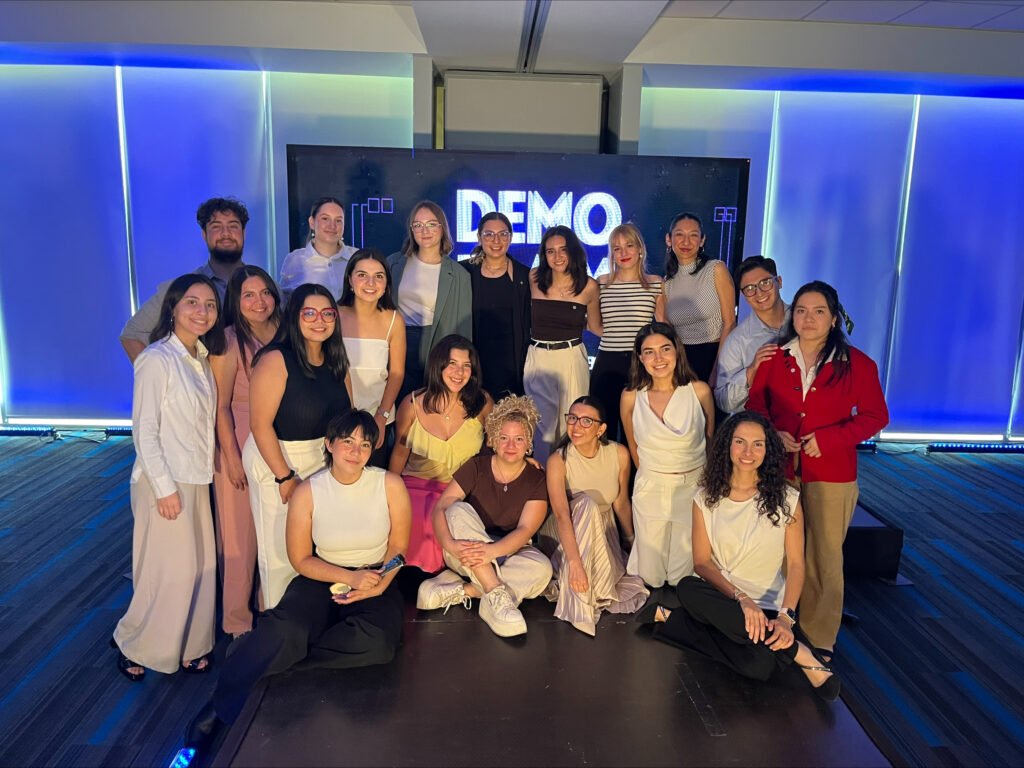
From the School of Humanities and Education (EHE) of Tecnologico de Monterrey, students of the Bachelor’s Degree in Educational Innovation (LEI) presented projects for their degree on June 5, 2024, during Demo Day. The graduates of the second class of LEI formed enterprises that represent instruments to transform learning within the framework of the “Integrative Project of Educational Innovation” block, with a conscious approach to address SDG 4 regarding quality education for all. These solutions reflected their ability to identify problems in latent and distinct realities and develop innovative initiatives focusing on quality education and lifelong learning in response.
The event was attended by special guests and project evaluators such as Sara Segundo, Rodrigo Correa, and Antonio González Grez from the Institute for the Future of Education (IFE) and Elizabeth Martínez, business experience designer. Priscila Rodríguez, the facilitator of the block and professor in the Department of Education, led the session, thanking her colleagues for their guidance and support in the program: Leonardo Glasserman, Éder Villalba, César Sánchez, Iván Ramírez, Samantha Barrón, and Miguel Ángel Rodríguez. Notably, this Training Unit was also strengthened with transversal content provided by Judith Rodríguez from the Eugenio Garza Lagüera Entrepreneurship Institute (IEEGL).
The session began with words from Priscila Rodríguez, who recognized that during the last few months, these talented students worked hard to apply the knowledge and skills acquired throughout their Bachelor’s Degree career, combining it with their passion for educational innovation to develop solutions that positively impact society.
“Each project that will be presented today results from their dedication, perseverance, and entrepreneurial spirit. They have faced challenges, overcome obstacles, and demonstrated their ability to develop creative and disruptive solutions in the field of education. This event is not only an opportunity for students to showcase their projects but also for us to learn from them and appreciate their great talent. I am sure they will inspire us and invite us to reflect on how we can transform and improve the education of our society,” she mentioned.
Miguel Ángel Rodríguez, Entrepreneurship Manager for the Monterrey region, also shared a greeting message, motivating the students who would present their projects at the Demo Day. Likewise, Leonardo Glasserman, coordinator and facilitator of the block, addressed a few words to the young entrepreneurs. He wished the best of success to those who exhibited and described that doing so was a milestone for the class of 2024. In addition, he highlighted the students’ valuable journey and thanked the entrepreneurship team for showing what can be done to address educational entrepreneurship issues.
The 20 projects of the Bachelor’s Degree in Educational Innovation presented were:
- Abrazando
- Akili
- UpSkill
- Insided
- Casa Xochipilli
- Raíces y Alas
- Caminando Juntos
- Eduambientes
- WildLearn
- Komon
- Curiosfera
- Eleinfantes
- Abierto al diálogo
- Blended
- Togetherness
- Meramente
- Beaverfield
- Instituto Digital
- Community Game
- HombreSX
Abrazando (Embracing) | Eugenia Gómez

This social reintegration program holistically supports people deprived of liberty for various reasons. It seeks to develop soft skills through teaching in startups and small and medium-sized enterprises so that users cultivate positive habits, such as inclusion, in eight weeks and create friendly and welcoming spaces. It produces meaningful and experiential learning through workshops, talks, and collaborative dynamics in activities such as board games with people in the process of reintegration.
Akili | Estefanía Solorzano

This gamified application allows students to assess their reading and writing skills and facilitates teacher planning. Artificial intelligence tools (image-to-text and speech-to-text) produce desired results, and teachers’ activities are structured automatically. With this resource, it is possible to educate students to communicate and interact with the environment, thus polishing and generating skills for life.
UpSkill | Rebeca Cantú

UpSkill consists of soft skills development programs or power skills for companies. It is a personalized educational experience that focuses on the particular needs of organizations and their individuals. Its methodology mainly performs diagnostic evaluations such as psychometric tests, aptitudes and personalities, 360 assessments, and one-on-one interviews to identify each client’s requirements. Subsequently, educational programs are designed to reduce the soft skills gaps in communication, leadership, and emotional intelligence.
Insided | Michelle Castillo

Confronted with many factors that hinder educational quality, teachers demand spaces to build together. Therefore, this project provides contextualized teacher-learning communities for transforming and innovating primary academic institutions in Mexico. It is a consultancy focused on achieving educational quality using artificial intelligence to offer diagnoses and accompaniment. Teachers can also share, dialogue, and provide feedback to other educators about their experiences in their institutions.
Casa Xochipilli | Enrique Cortés

This is a house of culture or makerspace dedicated to artistic creation, where the community achieves learning through activities and coexistence with artists. It has designated spaces for electronics, computing, carpentry, sewing workshops, two rehearsal rooms, and a cafeteria. This project aims to institute a learning community where participants can dialogue about the philosophy of space, coexistence, peer study, and collaboration.
Raíces y Alas (Roots and Wings) | Valeria de la Cruz

This solution seeks to promote the inclusion of the elderly in education. Its work forms intergenerational bridges that leverage the knowledge of older adults, given their vast cultural, academic, trade, and skills knowledge. On the other hand, teenagers usually have an extensive understanding of technology and content creation. In this way, the platforms combine the ideas of seniors and youth to build a broad knowledge repository. Simultaneously, workshops, personalized courses, and dialogues generate social inclusion, which fosters positive relationships between both generations.
Caminando Juntos (Walking Together) | Regina Felix

Walking Together for Early Childhood provides a kit with resources for early stimulation integrated into ongoing training for educators and parents in marginalized communities. It intends to provide essential skills for early, integral child development, which produces long-term benefits. The kit includes information on early stimulation, an activities manual, and materials. Thus, regardless of the children’s socioeconomic status, they can have quality education.
Eduambientes (Edu environments) | Ximena Gallegos

This educational consultancy specializes in the design of pedagogical furniture to create educational spaces. Its meaningfully innovative direction is not limited to formal education spaces. It was created to rescue the closeness of the intellectual and material embrace among higher education students, providing spaces where they can listen, learn, and develop. The formula for constructing these sites for complex thinking combines community, meaningful and dialogical learning, and furniture, giving relevance to the aesthetic experience and dignifying intellectual life.
WildLearn | Camila García, Mariana González and María Fernanda Lamas

This initiative addresses the disconnection of children and adolescents with nature due to accelerated urbanization and the excessive use of technology in sedentary lifestyles. Its proposed methodology entails an immersive learning experience in nature for environmental education, motivating personal and emotional development, social skills, creativity, and artistic expression. The program is supported by educators specialized in ecological education and outdoor activities. It is designed directly for schools, where workshops and events will be held.
Komon | Melany Leal

The Mexican education system not only marginalizes and discriminates against the country’s ethnolinguistic diversity but also perpetuates the idea that being Indigenous and speaking the language of Indigenous people is a significant barrier to the educational development of these groups and their communities. That is why this educational project for flourishing is proposed as a means to develop linguistically and culturally contextual academic resources. This tool can adapt to the 364 variants and, therefore, to the various indigenous communities in Mexico.
Curiosfera | Fabiola Rodríguez

This proposal is enhanced by active learning, a pedagogical methodology that inspires students to transition from passive listeners to thinking and doing. Active learning in the classroom results in lower failure rates than in lectures or master classes. The project introduces an open-source board game that is a first step for teachers to cultivate an active learning classroom. Unlike the options on the market, this accessible resource works intuitively without the need for rigorous technical training. Thus, teachers and students exercise curiosity and enjoy horizontal relationships, practicing listening, and dialogue to promote their learning.
Eleinfantes | Alina Rodríguez

This foundation professionalizes informal childcare services through educational tools and learning spaces. Its platform makes tools and training available to caregivers to build physical learning bubbles, which are small centers where users can access the necessary resources within the communities of the children to carry out their work. For example, a caregiver might have access to playful learning activities, a guide to infant neurodevelopment, and tips and techniques for popular parenting. They can even receive a certification through MOOC-style courses that professionalize their knowledge. Since its purpose is to create links to help working mothers with their children, its main allies are the companies subsidizing this kind of care service for their employees.
Abierto al diálogo (Open to dialogue) | Marisol Straffon

This learning community is based on Dialogic Pedagogy, which is an egalitarian and conversational dialogue in community spaces known as third places. These places are where people go to seek community, not the home or school, forming valuable bonds in cafeterias, bars, or churches. The initiative intends to promote a social movement based on dialogue as a tool for connection, reflection, and learning.
Since there is a shortage of dialogic learning communities for young Mexican adults, particularly outside formal educational institutions, the project seeks to resignify the existing third places in Monterrey for people between the ages of 16 and 60 who would like to join. Open to Dialogue has three tools: a card game with 52 catalytic conversation questions and 20 challenges that are based on the principles of learning community; a sign to place on the table that indicates that you are open to dialogue; and the badge for those places that already have both the card game and the signs, identifying the place as part of the initiative.
Blended | Ángela Tamara

This educational consultancy uses a methodology that combines traditional teaching (behavioral) and a socio-constructivist one to produce student-centered learning of a second language. The methodology called TSA begins with the traditional, where the support of repetitive playful games and educational technologies results in a superficial understanding of the language. Then, the constructivist model helps to talk about a topic of which we already have notions, and finally, project-based learning is applied to consolidate active and meaningful learning.
Togetherness | Irais Aguilera

Togetherness, Athletes for the Future is an organization created for children and young people who require an approach and follow-up to develop sports skills and access quality education. The initiative aims to be established in schools, specifically high schools, to improve their educational models, provide excellent quality in teaching students, and enable them to acquire sports scholarships in some of the best secondary institutions in Mexico. This contributes to the great goal that, when ready to enter university, students have the knowledge and performance necessary to access sports scholarships at any university in the country or abroad.
Meramente (Merely) | Rebeca De León

This project comprises a creative hub that seeks to demystify, ignite, and illustrate creativity with different tools and experiences. So, it is a machine that transmutes ideas into innovative, concrete proposals depending on the contextual ecosystem and the user. Faced with the scenario of a creative crisis, the inventor decided to make a mystery box full of challenges where the work teams select one at random and solve it ingeniously. The box includes instructions and materials that allow its users to have a unique interpretation of how to solve the assigned challenge. Its notebook has a display inviting users to enjoy making creative spaces anywhere.
Beaverfield | Denisse Russildi

This skills verification platform of the future is aimed at companies. With this tool, international standards can be followed, with the support of a prestigious institution, to identify the critical skills a person must possess. Its methodology offers micro and macro credentials identified by badges with values. This way, acquired skills can be accumulated and exchanged for a more complex skill. In addition, it personalizes trajectories, following the user journey with artificial intelligence to account for previous experiences to know the developed skills. A diagnostic test helps determine what other badges can be approved.
Instituto Digital (Digital Institute) | Lucas Muñoz

The Digital Institute is a digital university that looks to maximize the potential of micro-credentials, which are diplomas or credentials based on an aspect of a specific professional discipline or career. Micro-credentials offered at various points of a university career can lead to achievable goals to ensure learning and that everyone advances at their pace. Some other benefits include the flexibility of a digital format and the personalization of learning. The three types of clients are people who want to complete a college degree, those who wish to develop a particular skill, or groups such as companies that need to train numerous teams.
Community Game | Dana Paola Prieto

Parents, teachers, and students play and interact through questions in this game application. Each actor has a different profile to add and consolidate learning so that it is possible to continue with the lessons taught in class. The learner can choose from art, general culture, socio-emotional, and science categories or pick randomly. Similarly, the teacher character can ask questions, forging a communication link between the different participants in the teaching process.
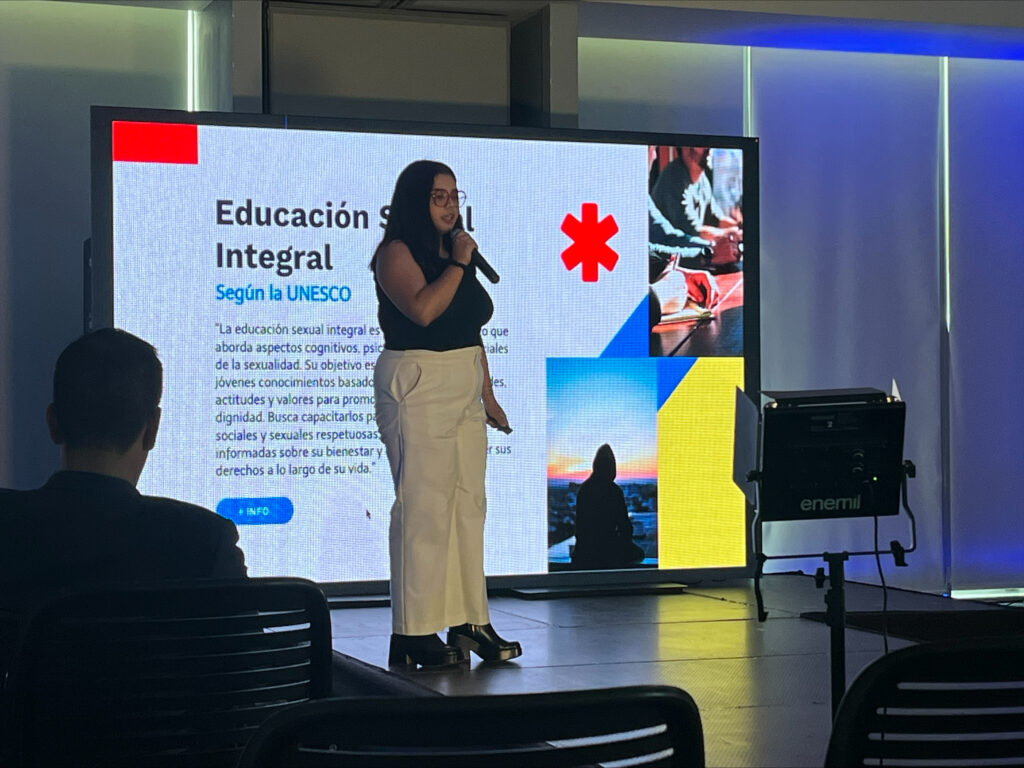
HombreSX | Mariel Gutiérrez

This project is based on a comprehensive sexual health platform that aims to transform sex education for men in Mexico. This tool provides reliable and accessible information on reproductive health to deliver comprehensive education that empowers men to make more informed decisions. Users between 18 and 50 years of age have access to attested information through various formats, specialists, legal advice, emergency chats, and an anonymous discussion forum.
Comprehensive sex education responds to a historical problem of the lack of attention to sexual health in men. This is due to gender stereotypes and the constant centralization of reproductive health responsibility to women due to cultural taboos and the scarcity of specific research. Therefore, this project is based on pedagogical theories of constructivism, social learning, and the experience model, which formulate the ability for conscious choices.
After the presentations of the educational innovation projects, Samantha Barrón from the Eugenio Garza Lagüera Entrepreneurship Institute (IEEGL) and a socio-trainer of the LEI integrating block congratulated the graduates for their initiatives. “It takes a lot of resilience and courage to stand here, believe in your project, and continue. So, congratulations on persisting with them, and I hope that many of you continue, if not with this one, with other entrepreneurial ventures you have. ‘Free are those who create, not those who copy, and free are those who think, not those who obey. To teach is to teach to doubt.’ Thank you for teaching us to doubt our entrepreneurship and to question whether we are doing things well. Congratulations!”
Likewise, Éder Villalba, coordinator and facilitator of the block, said, “In this last stage of their careers, the students had ten weeks to build their projects. This scenario allows them to visualize everything they must mobilize, not only cognitive resources but also connections, people, and contacts. They executed, encountered problems, and managed to resolve them at all times. Our students graduating this semester managed to transcend what they were seeking.”
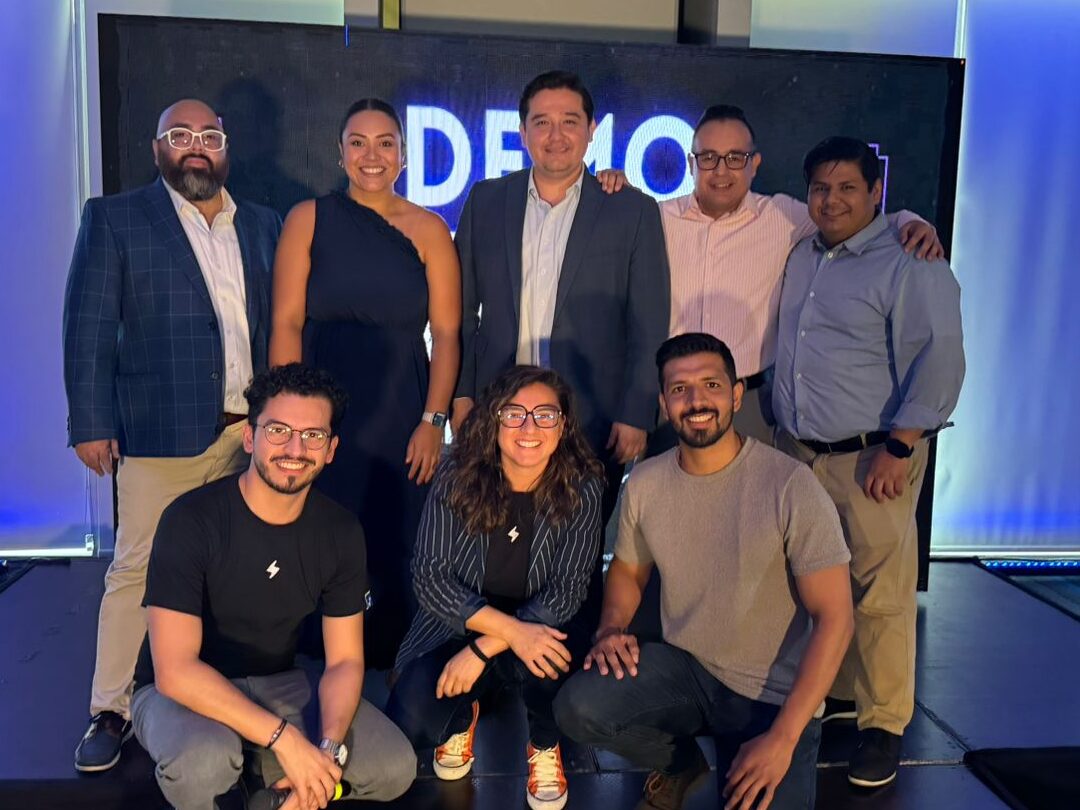
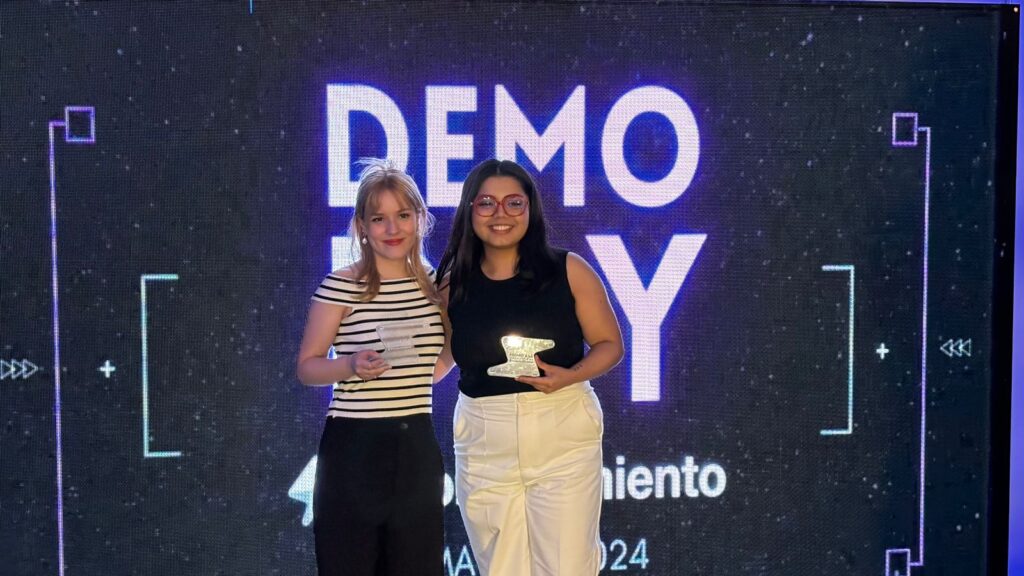
At the end of the session, two initiatives were selected to advance to the Spark Stage in the Demo Day organized by IEEG. The selected integrating projects were Abierto al Diálogo by Marisol Straffon and HombreSX by Mariel Gutiérrez, who presented their LEI program solutions. The students were part of the 11 best projects representing the Tecnologico de Monterrey Schools (Business, Engineering and Sciences, Humanities and Education, Architecture, Art and Design). In this event, four projects were recognized, two from students in the Bachelor’s Degree in Educational Innovation program, reiterating their entrepreneurial proposals’ relevance, topicality, and innovation.
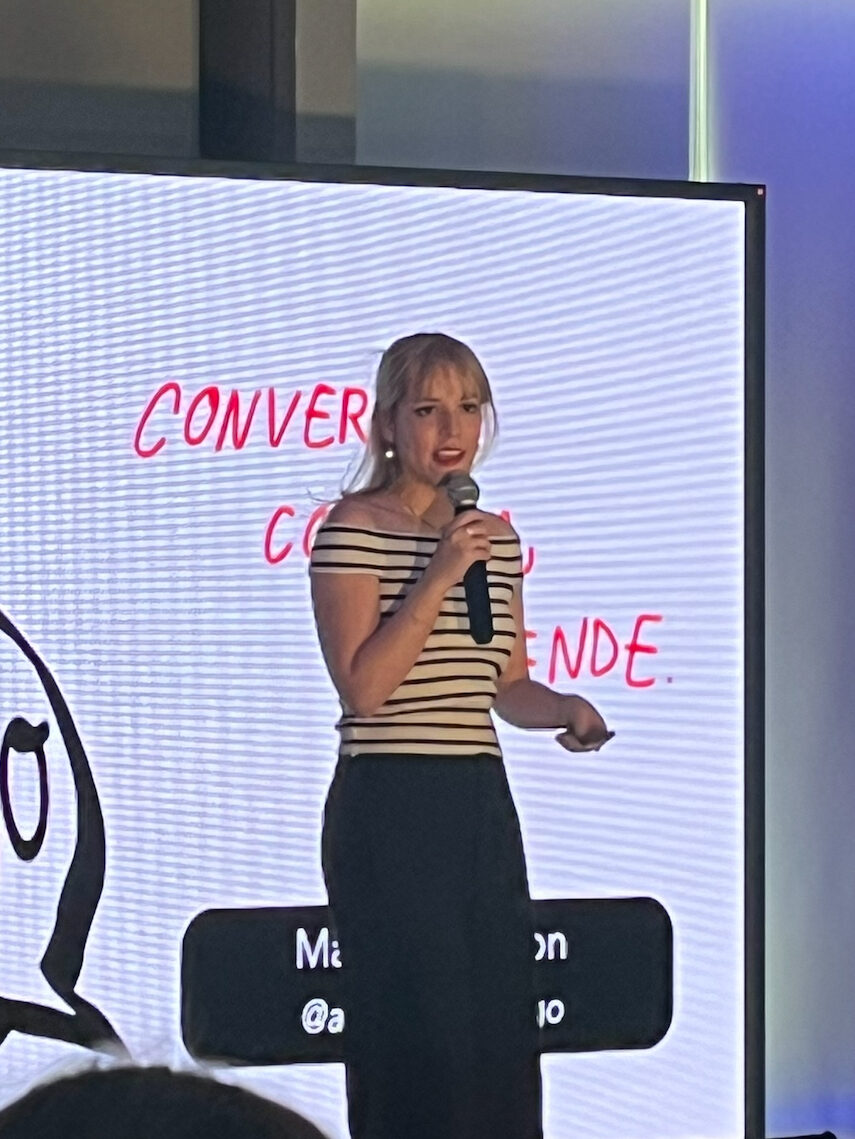
“Every great social and cultural movement began with a conversation. In our daily lives, we have the power to have forceful and transformative conversations; what we need are the right tools to do so,” stated Marisol Straffon.
Translated by Daniel Wetta