

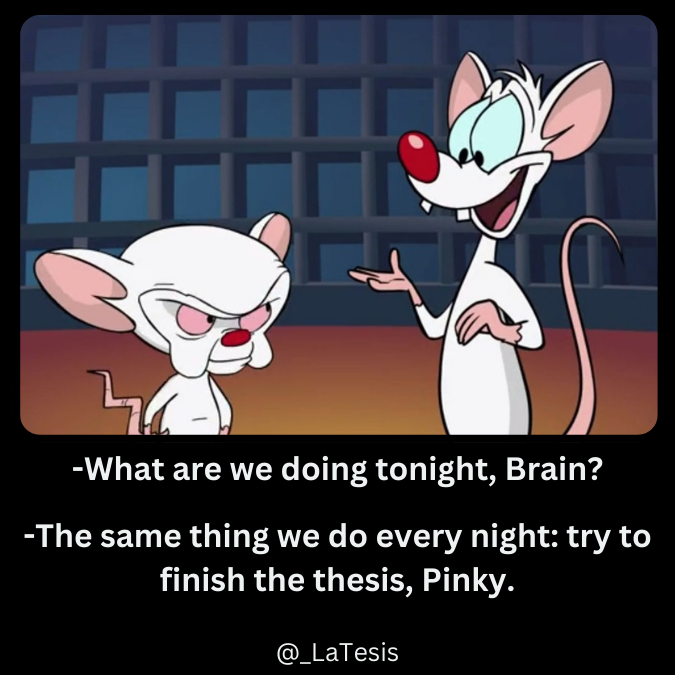
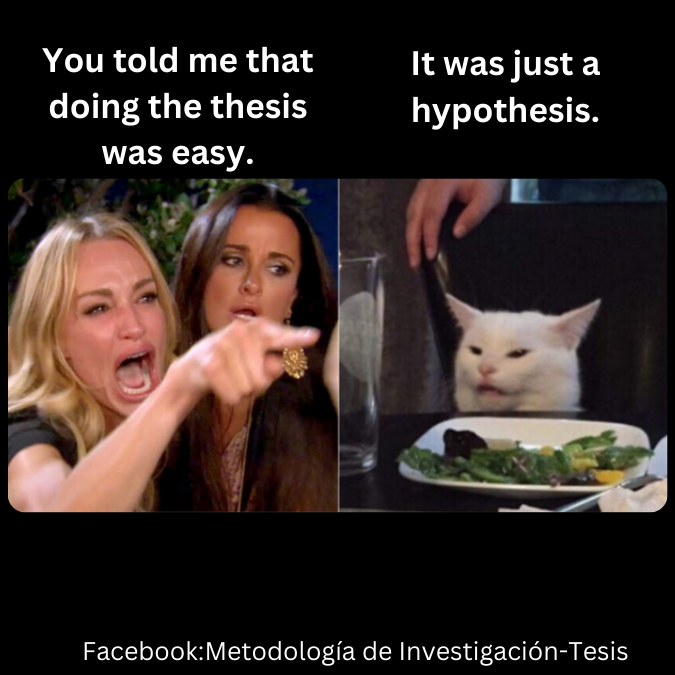
We can find some funny but very illustrative memes on the internet about students’ emotional challenges when writing their thesis. Although many students have completed their thesis successfully, others have gotten stuck and bottled up in a frustrating, discouraging, and lonely process. Hence, as a teacher, these questions arise: Is it essential or not to write a thesis to obtain a degree? Is the thesis the only way in which students can demonstrate their knowledge? Or is it a training process that is worth addressing? I share my experiences and a proposal concerning these questions in this article.
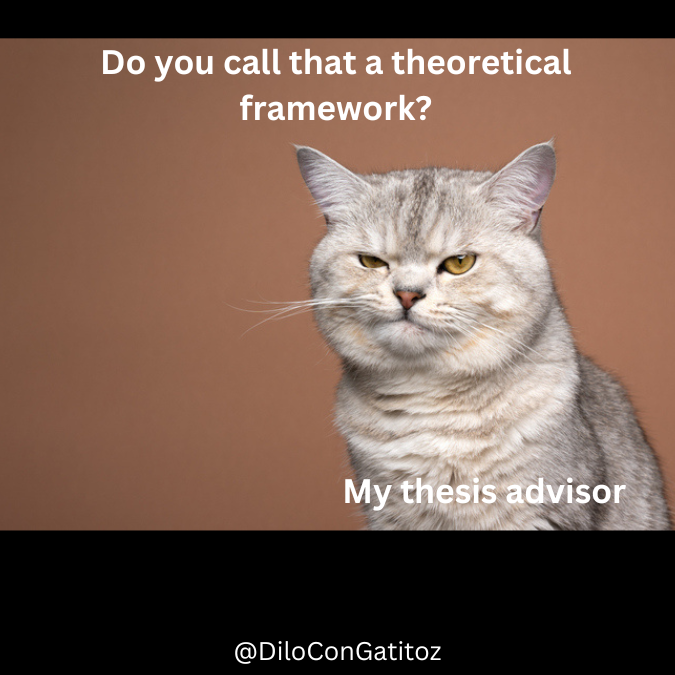
Thesis continues to be one of the most requested ways to obtain a degree, even though there are other options, such as exams or integrative projects. In what situation or context is it best to use each option? To begin with, some students abandon their thesis because they have difficulties writing and researching, two essential skills for completing a thesis. On the other hand, some universities have chosen to present a knowledge exam to replace the famous dissertation. The curious thing is that, in their curricular offerings in almost all their degree programs, these institutions have subjects such as Research Methodology and Thesis Seminars I and II that are fillers. In addition, the didactic strategies applied in these subjects are often limited to lecturing about writing rules, ways of citing work, or theoretical, experimental design, making research seem tedious, frustrating students, and killing their curiosity.
However, we can rejuvenate subjects such as Research Methodology and Thesis Seminars by implementing Project-Based Learning (PBL). In this teaching-learning model, students work on a project that addresses a real problem in their environment. This model perfectly applies to these subjects, allowing them to apply the information they have accumulated throughout their academic journey. In addition, it leads them to learn new knowledge, but from a more applied perspective, with a comprehensive view of their career. PBL profoundly impacts students, forcing them to visualize a problem from many perspectives and requiring them to form teams and work collaboratively. In addition, they feel motivated to do the work, reason, and think of ideas to deal with the challenges and difficulties of developing a solution that completes the project.
PBL in experimental research subjects
PBL is a teaching-learning model that has worked for the new generations. It directly involves students in teaching-learning, placing them in an authentic learning context (Abella-García et al., 2020). This model motivates students to collaborate, inquire, and investigate to solve challenges or problems (Aprende.mx 2021). Additionally, it has been evaluated in experimental subjects, improving the students’ critical analysis abilities, teamwork, and, in general, the teaching-learning process by 20 to 50 percent (Ayala-Cabrera et al., 2020; Loyens et al., 2023). Also, improved decision-making and skills have been observed compared to other models (Villanueva-Morales et al., 2022).
Undeniably, the world is changing, but most educational models remain unchanged. As facilitators of knowledge, teachers must equip students to perform competently and appropriately as professionals. Specifically, working life requires teamwork, assertive decision-making, and critical analyses of problems. PBL is an answer to improve the traditional method; it has been successful in primary education in science and technology (Owens & Hite, 2022) and has been proposed as an excellent tool at higher levels of education (Almulla, 2020; Guo et al., 2020).
PBL in thesis seminar subjects and research methodology
I share my experiences in charge of the Thesis Seminar for students pursuing a bachelor’s degree in Chemist Biologist at the Institute of Higher Studies of Chiapas (IESCH) from 2016 to 2018. Note that in this career, the students are not allowed to graduate by thesis; the institutional knowledge exam is mandatory to obtain the degree. I implemented PBL with three generations (class years) of students taking the subject during that time.
Each student was free to propose the topic they would develop during the semester. The considerations for selecting the project were: 1) the project had to be chemistry-oriented and applicable to pharmacy or biology, 2) the project must involve teams, and 3) the project must have a maximum duration of five months. In addition, I analyzed their proposals and made suggestions so that the projects could be viable in the scheduled time.
For these projects, I collaborated with fellow researchers for advice during the chemistry experimentation stage, mainly regarding the extraction of plant compounds, microbiology experimentation, evaluation of extracts in medically interesting bacteria, and ecology experiments assessing insect pheromones. Hence, class hours became laboratory hours. The students acquired the necessary concepts during the development of the project. As they progressed, I asked them to record the results they obtained. During this writing process, they structured their work according to the guidelines of a scientific journal; they learned how to write a statement and compose a paragraph. We also took advantage of the available technology, free-access bibliographic managers (Mendeley), and statistics programs (Software R Core Team), which I taught them to use in class.
The results were surprising. My students became very excited to work in the laboratory and apply all the knowledge they had acquired. Some even said they could not believe they could conduct experiments, applying all the knowledge learned during their degree program in a research laboratory. It allowed them to hone their skills and, above all, to exploit their imagination, inspiration, and creativity.
During 2016, as part of the course, a three-student team participated in the Chiapas State Science and Engineering Fair 2016 with the project “Chemical communication in the alarm behavior of the stingless bee, Melipona solani.” In this project, we investigated how stingless bees react to potential danger. These insects use a chemical language to communicate; the objective is to decipher the molecule responsible for the message they send in an alarm situation. This group of students won the contest and attained a place in the National Science and Engineering Fair 2016.
In 2017, as part of the course, three students participated in the project “Repellent and adulticidal effect of mixtures of essential oils in females of Aedes aegypti.” In this project, we determined how a blend of peppermint, citronella, lavender, and clove essential oils comprises an excellent Aedes aegypti mosquito repellent. Such a mixture at higher doses was found to work as an insecticide. The experience of this project was published in the International Journal of Tropical Insect Science under the title “Repellent and adulticidal effect of essential oils mixtures on Aedes aegypti females.”
In 2018, as part of the course, a team of two students participated in the project “Banana peel extracts as a broad-spectrum antimicrobial.” The project objective was to evaluate extracts of different banana species because Chiapas has a variation of more than 20 types of bananas. Once it was established which extracts had antimicrobial activity, the molecules present in the extracts were identified with the intention of knowing which compound(s) were responsible. In the long term, a handy application would be the creation of ointments with these active compounds. The project was presented at the Chiapas State Science and Engineering Fair 2018. These students won the contest and attained a place in the National Science and Engineering Fair 2018.
Whether students are developing a thesis or an integrative project as part of a research project, we as teachers must encourage them to research, think critically, analyze information, and postulate hypotheses and research questions. One way to do this is by implementing PBL in the classroom, which will give them a comprehensive approach to their professional training and a clear idea of their future work.
Thesis, exam, or integrative project?
It is a matter of perspective; probably, for some training areas, the thesis may not be necessary, but for others, it is. From a very biased point of view, since I am a chemist by training and have always been in the academic world, I think that students of experimental natural sciences, such as physics, chemistry, and biology, would have better training if they did a thesis because it allows them to access knowledge, and develop skills and techniques that they did not necessarily learn in the curricular program. It also allows them to get involved in research activities at the university or in the workplace.
Preparing for the bachelor’s thesis project enhanced the knowledge I had obtained during the four years of classes. It allowed me to develop manual dexterity, which is essential in the chemistry laboratory. Fortunately, my university career was at the Faculty of Chemistry of the UNAM, where we had access to the laboratories, reagents, and materials necessary for good laboratory practices. However, realistically, many universities, mainly in the provinces, need the equipment or facilities for good laboratory practices.
The thesis can be carried out outside universities, such as private companies. It allows the student to connect with professional practice when joining the labor market in the public and private sectors. We must acknowledge that many students have serious writing, editing, and spelling deficiencies even as they reach the end of the curriculum. The thesis presents the last opportunity to acquire these indispensable skills before entering the labor market (Loria-Díaz, 2019). A student can generate knowledge using the scientific method by doing a thesis, mainly in experimental careers.
Universities must urgently apply the principles of the scientific method to train professionals in critical and reflective thinking and the development of innovative ideas. Collaborating with other educational institutions and companies is necessary to identify transcendental problems for society. The idea is to create solutions jointly and implement innovative initiatives where students can appreciate the relevance and importance of the scientific method in solving problems in the workplace and academia.
On the other hand, I recommend that students of medicine, engineering, law, actuary, and other careers that interact with and immediately impact society carry out an integrative project because it gives them the necessary tools for their professional performance. Finally, I believe that for students who do not necessarily need manual skills because their professional performance is more focused on theoretical experimentation (for example, mathematics, philosophy and letters, humanities), it would be advisable that they be evaluated with a general knowledge exam to obtain the degree.
Reflection
As seen in the cases I shared in this article, students are eager to learn and develop their skills. Therefore, as teachers, we must go one step beyond the traditional to improve teaching. Implementing PBL in natural sciences careers in subjects such as Thesis Seminars and Research Methodology is an excellent option. Indeed, the teacher’s role as a knowledge facilitator is crucial in the project’s guidance and awareness of the student’s learning. Also, we must consider that this model imposes a vital challenge when evaluating student learning. For this reason, I share an excellent webinar by Professor Marisa Conde, “PBL as an Opportunity to Transform the School.”
Other ways to encourage students are by writing scientific articles and participating in science fairs, congresses, and other events. They are more motivated through interactions with students from other places; seeing that they have the same interests broadens their outlook and motivates them to continue learning. This situation is more complicated in schools in small cities, where laboratories, libraries, and, in general, educational spaces are more limited than in schools in developed cities.
To close, I would like to call upon my colleagues who are going through a similar situation where they observe students who are apathetic to research and institutions that do not promote scientific research, mainly in subjects such as Research Methodology and Thesis Seminars. I recommend implementing PBL to improve the teaching-learning process in the classroom. You will notice tremendous student enthusiasm; above all, it will help them with their challenges during their professional activity. Finally, I remain available for future collaborations, questions, and suggestions.
About the Author
David Alavez Rosas (alavezd@yahoo.com) is a Chemist with a master’s degree in chemical sciences from the Faculty of Chemistry of UNAM. He is a Doctor of Science in Ecology and Sustainable Development from ECOSUR, has Postdocs at UW-Madison and UVGR-Texas, and is currently at the Institute of Ecology at UNAM. David has been a teacher at the undergraduate level since 2013 and postgraduate since 2020. He belongs to the National System of Researchers, Level 1. He has published 25 research articles and six popular science articles.
References
Abella-García, V., Ausín-Villaverde, V., Delgado-Benito, V., & Casado-Muñoz, R. (2020). Aprendizaje basado en proyectos y estrategias de evaluación formativas: Percepción de los estudiantes universitarios. Revista Iberoamericana de Evaluación Educativa, 13(1), 93-110. https://doi.org/10.15366/riee2020.13.1.004
Almulla, M. A. (2020). The Effectiveness of the Project-Based Learning (PBL) Approach as a Way to Engage Students in Learning. Sage Open, 10(3). https://doi.org/10.1177/2158244020938702
Aprende.mx. (25 de abril del 2021). El Aprendizaje Basado en Proyectos como oportunidad para transformar la escuela. https://www.gob.mx/aprendemx/es/articulos/el-aprendizaje-basado-en-proyectos-como-oportunidad-para-transformar-la-escuela?idiom=es
Ayala-Cabrera, J., Pérez-Ràfols, C., Núñez, O., & Serrano, N. (2020). Implementación del aprendizaje basado en proyectos en laboratorios de química analítica del grado de química. Avance en Ciencias e Ingenierías, 11(2), 31-40.
Guo, P., Saab, N., Post, L., & Admiraal, W. (2020). A review of project-based learning in higher education: Student outcomes and measures. International Journal of Educational Research, 102(101586), 1-13. https://doi.org/10.1016/j.ijer.2020.101586
Loria-Diaz, E. (2019). ¿Sin tesis hay paraíso? Hacia un buen propósito. CIENCIA ergo-sum, Revista Científica Multidisciplinaria de Prospectiva, 26(3).
Loyens, S.M.M., van Meerten, J.E., Schaap, L. & Wijnia, L. (2023) Situating Higher-Order, Critical, and Critical-Analytic Thinking in Problem- and Project-Based Learning Environments: A Systematic Review. Educational Psychology Review 35(39), 1-44. https://doi.org/10.1007/s10648-023-09757-x
Owens, A. D., & Hite, R. L. (2022). Enhancing student communication competencies in STEM using virtual global collaboration project-based learning. Research in Science & Technological Education, 40(1), 76–102. https://doi.org/10.1080/02635143.2020.1778663
Rojas-Solís, J., Espinosa-Guzmán, D., Espíndola-Larios, M. & Hernández-Rosas, S. (2021). Actitud hacia la investigación en universitarios mexicanos: Un análisis exploratorio. Dilemas contemporáneos: educación, política y valores, 8(4),1-4. https://doi.org/10.46377/dilemas.v8i.2747
Villanueva Morales, Camila, Ortega Sánchez, Gustavo, & Díaz Sepúlveda, Lesly. (2022). Aprendizaje Basado en Proyectos: metodología para fortalecer tres habilidades transversales. Revista de estudios y experiencias en educación, 21(45), 433-445. https://dx.doi.org/10.21703/0718-5162.v21.n45.2022.022
Editing
Edited by Rubí Román (rubi.roman@tec.mx) – Editor of the Edu bits articles and producer of The Observatory webinars- “Learning that inspires” – Observatory of the Institute for the Future of Education at Tec de Monterrey.
Translation
Daniel Wetta