
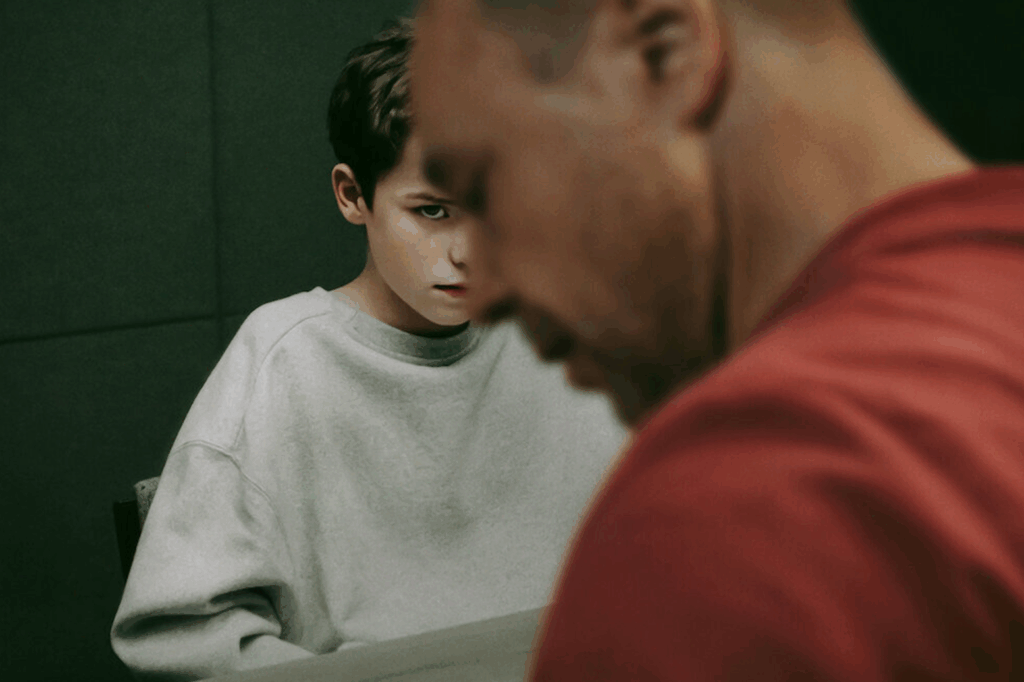
This text contains some spoilers for the Netflix series Adolescence.
Being a teenager is never easy. Beyond the biological changes every person faces during this stage of life, and regardless of the historical era, preadolescents’ and adolescents’ realization of living up to societal ideals strikes with brutal force. Daily Internet and social media use add significant obstacles to their integral development.
“The world for kids today looks a lot different than it did for their parents … the hit Netflix series ‘Adolescence‘ captures just how vast that difference is.” – Mike Males, San Francisco Chronicle.
Last month, Netflix’s miniseries Adolescence was released. It became a sensation among viewers for its formidable one-shot episodes, the actors’ authentic performances, the quality of the script, and the realistic approach taken by this project.
Jamie, the protagonist of the show, is a 13-year-old boy accused of murdering a classmate. Notably, viewers become immersed in various perspectives of this event throughout the series, witnessing different interactions parallel to Jamie’s arrest and investigation. Conversations between investigators and police, family discussions, and chatter among the students at Jamie’s school provide us with valuable information to help us understand the environment of the modern adolescent. Beyond the details of the murder or the trial, the series provokes a question that viewers and characters ask themselves: Why would Jamie, a seemingly “normal” non-problematic teenager, commit such a heinous act?
In my opinion, what makes the series so interesting is not that this question is not answered with certainty. Still, at the end of the show, we are left with more questions, leaving us reflecting on how adolescents live nowadays and how many of us do not understand them, let alone the atmosphere and content to which they are exposed every day on their technological devices. This is reflected explicitly in the episode inside the school premises where Jamie attends. The investigator in charge is at a disadvantage when trying to communicate with groups of students. This character, who has a son in the same school, is trying to talk to aliens since they seem to speak on an entirely different planet.
There were parts in this episode where I felt bewildered because of my lack of understanding of the way these young people were behaving. They seemed to take what happened as a joke, not cooperating directly with the authorities, making me reflect on why I felt distressed. I think many adults might have this same feeling. All this led me to conclude that my perspective on life has changed quite a bit over the years and that my lack of patience and contact with people at this stage of life influences me significantly.
It seems I have completely forgotten what it was like to be a teenager. Many of us also fail to contemplate the current environment of young people, which, although similar in several aspects to older generations, differs significantly in others, such as family situations, economy, schooling, and medical history.
Hyperconnectivity
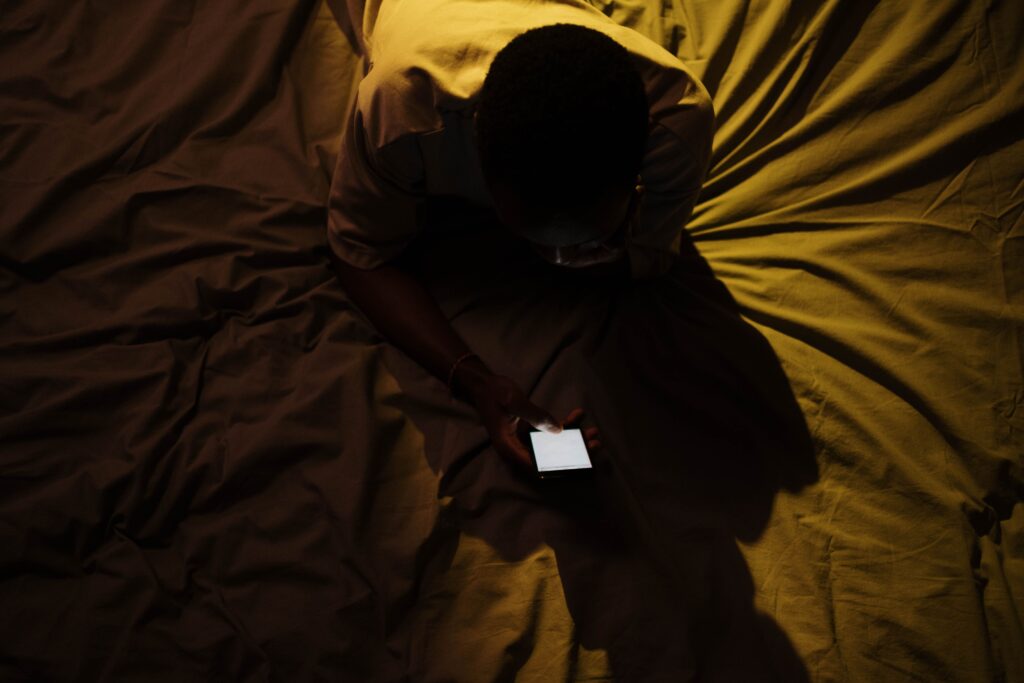
Something essential to consider is the impact of hyperconnectivity on adolescents. Smartphones and computer screens are the window to the outside world for millions of young people worldwide. The oversaturation of information to which they are constantly subjected can be overwhelming, especially considering that the most used platforms are governed by algorithms designed to capture our attention to sell us products and services.
Puberty is a complex stage, now even more so with the rise of social media. Teenagers usually see idealized lives and bodies on their homepages, which is not a problem originating from these platforms, but they do amplify negative feelings of comparison, low self-esteem, and depression.
Moreover, young people are prone to cyberbullying and harassment on their social media profiles. In Adolescence, Jamie received aggressive comments on Instagram from a female classmate, which were supported (in the form of “likes”) by several of his peers; thus, one comment implicates more people in the aggression. As we saw earlier, cyberbullying comes from people we know, but it can also come from strangers. Users can decide to make fake accounts or hide their names, feeling they have a shield of anonymity, allowing them to say or do anything without repercussions.
The anonymity that many Internet sites provide can be counterproductive. A prime example is pornography; the BBC has reported that children as young as nine are exposed to this type of content because it is possible to access these sites without an account, and their age verification methods are very weak. Even so, the BBC study reports that many children are exposed without seeking it because, despite parental parameters, 38% of children encounter sexual and violent videos on social networks such as YouTube, Snapchat, and TikTok. Unfortunately, due to the enormous volume of content uploaded to these platforms daily by different users, it can be difficult for companies to detect unfit material quickly. Minors’ access to pornography has enormous negative impacts on their psychology, as it affects their mental health by normalizing behaviors that are not normal, to name a few: violence, objectification, and misogyny.
The manosphere
It is well known that the world is confronting a serious loneliness epidemic, especially among men. Therefore, seeking remedies in different Internet platforms such as chatbots, forums, and groups has become one way these people find support, company, and comfort. However, while many groups can be positive (based on common hobbies or tastes), others can harm vulnerable people, notably teenagers.
In the third episode of the series, an intriguing conversation between Jamie and a psychologist gives the audience a glimpse into the teen’s psyche and the content that may have influenced his behavior. In this sequence, the psychologist questions Jamie about the content he shares on social networks and even mentions some concepts from the “manosphere,” a term defined by García Minogo for The Conversation as “the set of digital subcultures that share a misogynistic vision of the world and a negative perspective towards feminism.” The men who comprise these groups discuss issues of masculinity and health, video games, and politics, so it can be difficult for family members to notice the content their children consume, which can be shrouded in misogyny and false expectations for young men.
The manosphere is often an environment that shares misinformation, offering courses and “advice” that can be very harmful to young people’s mental health. However, this content can be very attractive to them, as it can be a narrative in which women are to blame for their loneliness, rejection, and feelings of inferiority, which encourages violence. Unfortunately, this mentality has resulted in violent acts towards women, which even inspired the creation of Adolescence.
Children and adolescents worldwide are at risk of adopting negative behaviors they have seen on the Internet. To combat this, Australia has passed a law establishing the age limit for using social networks. Several schools in the United States are considering and even implementing measures to ban smartphones on school grounds. However, is this the way to protect young people?
The importance of high-value communication
Indeed, children and young people may employ manosphere concepts, which can be alarming from the start. Guardians and family members need to question whether their children use words innocently from watching TikTok videos, or if their perceptions about gender have changed.
Throughout the second episode, the lack of parental involvement and even the teachers in the lives of some of the characters stands out; especially, the relationship between the police officer handling the case and his son is notable. The series shows their alienated relationship and the student’s need for his father’s attention. However, in the end, we witness the father’s effort to be more present in his son’s life and communicate more with him.
Social networks and media exert enormous influences on our perspectives and ideologies, and it is very easy to adopt them, especially for children and adolescents, who often spend a lot of time on their phones and computers. Through the harmful and toxic belief systems they see on these devices, they can begin to construct their identity, which negatively impacts their minds throughout their lives.
Parents and guardians must live and communicate efficiently with their children and adolescents, be aware of young people’s new trends, and act as guides to what they consume, to clarify today’s confusing and complicated panorama. It is not easy, but caring for young people’s integrity and being present are essential for their mental and emotional well-being. In the series, you can clearly see that the adults and young people are in different dimensions, which can be exasperating, but it is the adults’ job to be patient and understand them.
“Instead of engaging boys with empathy or curiosity, we tend to talk at them, as if they alone are the problem, rather than talking with them.” – James et al. for The Conversation.
Listening to what they think, validating their emotions, and, in general, being there for them are some recommendations that UNICEF provides to establish a healthy relationship and communication with children and teens. Family members and guardians must get involved with the integral development of youth and not let digital media shape their personality, behavior, and mentality. Adolescence lives up to the hype and the good reviews it has received. Among the countless shows that now exist on streaming services, this show is a true cinematic gem that stands out greatly from the rest. This article only highlights some of the many themes surrounding this intricate story. It impressively invites us to reflect on and question our reality and that of future generations, as well as advising us to be mindful of the consequences children and teens can face if we do not make the effort to empathize, listen, and understand them.
Translation by Daniel Wetta