
One of the most significant areas of human life that technology has revolutionized is communication. Throughout human history, humanity has found increasingly effective ways to communicate with each other, most recently through technological advances such as the telegraph, radio, television, and now smartphones.
Many of these technologies were limited, so using them efficiently was a necessity. For example, each word sent by telegram had a cost, so sending short messages was the norm to keep expenses down. On the other hand, years later, in addition to the cost involved in sending messages through the first mobile phones, writing text messages was slow and tedious on their cramped up and tiny keyboard, so people would abbreviate common words or use emoticons to speed up this process (“bc” indicates “because;” “np” means “no problem” and “lol” is “laugh out loud”).
These abbreviations continue to be part of our daily lives. Although we now have more accessible keyboards and are now able to easily send voice messages, these shortcuts persist and have even permeated modern communication, both on social networks and face-to-face. Millennials and younger generations use these abbreviations in their conversations, continue to use a colon and parentheses to portray a smile, or select a GIF to express a specific feeling.
The applications of artificial intelligence in everyday life are becoming increasingly surprising, especially when they influence our behavior. The reliance on these tools for seeking advice, conducting academic work, and performing other tasks is a recurring theme. Little by little, these technologies have influenced language and the way we communicate, especially when speed is highly valued today.
Autocorrect and predictive text existed before AI, helping users compose quickly and with accurate spelling. However, various online shopping platforms and social networks have introduced the option to set default comments on posts, or users can even use AI tools to send messages in different tones to save time.
For example, an employee leaving work asks their smartphone to send a message: “Send a text to my friend in a cheerful tone saying I’m on my way to the restaurant.” The time it took for this person to give the command to the AI to generate the message will be the same as if they had sent a voice message in their own words. It would take even longer if the person had to read the message and correct it before sending it. Moreover, although the user sets the intention, generative AI tends to adopt a cordial, enthusiastic tone, which, to a certain extent, depersonalizes messages usually addressed to loved ones.
The excessive use of these tools can become a dependency, in which, over time, people lose confidence in their ability to write any text; machines are given partial or even complete control over how people relate to each other, which can be counterproductive to social development. Just as there are people who use AI chatbots as therapists, there are also users who upload their conversations to these platforms to help them write the most appropriate responses, and even to analyze their messages in depth to detect intention, emotions, compatibility, etc.
However, various studies have reported that the use of certain words and writing structures has increased considerably due to the use of artificial intelligence. A few months after the launch of ChatGPT, studies reported a considerable increase in the use of words in scientific texts and videos that were previously not widely used, such as delve, realm, meticulous, among others, which can be unfavorable to linguistic diversity. These words or structures have now also become signals that expose the use of AI; therefore, people have begun to avoid them, which has led some to avoid these platforms, and this is another element to consider when writing.
Many people see some AI platforms as a source of absolute truth; thus, the way these tools structure texts or correct them is often considered the “right” way. However, the results produced by these platforms are frequently relatively neutral, rejecting how people express themselves and delivering a more formal text, leaving aside words or phrases that give more humanity to what was initially written – giving rise to “[…] subtler shifts in language: carefully hedged statements, justified opinions, and polished confidence”(Prada, 2025).
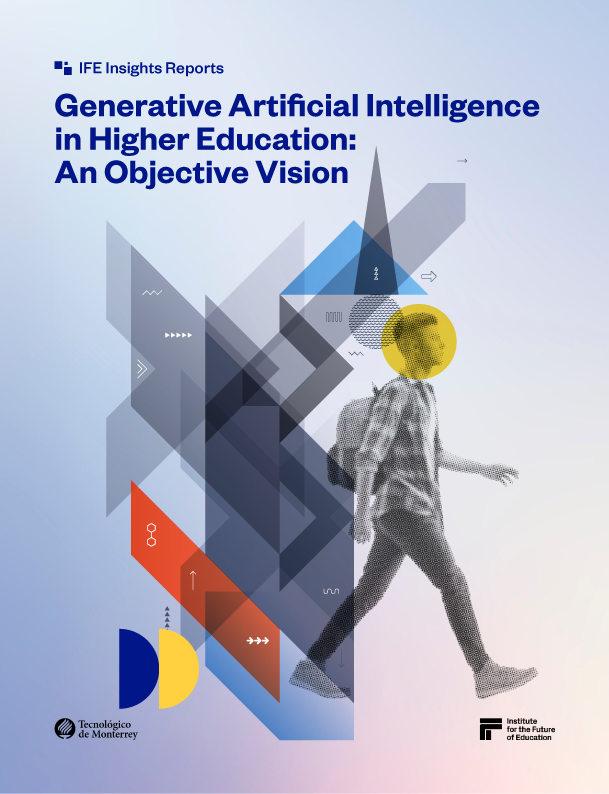
A good example of this is an anecdote by Paola Ricuarte, professor and researcher in the Department of Media and Digital Culture of the Mexico City campus of Tecnológico de Monterrey. In the report IFE Insights | Generative Artificial Intelligence in Higher Education: An Objective Vision, she remembers that one of her students confessed that every text they write is subsequently reviewed without fail by one of these tools, because checking it themselves leaves them feeling insecure. However, this takes away autonomy and evaluation skills, fundamental cognitive competencies for people.
It is important to note that many of these sites are programmed by people from other countries, such as Nigeria and Kenya, where English is spoken. Therefore, what is produced on many of these platforms is automatic translation, programmed primarily in English. Liliana Acosta says for Sin Embargo: “[…] even though Spanish is the second most used language on the internet, its digital content only represents six percent on the web, compared to 49 percent for English. […] So, although it seems that the digital world is diverse, since we are sold the idea that we all have the ability to generate content, the truth is that most of what we see, read, and listen to has an American accent.” Unconsciously, then, the most used words and structures generated by AI are really determined by a few people.
Using AI to check the proper use of words or correct grammatical errors is highly valuable for delivering high-quality projects and can enhance learning. Still, independence from these tools is essential for developing communication skills outside academia and work. Imperfections or clumsiness in our messages represent what makes us human: how we communicate our feelings and intentions, fundamental elements of our relationships with people. It is essential to remember that generative AI tools will never be free of bias and can subtly change our thinking without us noticing. We must use generative artificial intelligence consciously and thus take control of our own humanity.
Translation by Daniel Wetta