


In engineering classrooms, the disconnect between rigorous mathematical concepts and their practical applications can hinder student learning, especially in areas such as mathematics, logic, and linear algebra. This disconnect can lead students to see these topics as abstract, question their purpose, or feel frustrated because they cannot handle them. This lack of practical relevance leads to superficial learning that does not endure after the final exam. Therefore, as teachers, we must find different ways to show students that knowledge in these subjects leads to relevant applications for people and various sectors of society. In this article, I share a classroom practice in which we connect math concepts to digital video surveillance applications to help students better assimilate and understand them.
Sweller’s theory of cognitive load suggests that handling abstract ideas without a concrete anchor overloads students’ memory and, consequently, prevents deep learning (Sweller, 2020). Knowledge is best understood and retained when learned contextually, a concept known as “situated cognition” (Brown et al., 1989). In my experience, my students are noticeably more curious and take greater initiative when I integrate practical applications with theoretical mathematical concepts, which confirms what Sweller and Brown proposed.
Practical Applications of Linear Algebra in Daily Life
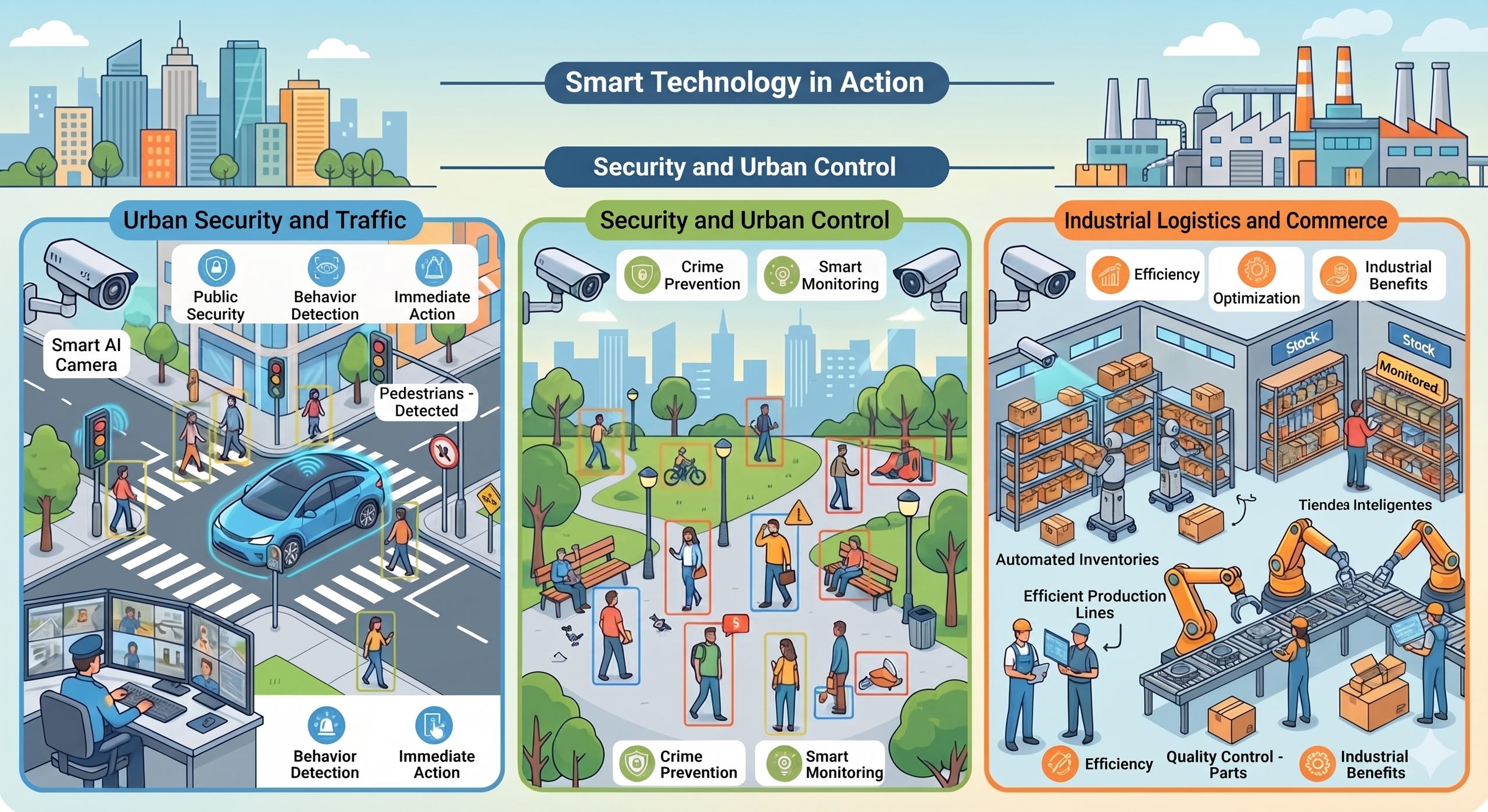
Connecting linear algebra to real applications can transform students’ apathy into curiosity. The basic concepts we cover in class—matrices, vectors, and algorithms—are part of the mathematical language underlying the security systems we use today to live in community. Recognition systems, smart cameras, and automatic alerts that protect public spaces operate, at their core, on these mathematical concepts. Specifically, automatic object detection and video surveillance systems are useful in urban security applications (traffic and urban control) and in industrial logistics, benefiting individuals, companies, government, and society as a whole.
Currently, the linear algebra concepts we address in class, along with deep learning and neural networks, form the basis of modern artificial intelligence systems, which have been integrated into various applications, including public safety. These systems detect behaviors and situations that require immediate action, enabling pedestrian identification, signaling, and autonomous vehicle operation. From an industry perspective, these technologies also deliver benefits such as automated inventory management, smart stores, and efficient production lines.
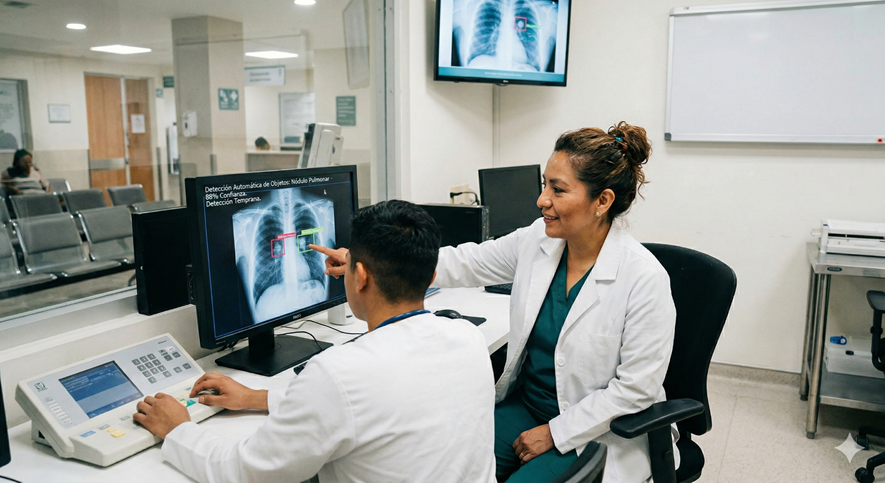
In medicine, automated object detection helps healthcare professionals make more accurate diagnoses, enabling early disease detection and saving lives.
This versatility shows that a basic knowledge of linear algebra leads to relevant applications for individuals and across various sectors of society. In my experience, when students understand that their learning has a real-world application, such as matrices representing digital images on a computer, they automatically engage more in their learning. This builds a bridge between theory and practice, connecting what students learn in linear algebra class to real-world applications.
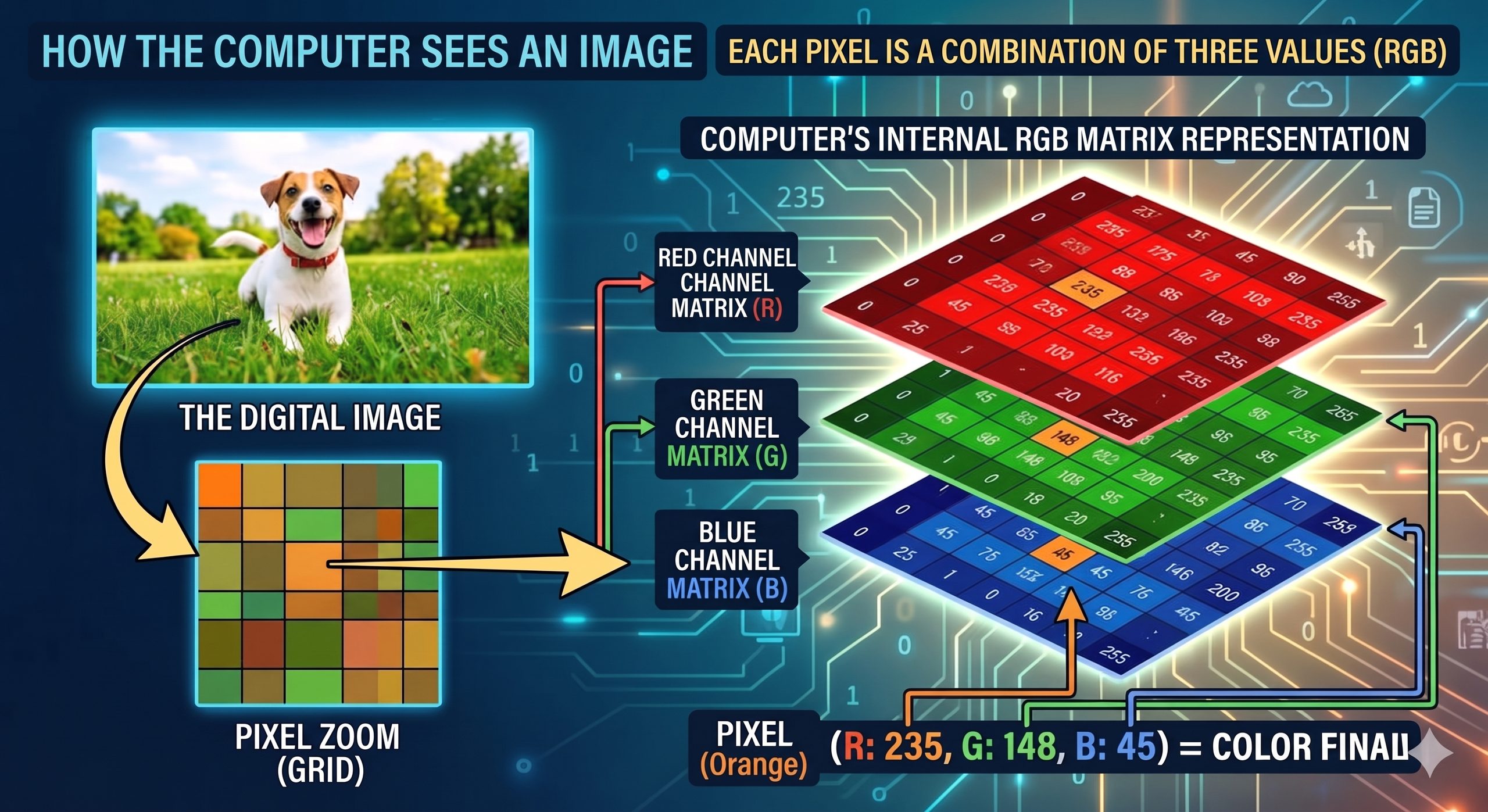
Linear Algebra in Automatic Edge Detection in Digital Imaging
In my class, “Engineering Modeling with Computational Mathematics,” my students learn to work with various types of matrices, such as identity, diagonal, inverse, and transpose matrices, which are used in conjunction with matrix operations such as addition, multiplication, and convolution to solve systems of equations using determinants and their properties.
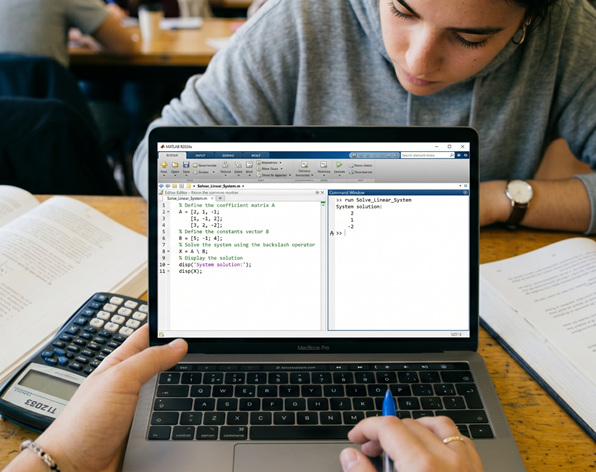
The project I assigned in class followed a five-week timeline focused on computer vision and technological analysis, two high-impact areas in engineering. The project presented an integrated challenge comprising patent research and the application of automatic edge detection to digital images. Students used MATLAB as the primary tool for programming algorithms and Lens.org for analyzing patents. This methodology aims to support challenge-based learning. Although time is a major limitation, the magic must happen through our efforts.
The anchoring phase takes place from weeks one to three, during which diagnosis is fundamental. The solution consists of practical exercises, such as implementing a simple video surveillance system using matrix operations and detecting objects automatically in images using morphological operators.
In weeks four and five, the students conduct a patent search on technological advances, compare edge detectors (the Sobel and Canny algorithms), program the kernels, and mathematically explain each step of the gradient calculation.
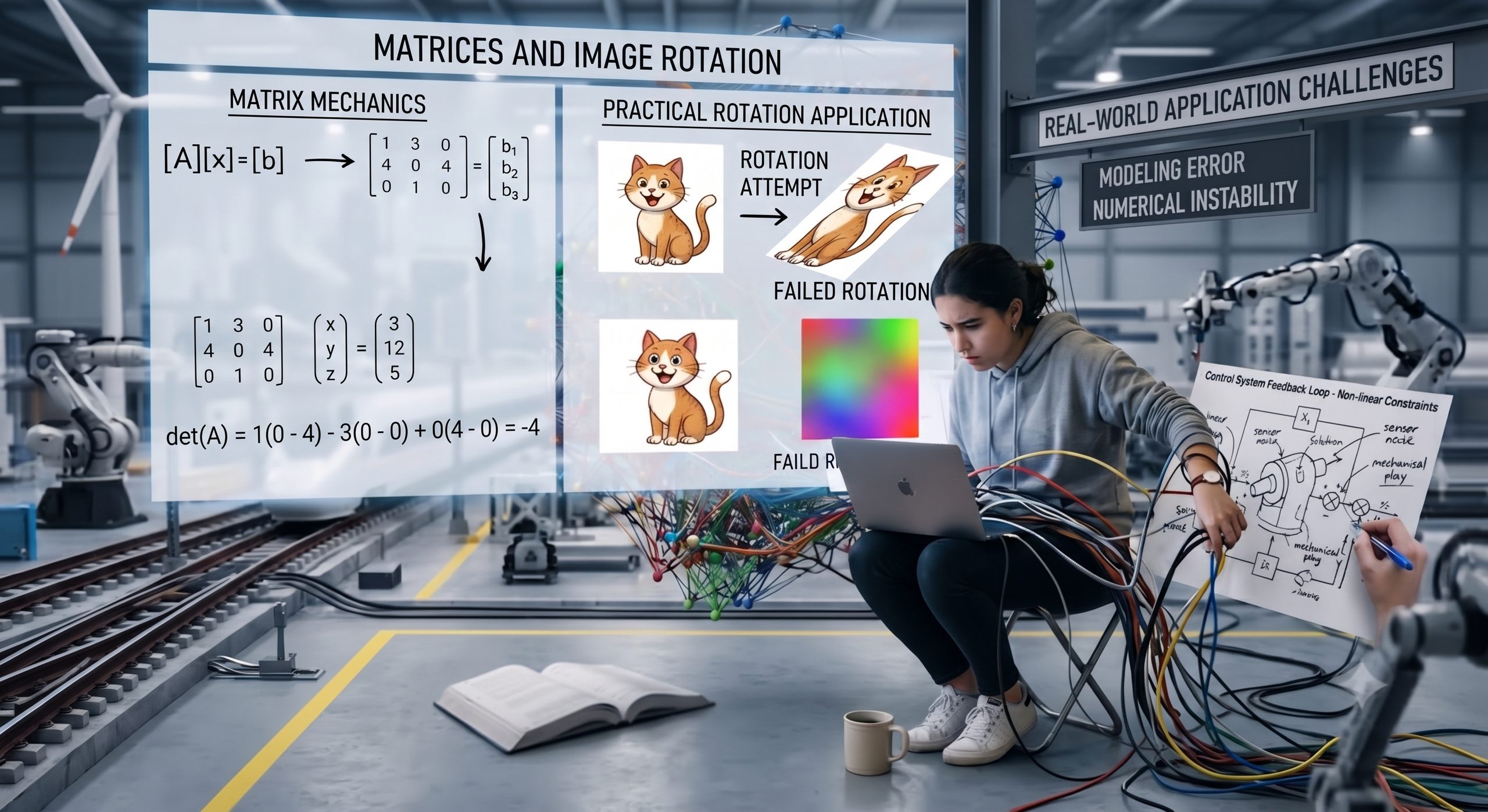
Throughout the course, I observed that although they could perform matrix operations on paper, they failed to apply them to rotate or scale a digital image in practice. This gap is evident because memorizing methods and algorithms is often prioritized over a deep understanding of their usefulness.

Results
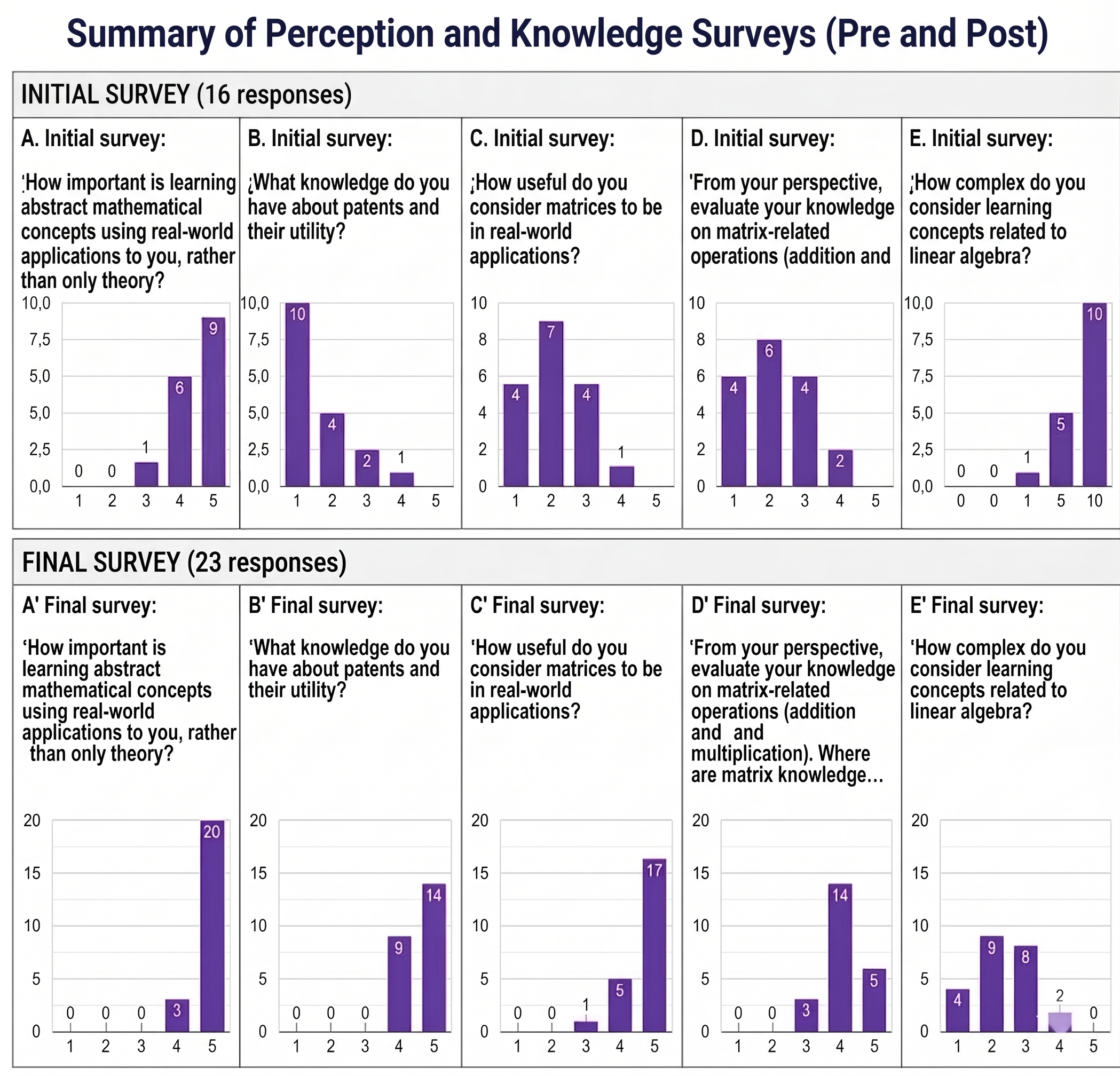
As a final step, quantitative measurement should not be omitted; therefore, I conducted a comparative analysis between the initial (theoretical) diagnosis and the final course grade. It is surprising to see how the group’s perception of learning linear algebra changed from before the course to the end of it.
The following questions were included in the qualitative measurement. The graph below compares the results.
- How important is it to learn abstract mathematical concepts through real-world applications, and not just theory?
- What knowledge do you have about patents and their usefulness?
- How useful do you think matrices can be in real-world applications?
- From your perspective, rate your knowledge of matrix-related operations (addition and multiplication), where 1 indicates no prior knowledge and 5 indicates that you have a solid understanding.
- How complex do you think it is to learn linear algebra concepts?
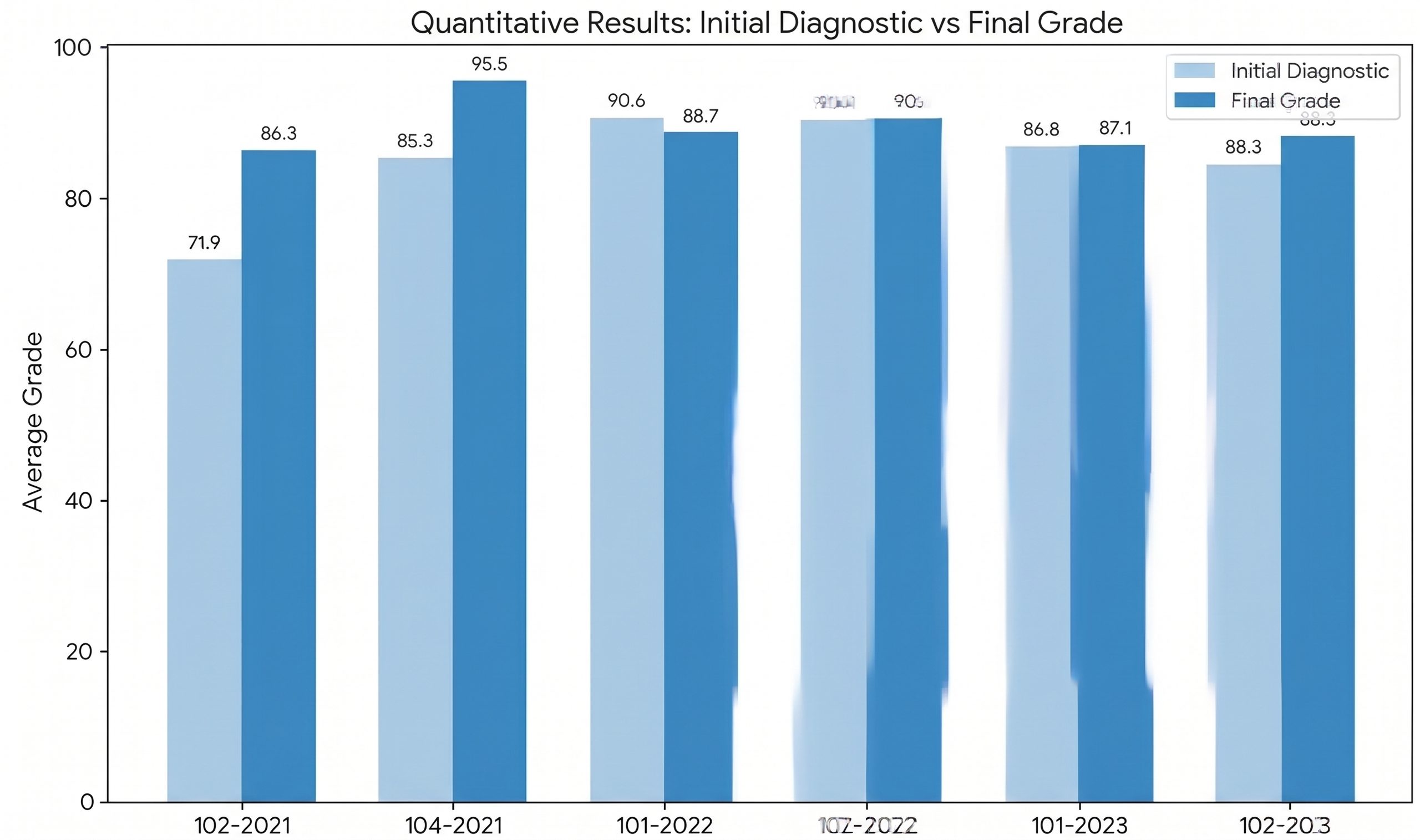
Below, I share the final comparative analysis of the group:
Moreover, it was observed that in five of the six classes analyzed during 2021-2023, students’ grades improved notably. For example, the 102-2021 class improved from an average of 71.86 in the diagnosis to 86.32 in the final grade; the 104-2021 class average rose from 85.27 to 95.50. This indicates an improvement of approximately 10% in conceptual understanding.
The students commented that “programming the solutions and algorithms strengthens their learning” and that collaborative work was essential for understanding complex topics. However, there are still bridges to build, for example, leveling up their initial programming competencies, as some require more time to master MATLAB, which can temporarily divert attention from mathematical concepts.
Reflection
Efforts that merely explain theory clearly without changing how content is presented are likely to fail because they do not address cognitive overload or provide the structure needed to organize abstract information into enduring learning models.
Teaching abstract engineering topics, such as logic, mathematics, and linear algebra, is unsustainable when they are taught in isolation from their applications. This classroom experience confirms that considering “hands-on” schemes with real applications and code does not dilute mathematical rigor but rather enhances it in students’ eyes. By transforming matrices into processed images, we also transform the students’ attitudes towards learning.
In teaching abstract topics, presenting a real-world problem before theory helps generate a need to know. The fear of putting theory into practice is natural, but we, as teachers, must take a leap of faith and bring our students closer to applying the topics from our training units in practice.
Therefore, it is crucial that teachers build bridges that lead our students from theory to practice, transforming apathy into curiosity, significantly improving the understanding of these topics in real contexts, and making learning meaningful and knowledge enduring.
About the Author
Víctor Adrián Sosa Hernández (vsosa@tec.mx) is a research professor in the Department of Computing, attached to the advanced artificial intelligence research group. He is also the director of the postgraduate program in computer science in the CDMX region. He is a specialist in multiobjective evolutionary optimization, generative language models, and AutoML. In 2025, he received an “Inspiring Professor ” recognition in the CDMX region.
References
Brown, J. S., Collins, A., & Duguid, P. (1989). Situated cognition and the culture of learning. Educational Researcher, 18(1), 32–42.
Darling-Hammond, L., Flook, L., Cook-Harvey, C., Barron, B., & Osher, D. (2020). Implications for educational practice of the science of learning and development. Applied Developmental Science, 24(2), 97–140.
Mayer, R. E. (2021). Multimedia Learning (3rd ed.). Cambridge University Press.
Sweller, J. (2020). Cognitive load theory and educational technology. Educational Psychology Review, 32(3), 637–662.
Thomas, J. W. (2000). A review of research on project-based learning. The Autodesk Foundation.
Whitehead, A. N. (1929). The aims of education and other essays. Macmillan.
Editing
Edited by Rubí Román (rubi.roman@tec.mx) – Editor of the “Edu bits” articles and Producer of the Observatory’s Webinars – “Learning That inspires” – Observatory of the Institute for the Future of Education of Tecnológico de Monterrey.
Translation by Daniel Wetta