

One of the teachers’ main challenges is creating strategies and innovative didactic applications that capture the students’ attention. To do this, we must consider the multiple ways of accessing today’s information, the social and technological changes we experience in our environment, and the students’ learning needs. When we use information and communication technologies with which students identify didactically, we generate trust and complicity with them, promoting their active and personal participation in learning.
In this article, I share how to develop didactic material that promotes student curiosity and interest in research step by step. For this project, we used the strategy of developing educational video shorts and stories about characters and events that forged the history of Mexico.
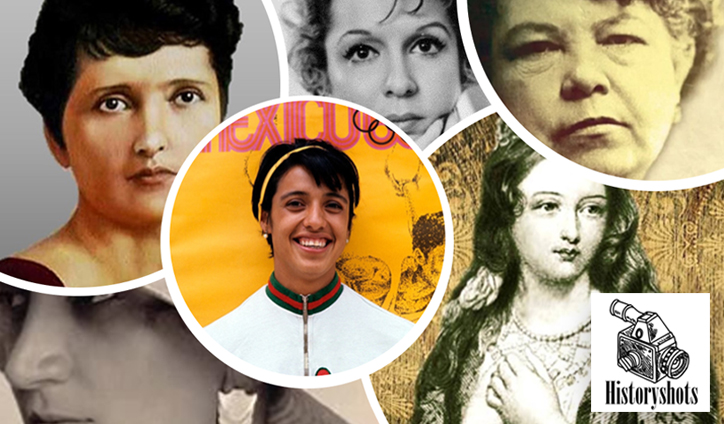
“Every 15 days, we publish a video in which we present the biography of women who were historical figures with great contributions to Mexico but who are little known. Hence the importance of disseminating and recognizing the work and effort of each one of them”.
Stories and video shorts for learning History
The story stimulates the students’ imaginations and helps them to identify themselves as beings with different dimensions and emotions; likewise, by using their own resources, they come to self-recognition as human beings (Martínez, Querales, and González, 2021). The stories’ contents in the project we developed addressed the curricular contents. Also, they strengthened other competencies and skills, such as critical thinking, communication, attention, research, conflict resolution, values, and social coexistence.
The presented material was prepared by the professor of the subject and the author of this article. The process is described below, starting from the selection of the theme, the research and writing of the script, and, finally, the elaboration of the material. The content involves the development of open educational resources exposed through a profile on the social network TikTok, which continues to be a platform with many users and teenagers represent a large percentage of its followers.
The content of the videos addresses events in Mexican history so that students learn and know the transcendental events comprising it, playfully and engagingly, on the social network with which they identify. As Santisteban (2010) points out, we seek to provide students with instruments of analysis, understanding, and interpretation so that they can approach the study of the history of Mexico with autonomy, building their own interpretations and contextualization of the past, which they can relate to their present.
How to develop teaching material on TikTok for learning?
The first step was creating a profile on TikTok called “HistoryShots,” alluding to the exhibition of material in short stories of up to three minutes, the maximum time for videos on this platform. In this profile, we publish a video every 15 days in which we present the biography of women who were historical figures with significant contributions to Mexico but who are little known. That is why we must disseminate and recognize each of them. Here I share the link of the profile on TikTok, and some examples of the videos created by the professors of the Prepa Tec campus Morelia: Full profile: http://tiktok.com/@historyshots
The following content blocks are planned to include other themes or characters; however, the material presented so far addresses issues like equity or inclusion, recognizing the strengths, contributions, and struggles of the female gender in the independence, revolutionary, sports, political, and cultural periods.
Once we selected the character, their biography was written like a personal text, highlighting their main achievements, and mentioning figures and events that accompanied them. For the narration of the text, we requested the support of the Morelia Prepa Tec professors, who recorded the audio and whose credits appear at the end of this material. Finally, we made the video using story images and filming Playmobil-type toys that represent the characters, using the technique of video volume. It was also accompanied by music related to the time or historical fact.
The videos on TikTok above can be downloaded and used according to the purposes and objectives that best suit the teacher in developing a class activity.
Application of short stories in a video for a didactic activity in class
We applied the first activity to 110 second-semester Prepa Tec students using the didactic material we created. We presented them with the list of women who appeared in the videos and asked them to select the two that most caught their attention, either because of their role in Mexican history or because perhaps they were familiar with them and would like to know more details.
The students reviewed the video materials of both women and selected the one that impacted them the most. Then they had to investigate two events mentioned in the material that had caught their attention. Later the students reviewed each character and shared what they had researched, opining about the life and contributions of the character. Finally, they were given a questionnaire in which they answered the following items:
- How do you think videos helped you acquire new knowledge?
- Argue whether this type of material facilitates learning.
- How did it help you improve your attention span, retention, research, or reinforcement of previous knowledge?
- Please indicate whether you consider it correct to use social networks with didactic material that promotes learning.
- Point out areas of opportunity or recommendations to improve information presentation.
The most mentioned student opinion responses were that the activity allowed them to reinforce their knowledge, improve their attention span, and stimulate their curiosity about the subject. The videos begin with an iconic phrase from the character, which the students highlighted as a hit or hook to continue viewing the material.
On the other hand, student recommendations included that the videos should have a longer duration or more information about the character. This possibility is limited by the maximum time allowed for videos on TikTok. Still, the students claimed to be able to access them on other social networks such as Instagram or YouTube.
Regarding the duration of the videos, the proposal focuses precisely on generating short materials that keep the viewer captive. Also, although the character’s biography is exposed generally, we included key elements to create curiosity and initiative to investigate more about her. Hence, we named the profile, HistoryShots, alluding to short, fast content presented as a “shot.”
Reflection
The generation and application of new strategies to create didactic resources can cause uncertainty about their functionality. However, if teachers create them from their experience combined with a needs analysis of the students’ characteristics and interests, they have a good approach toward fulfilling the proposed goal.
The activity proposed in this article sought to bring students closer to learning history differently because leveraging a social network highly used by adolescents, such as TikTok, makes the material they consult more attractive, generating new links between teachers and students.
When students share the information they investigate in class, they strengthen competencies or skills such as critical thinking, communication, attention, and the ability to synthesize. Prats et al. (2011) suggest there must be a rethinking of the teaching of history because, through knowledge, skills, values, and attitudes, students will indeed find in their learning a utility for their daily lives.
Finally, it is essential to highlight that you can download and use the videos shared in this article. Their value and exciting features will be determined by the products and learning generated from the teacher’s creativity and the curiosity, interest, and skills that are fostered in the students.
About the author
Fernando Patricio Pantoja Bedolla (fernando.pantoja@tec.mx) is an Education teacher with a focus on Teaching-Learning Processes. He is a full-time Professor-Tutor at Prepa Tec Morelia Campus at Tecnologico de Monterrey Morelia campus. Previous Edu bits publications: 1) Using TikTok in the classroom to manage emotions 2) Virtual experiences: visiting school without leaving home, and 3) Video didactic resources focused on emotional care.
References
Martínez, D., Querales, L. y González, G. (2021). El cuento corto como estrategia didáctica para potenciar el pensamiento creativo en los estudiantes del grado 3º de primaria en la Institución Educativa Luis Carlos Galán Sarmiento – sede Juan Ramón de la Jagua de Ibirico – Cesar. Revista UNIMAR. Accessed at: https://www.researchgate.net/publication/355054899_El_cuento_corto_como_estrategia_didactica_para_potenciar_el_pensamiento_creativo_en_los_estudiantes_del_grado_3_de_primaria_en_la_Institucion_Educativa_Luis_Carlos_Galan_Sarmiento_-_sede_Juan_Ramon_de
Prats, J., Santacana, J., Lima, L., Acevedo, M., Carretero, M., Miralles, P. y Arista, V. (2011). Enseñanza y aprendizaje de la historia en la educación básica. Secretaría de Educación Pública. Accessed at: http://www.ub.edu/histodidactica/images/documentos/pdf/ensenanza_aprendizaje_historia_educacion_basica.pdf
Santisteban, A. (2010). La formación de competencias de pensamiento histórico. Clío & Asociados (14), 34-56. En Memoria Académica. Accessed at: https://www.memoria.fahce.unlp.edu.ar/art_revistas/pr.4019/pr.4019.pdf
Edited by Rubí Román (rubi.roman@tec.mx) – Observatory of the Institute for the Future of Education at Tec de Monterrey
Translation by Daniel Wetta.