
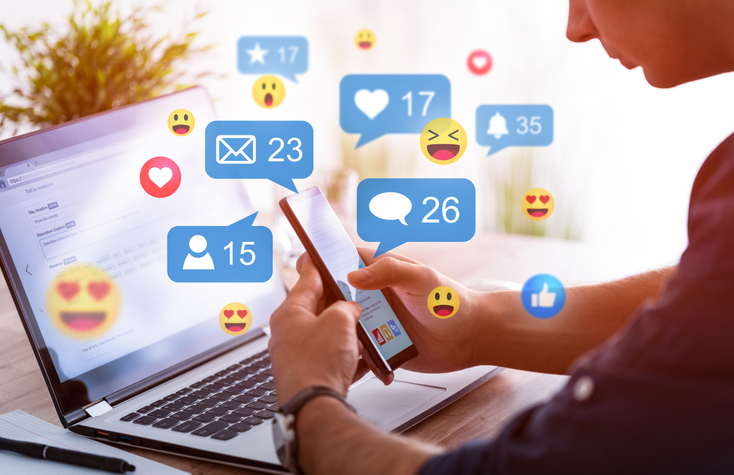
Before the appearance of COVID-19, social networks were considered a simple means of entertainment designed to be addictive and profit from our data, regarded as toxic to our mental health and a distracting enemy of education. However, today they are part of our daily lives and are used as a tool for communication, advertising, commerce, and education. Their immersion in the different aspects of our lives has made them a valuable source of information that, using the right tools, can help us find solutions to the problems that afflict us as a society.
During the lockdown of the pandemic, all educational institutions, without exception, closed their facilities. Teachers were forced to make a sudden and drastic transformation of their courses, going from a face-to-face modality to a remote model. In addition, they had to resort to using new media for academic activities and share concerns, advice, and experiences regarding the new teaching modality. An example of this was the forum “Transforming a course to the online modality: Tips and best practices,” which facilitated the creation of a friendly, supportive community that helped them successfully transition to the new model.
Social networks generate research and learning opportunities
Understanding the needs of a sector of our society or profession is essential for finding solutions and making decisions. However, the challenge is huge when talking about thousands of people, each with different opinions, experiences, circumstances, and locations. In this sense, social networks constitute a massive database that records the interactions among members and allows observing their views, concerns, and comments. In other words, social networks generate multiple research and learning opportunities for social scientists. A few decades ago, this type of effort presented a challenge for computer scientists and statistics. Fortunately, advances in data mining and Big Data have materialized the potential of social networks as a source of information.
The advance in data mining and Big Data have materialized the potential of social networks as a source of information.
A group of professors from Tec de Monterrey researched the publications of 5,729 university professors in a forum called “Transforming a course to the online modality: tips and best practices” to identify the needs of professors and their concerns about this new modality. The results were shared in the article Professors’ Concerns after the Shift from Face-to-Face to Online Teaching amid the COVID-19 Contingency: An Educational Data Mining analysis (De Oca, Villada-Balbuena & Camacho-Zuñiga, 2021). The analyzed forum was in operation between March 2020 and June 2021, aiming to share classroom teaching practices under the new distance model. Faculties of art, design, architecture, science, engineering, and medicine, among others, participated, constituting a representative sample of teachers in terms of age, gender, and degree programs. We filtered the information collected into a clean database to eliminate any inconsistency. Only the message’s intention was maintained. Subsequently, the corpus was subjected to text and sentiment analysis (Abbas et al., 2018).
The results showed that during the first 15 months of the pandemic, social networks helped teachers maintain contact and even foster collaborative work communities. Teachers used the forum not only to share experiences of remote teaching, such as how students improved from using classes recorded in video or the ongoing debate on whether the cameras should be kept on or off. In addition, social networks allowed participating teachers to express their feelings during confinement and seek peer support. The sense of community was reflected in most posts’ positive sentiments. It can be attributed to the good results obtained in the new model or the motivation to help others with advice.
The use of social networks and data analysis helps improve education
The continuous exchange of videos, tips, links, and apps to improve their classes helped teachers reduce the negative impacts on their student’s education due to the situations they experienced caused by the pandemic.
One of the greatest lessons we can learn from this study is the need to create similar discussion forums and safe spaces for all members of educational institutions, students, and teachers. These virtual spaces allowed teachers to share their feelings and recommendations daily under the extreme conditions experienced during confinement to ensure better environments within their universities.
Another essential lesson from the results was the prominent scope of social networks in our lives, relationships, and continuance in our new normality. This type of study and its specific approach reveals social networks as a valuable source of information that makes possible access to random samples simple while avoiding bias. It is precisely for this reason that the article above presents accurate results suggesting actions that could improve the teaching experience for both students and teachers under the remote modality.
Conclusion
Social networks provide information about communities at different levels, from various guilds to entire nations. Social researchers can generate precious knowledge from them to identify problems and search for solutions. Today, this has become a reality thanks to advances in data mining and Big Data; however, analyzing natural language and other unstructured data remains challenging.
The article by De Oca, Villada-Balbuena & Camacho-Zuñiga (2021) describes the teaching practices that allowed the transition from the face-to-face to the online modality and deserve our attention to identify those strategies and policies that improved teaching and what we must maintain in the end of confinement. We invite you to consult the complete document at https://ieeexplore.ieee.org/document/9733778 and share your opinion in the comments section of this article in the Observatory of the Institute for the Future of Education at Tec de Monterrey.
About the authors
Marian Morales Quinto (A01366433@tec.mx) is an eighth-semester student of Biotechnology Engineering at the Tecnologico de Monterrey Campus Toluca and is currently an information technology (IT) intern at the Procter & Gamble Mexico Corporation. She was a winner of the academic talent scholarship awarded by the Tecnologico de Monterrey in 2018, President of the HeForShe Tec Toluca student group from July 2020 to December 2021, and event leader of the same student group from January 2020 to June 2020, and returning to the position in January of the current year.
Claudia Camacho Zuñiga (claudia.camacho@tec.mx) is a science teacher focused on research, innovation, and transformation of higher education. She has a Ph.D. in Materials from UAEMex and an M.Sc. in Chemical Engineering and Physical Engineering from IBERO. Her publications in internationally indexed journals have been cited more than 250 times, including a mention of her work on education during the COVID-19 lockdown by the World Health Organization. Currently, she is a researcher at the Institute for the Future of Education and a professor at the School of Engineering and Sciences of the Tecnologico de Monterrey Campus Toluca, Mexico. Since 2014, she has been developing innovation and educational research to foster in university students a passion for science, ethical and citizen commitment, and appreciation for the diversity of knowledge and people.
References
De Oca, S. M., Villada-Balbuena, M., & Camacho-Zuñiga, C. (2021). Professors’ Concerns after the Shift from Face-to-face to Online Teaching amid COVID-19 Contingency: An Educational Data Mining analysis. In 2021 Machine Learning-Driven Digital Technologies for Educational Innovation Workshop (pp. 1-5). IEEE.
Available at: https://ieeexplore.ieee.org/document/9733778
Román, J. A. M. (2020). La educación superior en tiempos de pandemia: una visión desde dentro del proceso formativo. Revista Latinoamericana de Estudios Educativos (México), 50, 13-40.
Abbas, A., Zhou, Y., Deng, S., & Zhang, P. (2018). Text analytics to support sense-making in social media: A language-action perspective. MIS Quarterly, 42(2).
Edition by Rubí Román (rubi.roman@tec.mx) – Edu bits and Webinars Editor – “Learning that inspires” – Observatory of the Institute for the Future of Education of Tec de Monterrey.
Translation by Daniel Wetta.