

“Knowledge, coupled with experience, motivates students to live their importance as an individual capable of giving and benefiting society.”
In recent times, the educational perspective has opted to bring “doing” and not just absorbing theoretical knowledge to student life. Traditional pedagogy has fallen short in the teaching-learning binomial. The inherited approach to knowledge, installed in the single teacher-student path, faces various situations that move us further from that perspective—revealing to us, instead, multiple paths with dynamic interactions. As the French academician Michel Serres puts it, our students “… have already had access to that information, and we must realize it; the nature of classes has changed…” (Editorial Gedisa, 2014).
Students are active entities who live and interact in reality. It is increasingly common for them to appear in the classroom with knowledge already acquired before learning the class content. Therefore, developing learning challenges that involve creativity, reflection, proposal, and implementation of community-specific actions within a course’s timeframe is a substantial turn in the learning process. Knowledge, coupled with experience, becomes the blood that runs through the veins and animates the student to feel their importance as an individual capable of contributing and benefiting society.
“Universities have the challenge of training human beings involved as leaders with a high degree of responsibility in their community.”
Social relevance was proposed as one of the fundamental points at UNESCO’s World Conference on Higher Education, celebrated in Paris in 2009. Universities were called to higher social responsibility and generation of knowledge, responding to global challenges. Such as food safety, climate change, and water management; they were asked to host intercultural dialogue and attend to public health by forming “ethical citizens committed to building peace and defending human rights and the values of democracy” (2010 p. 45).
By 2025, according to the “Jobs of the Future” report created by the World Economic Forum, among the ten essential skills to develop are Leadership and Social Influence (Whiting, 2020). Universities have the challenge of training human beings who engage themselves as leaders with a high degree of responsibility in their community.
Therefore, it is essential to involve students from the origin of the challenge, taking them through reflection to explore the community’s needs. They must define the limits of the challenge to propose tangible solutions; these must be implemented during the time allocated to a learning block or a subject in question. A block is a “set of learning modules with theoretical and practical knowledge and at least one challenge” (Villanueva, 2019).
We should not present the challenge as a generic assumption from which the student only generates and presents projects. On the contrary, we must encourage students to become actors who impact the present in their real environments by implementing their proposals. Tecnologico de Monterrey has adopted the challenge-based-learning (CBL) approach, actively engaging the students in a problematic situation that is relevant and connected to the real world (Edu Trends, 2015).
The learning challenge for students
In the Creative Writing block, we use the CBL methodology for five weeks. The initially proposed challenge was the creation of a digital book as a personal creative writing project. This block is optional and was offered to Tecnologico de Monterrey students in the Business and Engineering Schools. These students did not have a prior principal desire to write a narrative or had not previously engaged in a similar project during their demanding curriculum.
From this proposal came the triggering question that actively linked the student to the community and increased the writing competency requirement’s difficulty: The students were asked to choose to write for themselves or others. Thus, the objective of fulfilling an individual process acquired a process of social vocation.
“We incorporate technological tools that supported the openness and fluidity of flexible and horizontal communication to achieve the challenge.”
Through four modules to develop creative writing, students learned various concepts such as narrative resources, appropriation of reality, literary language, genres, and formats. Learning based on conceptual, procedural, and attitudinal processes led them to develop their writing projects in diverse topics in science fiction, romance, adventure, and grieving.
The students enthusiastically accepted a new level of challenge: writing narratives for the sick in Central Hospital (a COVID hospital) in San Luis Potosí, Mexico.
Comprehend the pandemic’s current context and how it affects patients of all ages who become confined due to coronavirus, cancer, or other afflictions. Understand how their treatment has become complicated because the doctors and nurses attend them through a protective suit, mouth covering, and mask, reducing human contact. They are deprived of family members’ accompaniment, isolating them, even more, the very ones who need a word of encouragement. Therefore, we chose to send these patients a message of empathy and hope through stories written primarily for them.
We added complexity into the block as the days progressed, requiring higher quality writing, decision-making, and problem-solving besides the theoretical learning. The integration of external people who spontaneously joined to bring this project to life added a flow of trust, lightness, and a sense of community, compared to the rigidity typical of the traditional pedagogical structure.
To achieve the challenge, we incorporate technological tools that supported the openness and fluidity of flexible and horizontal communication organically. They also facilitated learning in multiple ways, derived from interactions at various levels: among classmates, between the teacher and the students, between the class and the training partner, between them and the experts, and, finally, between the class and society.
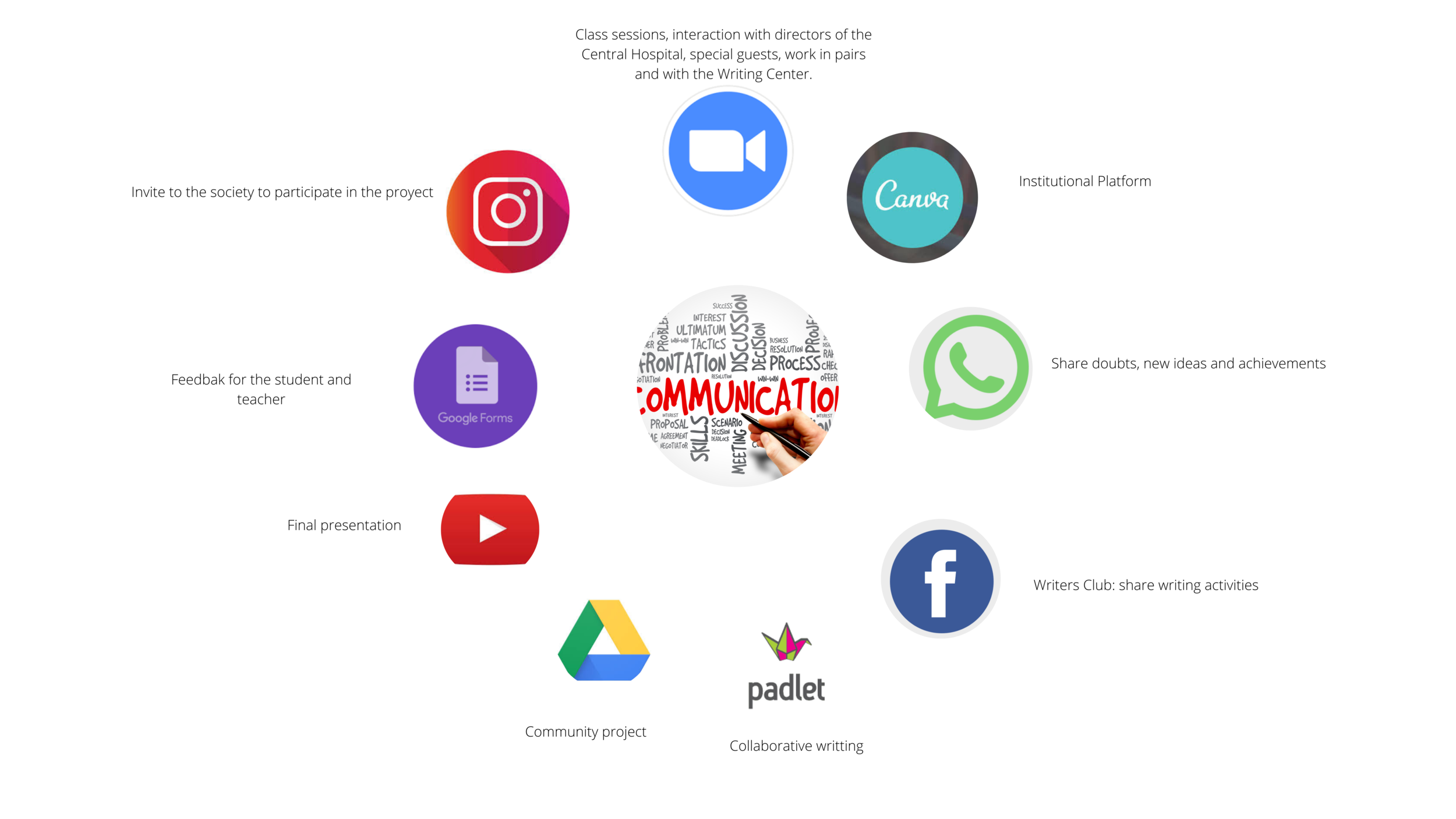
Figure 1: Tools for organic communication and learning.
The project from the beginning permitted openness thanks to not presenting the challenge already delimited. It achieved an implementation that benefited the community. It brought the student’s self-evaluation of how his exercise for the university contributed to empathizing with another. Each student wrote a digital book, shared through tablets acquired from a resource-generating strategy consisting of a raffle and sponsorships. In addition to doubling the number of tablets in the original plan, the project scored donations of antibacterial gel and mouth coverings for the Hospital.
The evaluation consisted of maintaining a Log intended to document the creative proposal process. Feedback and reflection processes helped assess the sub competency of Self-Learning and the delivery of the writing project for Intentional Representation and Narrative and Content Production.
No doubt, implementing CBL allows linking classroom learning with society. It achieves profound benefits, transcending the theoretical exercise and the student’s interest in the passing grade to his commitment to positively impact his community, leading him to substantial reflection on better social development.
It is vital to resume specific considerations to improve the scope of this process. Create activities that involve every student in the topics of organization and proposal generation. Work with humility for the common good, going beyond individual perspectives. Counteract the sense of normalized hierarchy that has existed, where there are those of us who collaborated more and did more versus those who collaborated less and did less: Replace this with collaborative work that seeks social good where each one’s action contributes to the final scope or product.
This writing is an invitation to implement this open learning methodology in your areas of study. Actively engage the student to allow him to take a look at real problems in his community. Implement specific activities during the learning process with the view to achieving the development of a better society. As teachers, share the experience as a contribution to this new educational proposal.
About the author
Marisol Álvarez Tostado Fernández (marisol.alvareztostado@tec.mx) has a Bachelor’s Degree in Communication Sciences. Her Master’s is in Cultural Anthropology and her Ph.D. in Psychology. She is a researcher of thought processes and a Montessori Guide. Also is a Chair Professor at the Tecnologico de Monterrey, San Luis Potosí campus. She has been a lecturer, collaborator, and editor in various forums, print and digital media, and a national speaker at the Novus Congress organized by Tecnologico de Monterrey.
References
Editorial Gedisa (2014). Michel Serres habla sobre Pulgarcita [Video]. Youtube. https://youtu.be/4-LHiGq8QLI
Edu Trends (2015). Aprendizaje Basado en Retos. Monterrey, México.: Observatorio de innovación educativa. https://observatorio.tec.mx/edutrendsabr
Imágenes logotipos: https://seeklogo.com/free-vector-logos
Malagón Plata, L. (2006). La vinculación universidad-sociedad desde una perspectiva social. Colombia: Universidad de La Sabana. Recuperado el 21 de septiembre de 2020 from https://www.redalyc.org/pdf/834/83490210.pdf
Niebles Reales, E. (2005). La educación como agente del cambio social en John Dewey. Colombia: Universidad del Atlántico. Recuperado el 12 de septiembre de 2020 from https://www.redalyc.org/pdf/937/93701003.pdf
UNESCO (1998). Conferencia mundial sobre la educación superior. La educación superior en el siglo XXI: Visión y Acción. París. Retrieved el 10 de septiembre de 2020 from http://sigc.uqroo.mx/Documentos%20Externos/Educacion%20Siglo%20XXI%20UNESCO.pdf
Tecnológico de Monterrey (2020). Modelo Tec21. Consulted at: https://tec.mx/es/modelo-tec21
Tünnermann Bernheim, C. (2010). Las conferencias regionales y mundiales sobre educación superior de la UNESCO y su impacto en la educación superior de América Latina. Universidades, núm 47. Retrieved 18 de septiembre de 2020 from https://www.redalyc.org/pdf/373/37318570005.pdf
Villanueva, A. (2019). El ABC del Modelo Tec21 del Tecnológico de Monterrey. México: Tecnológico de Monterrey. Recuperado el 30 de noviembre de 2020 from https://tec.mx/es/noticias/nacional/educacion/el-abc-del-modelo-tec21-del-tecnologico-de-monterrey
Whiting, K. (2015). These are the top 10 job skills of tomorrow- and how long it takes to learn them. Ginebra, CH.: World Economic Forum. https://www.weforum.org/agenda/2020/10/top-10-work-skills-of-tomorrow-how-long-it-takes-to-learn-them/
Edited by Rubí Román (rubi.roman@tec.mx) – Observatory of Educational Innovation.
Translation by Daniel Wetta.