

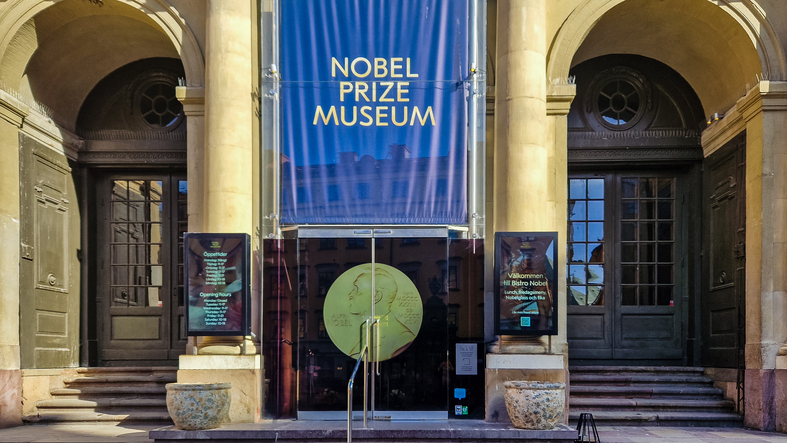
In recent years, the concept of Machine Learning (ML) or Automatic Learning (AL) has emerged as a revolutionary technological force, profoundly impacting sectors such as health, finance, manufacturing, transportation, entertainment, and sales, among others (Kumar, 2024). The incorporation of ML in the education sector is also growing rapidly (imarcgroup, 2024) (Kvartalnyi, 2024), allowing analysis of large amounts of data on student performance, behavior, and preferences. In this article, I highlight the notable contributions of John Hopfield and Geoffrey Hinton, recently awarded the 2024 Nobel Prize in Physics for their fundamental advances in Artificial Intelligence (AI). Both laid the groundwork for a better understanding and application of ML in real life. This article also addresses key concepts to understand ML and its practical application in education.
John Hopfield and his Neural Network Model
John Hopfield is known for his work on artificial neural networks. In the 1980s, he developed the Hopfield neural network model, a form of associative memory that can store and reconstruct patterns, such as images. This model has been crucial for developing AI systems that recognize and remember patterns in large data sets. Hopfield’s network is founded on the idea that neurons can work together to solve complex problems, which laid the groundwork for many modern machine learning applications.
Geoffrey Hinton and Deep Learning
Geoffrey Hinton is a key figure in developing Deep Learning algorithms, a subdiscipline of ML in which data analysts employ neural networks with multiple layers. Hence, they can go “deep” to capture intricate patterns in large data sets (Islam et al., 2024). In this sense, one of Hinton’s most outstanding achievements is creating the backpropagation technique, which allows neural networks to adjust their internal weights to improve their precision in tasks like image recognition and machine translation. Hinton also worked with convolutional neural networks and generative adversarial networks (GANs), which are fundamental to many modern AI applications.
Hinton’s and Hopfield’s contributions facilitate leveraging the benefits of Machine Learning to explore and apply in education, with the purpose of helping students understand and be enthusiastic about this technology’s potential.
Key concepts for understanding Machine Learning fundamentals
- Machine Learning is a subfield of Artificial Intelligence that allows computers to learn from data without being explicitly programmed. Instead of writing rules, programmers provide a machine learning algorithm with data to find patterns independently. This approach has revolutionized many fields, such as image recognition and natural language processing, in diverse areas like medicine and finance.
Machine Learning Subsets
- Patterns are observable regularities in the data. According to Hastie, Tibshirani, and Friedman (2009), these patterns can be simple or complex and are the basis for constructing predictive models.
- Algorithms are instructions that allow machines to learn from data and find patterns. These algorithms are classified as supervised, unsupervised, and reinforcement learning (Hastie, Tibshirani, & Friedman, 2009).
- Supervised Learning: The algorithm learns to map an input to a desired output based on examples of input-output pairs. For example, image classification relies on tagged images (e.g., “dog,” “cat”) to facilitate learning how to classify new images (Goodfellow, Pouget-Abadie, Mirza et al., 2020).
- Unsupervised Learning: The algorithm looks for patterns in the data without predefined labels. For example, clustering looks for natural groupings in the data (Goodfellow, Pouget-Abadie, Mirza et al., 2020).
- Reinforcement Learning: The algorithm learns to make decisions in an environment to maximize long-run rewards. For example, a reinforcement learning agent might learn to play a video game (Sutton & Barto, 2018).
- Artificial Neural Networks: Neural networks mimic human brain functioning. They learn and recognize data patterns through layers of connected “neurons.”
- Deep learning uses layered neural networks to combine simple identified patterns into complex ones, which is fundamental in computerized speech and vision recognition.
- Convolutional Neural Networks (CNNs) are networks designed to analyze images, detecting features such as edges and textures to identify objects. CNNs are widely used in computer vision applications, such as facial recognition and object detection.
- Generative Adversarial Networks (GANs) use two competing networks. One creates data like the real thing, and the other tries to distinguish between them. This process allows the generating of realistic images and synthetic content.
How is Machine Learning used in education, and what is its impact?
- Personalization of learning: With Machine Learning (ML), educational institutions can identify and analyze student patterns or behaviors to recommend or adapt educational content and strategies to each student’s needs and analyze the performance of each initiative that is implemented (India Next, 2023).
- Learning analytics: Through ML, student performance results can be analyzed and predicted, for example, by examining the results of partial or final evaluations in different school periods and cross-referencing school and academic information (Jeremy Qu, 2023).
- Language learning: Duolingo is a personalized language learning app that uses ML algorithms to personalize lessons and tailor each user’s learning pace. Case studies and research about their approach can be found on their official website or in academic databases.
- Feedback to students: ML provides feedback to students through models that analyze individual performance and learning patterns. These systems identify areas where students can improve and suggest additional personalized resources or exercises. By analyzing large amounts of student data, machine learning helps teachers identify common student challenges and provides more targeted and effective feedback, thereby improving educational support (phys.org, 2024).
- Image, voice, and text recognition: ML algorithms use facial recognition for security to power up mobile devices. ML is also integrated into chatbots in navigation services and voice assistants such as Siri, Alexa, Google Assistant, and Cortana, which use NLP (Natural Language Processing) to recognize voice instructions and respond appropriately (IBM, 2024).
Artificial Intelligence (AI) and Machine Learning (ML) technologies open unexpected horizons in education to transform the traditional classroom into a dynamic and personalized space, allowing the identification of patterns in the learning of each student to adapt approaches to fit their particular needs and create unique experiences.
Integrating both technologies in education brings closer the possibility that each student has a personalized virtual tutor to accompany and support them in their learning process. However, these advances invite rethinking the role of educators in the teaching process beyond simply transferring knowledge or developing students’ technical skills to recognize the importance of their critical and ethical thinking when using these emerging tools.
In this context, a fascinating paradox arises: As technology becomes automated, the challenges of its integration into education remind us of the profound human essence of learning. It calls for merging the best of technological innovation with human wisdom and creativity, opening the door to genuinely inclusive and transformative education. The use of ML and AI in education is a reminder that knowledge has no limits and that exploring new frontiers allows for forging a future where education is more accessible, enriching, and equitable for societies.
About the author
Luis Andrés Villalón Vega (andresvillalonlv@gmail.com) Scientist, CEO of VC Technologies, MSc, BSc. My main interest is the integration of AI in education.
References
AI in Education Market Report 2024-32: Size, Share and Trends. (2024b, June 14). Retrieved from https://www.imarcgroup.com/ai-in-education-market
Chen, W., Shen, Z., Pan, Y., Tan, K., & Wang, C. (2024). Applying Machine Learning Algorithm to Optimize Personalized Education Recommendation System. Journal of Theory and Practice of Engineering Science, 4(01), 101–108. https://doi.org/10.53469/jtpes.2024.04(01).14
Transkriptor. (January 17, 2024). Reconocimiento de voz: definición, importancia y usos. https://transkriptor.com/es/reconocimiento-de-voz/
Goodfellow, I., Pouget-Abadie, J., Mirza, M., Xu, B., Warde-Farley, D., Ozair, S., … & Bengio, Y. (2020). Generative adversarial networks. Communications of the ACM, 63(11), 139–144.
Forero-Corba, W., & Negre Bennasar, F. (2024). Técnicas y aplicaciones del Machine Learning e inteligencia artificial en educación: una revisión sistemática. RIED-Revista Iberoamericana de Educación a Distancia, 27(1), 209–253. https://doi.org/10.5944/ried.27.1.37491
Hastie, T., Tibshirani, R., & Friedman, J. (2009). The Elements of Statistical Learning: Data Mining, Inference, and Prediction (2nd ed.). Stanford, CA: Stanford University. https://web.stanford.edu/~hastie/Papers/ESLII.pdf
Hopfield, J. J. (1982). Neural networks and physical systems with emergent collective computational abilities. Proceedings of the National Academy of Sciences, 79(8), 2554-2558.
Hinton, G. E., Osindero, S., & Teh, Y. W. (2006). A fast-learning algorithm for deep belief nets. Neural Computation, 18(7), 1527-1554.
Islam, M. T., Al Mamun, M. A., Khan, O. U., Akeem, A. B., Mohammad, H., Hamdache, A., & Elmouki, I. (2024). Emerging Trends in Artificial Intelligence Learning Methods: Deep Learning And Machine Learning Innovation In Computer Science. Nanotechnology Perceptions, 1150–1173.
Kumar, N. (2024b, October 11). 70+ Machine Learning Statistics 2024 (Industry Market Size). Retrieved from https://www.demandsage.com/machine-learning-statistics/
Kvartalnyi, N., & Kvartalnyi, N. (2022b, August 9). Machine Learning in Education: ML Impact on Industry. Retrieved from https://inoxoft.com/blog/how-machine-learning-is-improving-education-benefits/
Sutton, R. S., & Barto, A. G. (2018). Reinforcement learning: An introduction. MIT Press. https://mitpress.mit.edu/9780262039246/reinforcement-learning/
Team, IBM Data and Ai. 2024. “Casos de uso del machine learning.” IBM. Retrieved (https://www.ibm.com/mx-es/think/topics/machine-learning-use-cases).
UNESCO. (2022). Artificial intelligence in education.
TeachThought. (2021). What Is Question-Based Learning?
Editing
Edited by Rubí Román (rubi.roman@tec.mx) – Editor of the Edu bits articles and producer of The Observatory webinars- “Learning that inspires” – Observatory of the Institute for the Future of Education at Tec de Monterrey.
Translation
Daniel Wetta