
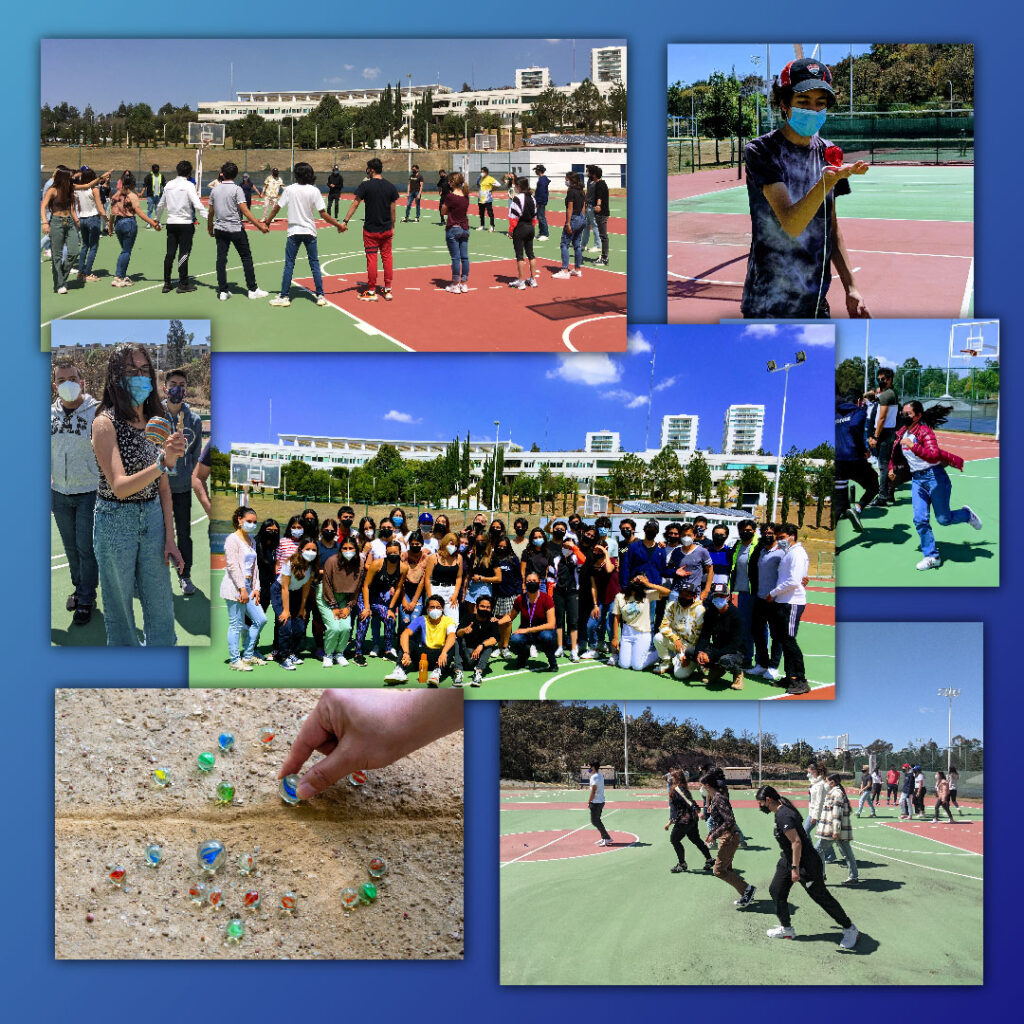
The return to 100% face-to-face classes generates much emotion and a great challenge. Our concern as teachers when returning to school was to implement outdoor recreational activities that break the ice and encourage the integration of students to improve their emotional well-being, leaving aside electronic devices. To achieve this, we thought about traditional Mexican games to create an environment conducive to the interaction and emotional work we describe later in this article.
However, the idea of implementing these Mexican traditional games in class emerged from a controversial and popular series among the students during the pandemic, “The Squid Game.” Which presents several traditional Korean games, many no longer played, thus, ceasing to be part of Korean folklore and its values.
Traditional games are those passed from one generation to the next and endure over time. These games identify us as a society and are part of our cultural heritage. They are also a form of interaction, coexistence, contact, and dialogue with others (Camacho, 2014).
“The students learned about or recognized some traditional Mexican games that promoted social interaction and their emotional well-being after the confinement due to the pandemic.”
Play is essential for learning
Various investigations highlight the importance of play in adolescence for young people’s physical and emotional health. Through games, we can foster values; also, students learn, develop skills, practice teamwork, cooperation, respect, strengthen social relationships, and accept the rules and norms established in the game.
Unfortunately, for many adolescent students, games no longer engage them, and they prefer to do other activities such as online games or talk with their friends on social networks. The graph below shows the increase in the average daily time users in Mexico spent on social networks before and during the pandemic (© Statista, 2022).
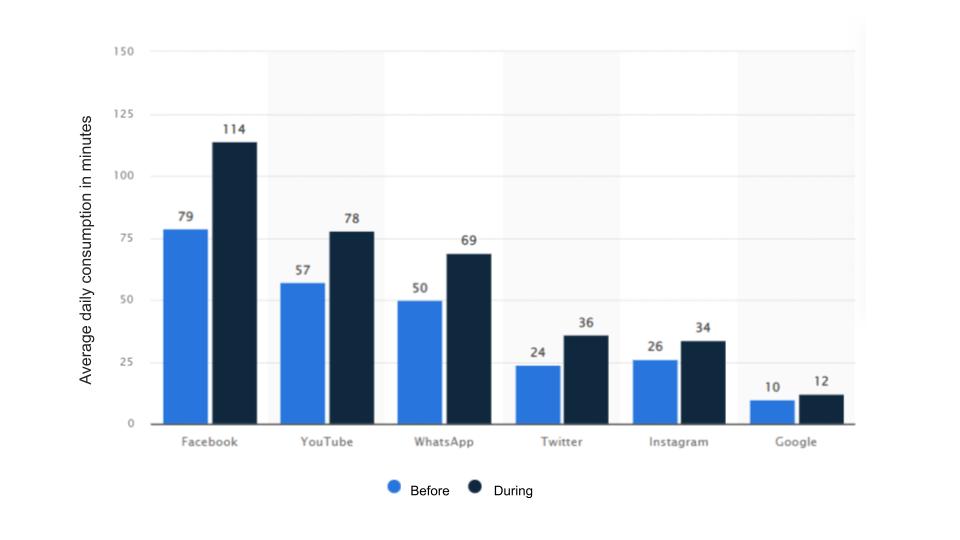
As teachers, we know that social distancing measures affect adolescents, generating various negative feelings such as frustration, sadness, and anxiety. Restricting their spaces for physical activities also affected their emotional health as they were required to spend more time at home during the lockdown. Teens spend more time on passive activities such as listening to music, watching TV, TV shows, movies, social media, or simply reading and sleeping (Lore Ramon E., 2021) and (Andreu, E., 2020). Hence, we see the importance of breaking this inertia and implementing creative activities to integrate students returning to face-to-face classes.
“The Squid Game ” vs. Traditional Mexican Games
In September 2021, the first chapter of the Korean series, “The Squid Game,” was broadcast on NETFLIX, becoming the most watched series during the pandemic. Its name is due to a famous Korean children’s game from the 70s. The series became extremely popular among our high school students; worldwide, it reached 142 million followers in just twenty-eight days. Each episode of the series proposes an individual or group children’s game requiring competency and skill. Generally speaking, it is a survival competition in which the competitors participate in different traditional Korean games for money, risking their lives. (Ahmed y Col 2022).

The negative side of this series is that each episode shows the loss of values and part of the Korean idiosyncrasy that endangers social and individual identity. It can be seen in episodes 1 to 6 of the series, where competitors must play marbles in pairs, but many of them do not know the game’s rules because they have never played it, thus, putting their survival at risk. An adolescent Millennial couple, finding themselves in this dilemma, just wait for the game time to run out while they talk in one of the most shocking chapters of the series (Decider, October 2021).
Making a bit of an analogy with the series, we asked the students who participated in the “traditional Mexican games” activity specifically if they had ever played marbles. Of the 117 students who answered the survey, more than half (58.1%) had played marbles. The others would be in serious trouble if they were part of the series script. It’s a joke to contextualize the idea.

As a result of the popularity of the series, we considered the idea of implementing “traditional Mexican games” in the “Tutoring and Integral Wellness” class sessions. We introduced one game weekly for eight weeks in the January-May 2022 semester. However, unlike the series, our primary goal was to promote social and emotional learning in the Morelia Prepa Tec Campus (high school) students after their isolation during the COVID-19 pandemic.
The first step was to list the 25 most popular traditional Mexican children’s games. We asked the high school students to select all the games they had played in their childhood. The most popular game among the 117 students was Hide-and-Seek, and among the least popular was Tinjoroch, a typical Yucatan game.

Implementation of traditional Mexican games in class
Students knew or recognized many traditional Mexican games, which promoted social interactions and emotional well-being after the pandemic lockdown. The activity was carried out with third-year high school students in the “Tutoring, and Integral Welfare” course, comprising 124 students in 5 classes, of which 47% were men and 53% were women. Sixty-one percent had attained the age of 17; 37% were 18, and 2% were 19.
The sessions were held for eight weeks on Thursdays from 1 pm to 2 pm during the Tutoring and Integral Wellness class. By having all the groups in the same class schedule, the students could meet in the fields to carry out the activities.
The activities were organized as follows:
- Students formed teams of three or four people.
- The teams were assigned a traditional game.
- Each team researched the game’s origin and the general playing rules.
- On the day of the class, the team presented the game and its rules.
- We gathered in the field to play.
The chosen games:
- Week 1: Jump rope
- Week 2: Spring
- Week 3: Marble Statues
- Week 4: Red Light, Green Light
- Week 5: Airplane or Hopscotch
- Week 6: Marbles or Cuirias
- Week 7: Yoyos, Tops, or Valero
- Week 8: Freeze Tag

Results
After the activities, a satisfaction survey using a Likert scale and multiple choice questions was applied to the 124 participating students, from which we obtained 117 responses.
To the question, “What emotions did you experience when playing and interacting with your peers?” 84.6% of the students indicated experiencing a feeling most of happiness, followed by 72.6% who said they felt energetic. Most of the students experienced positive, high-energy emotions.

The satisfaction survey results using a Likert format of 5 points (1 indicating not liking the activity and five indicating liking the activity), 40.2% answered that it was to their total liking and 2.6% that it was not to their liking. The mean score was 3.94, with a standard deviation of 1.03.

The activities were enjoyable, and the students had a pleasant time associating with their classmates, thus integrating the 2019-2022 generation of students after their compulsory, preventive COVID-19 isolation.

As teachers, we also enjoyed being outside the classroom, going to the playing fields to breathe fresh air. Seeing our students again on campus having moments of mixing and being happy was something incredibly satisfying. At the end of the activity, we saw the students’ pleasure in playing games such as burns, red-light-green-light, and jump rope, which are more dynamic and require much physical activity, running and competing with each other. The games they liked the least were the yoyo, the top and the Valero. Nevertheless, we also considered having “rally stations” and adding more “story” or storytelling to make the games more fun and entertaining for the students.
Although every idea can be improved, we believe these activities were beneficial for our students; therefore, we encourage teachers to carry out these activities that promote emotional well-being and positive emotions. It is also an excellent excuse to get away from the classroom and electronic devices for a while.
About the Authors
Arlette Audiffred Hinojosa (arlette.audiffred@itesm.mx) is a professor of the Multicultural Program at Prepa Tec Campus in Morelia. She teaches Chemistry and Social Entrepreneurship and collaborates on educational innovation projects at Tecnologico de Monterrey. These are her publications in Edu bits in the Observatory: Whatsapp for Education, El Chemistry Lab in TikTok, Virtual Reality for the Study of Human Anatomy, Cineastas 360, My Best Story, videos in volume, Achieve Your Pedagogical Objectives Integrating Google Tools, How to Produce Narrative Audiovisual Videos in Volume for Class? and Serious Games for Education.
Lizbeth Enriqueta Hernández Aguilar (lizbeth.hernandez@tec.mx) is the director of the Academic Development and Tutoring Department; she is also a mentor and teaches the Development and Tutoring classes at Prepa Tec Campus Morelia. Likewise, she is the coordinator of the academic activities: United Nations Model TECMUN and Debate Triathlon.
References
Khan, M. Z., Abbas, S. G., & Zeb, R. (2019). The reasons for traditional games losing popularity: a case study of Skhy (Calf) in Nihagdara, KP (Pakistan). THE SPARK A HEC Recognized Journal, 3(1), 129-142. Accessed from https://journal.suit.edu.pk/index.php/spark/article/view/484
Rodríguez, L. O (2013). Rescatando y promoviendo valores a través de la lúdica: Resaltando los juegos tradicionales mexicanos. Accessed from: https://inieam.org.mx/acervodigital/items/show/3
Lore, M., & Enrique, R. (2021). Programa recreativo para adolescentes en la nueva normalidad (Bachelor ‘s thesis, Universidad de Holguín, Facultad de Cultura Física). Accessed from: https://repositorio.uho.edu.cu/handle/uho/8100
Brooks, S. K., Webster, R. K., Smith, L. E., Woodland, L., Wessely, S. y Greenberg, R. G. J. (2020). The psychological impact of quarantine and how to reduce it: Rapid review of the evidence. The Lancet, 395 (10227), 912, 920. Accessed from: https://www.sciencedirect.com/science/article/pii/S0140673620304608?via%3Dihub.
Andreu, E. (2020). Actividad física y efectos psicológicos del confinamiento por Covid 19 Crecimiento psicológico y afrontamiento de la madurez. 2 (1), 209-220. INFAD Revista de Psicología. Accessed from: http://www.infad.eu/RevistaINFAD/OJS/index.php/IJODAEP/article/view/1828/1612
Pérez, M. (2011). El patio de recreo y los juegos tradicionales en la educación infantil. Pedagogía magna, 11(1), 347-353. Accessed from https://dialnet.unirioja.es/descarga/articulo/3629245.pdf
Camacho, N. (2014). Propuesta de trabajo sobre los juegos tradicionales en educación infantil. [Tesis]. Universidad de Valladolid. Madrid, España. Accessed from https://uvadoc.uva.es/bitstream/10324/5053/1/TFG-B.390.pdf
Edited by Rubí Román (rubi.roman@tec.mx) – Observatory of the Institute for the Future of Education at Tec de Monterrey
Translation by Daniel Wetta.