


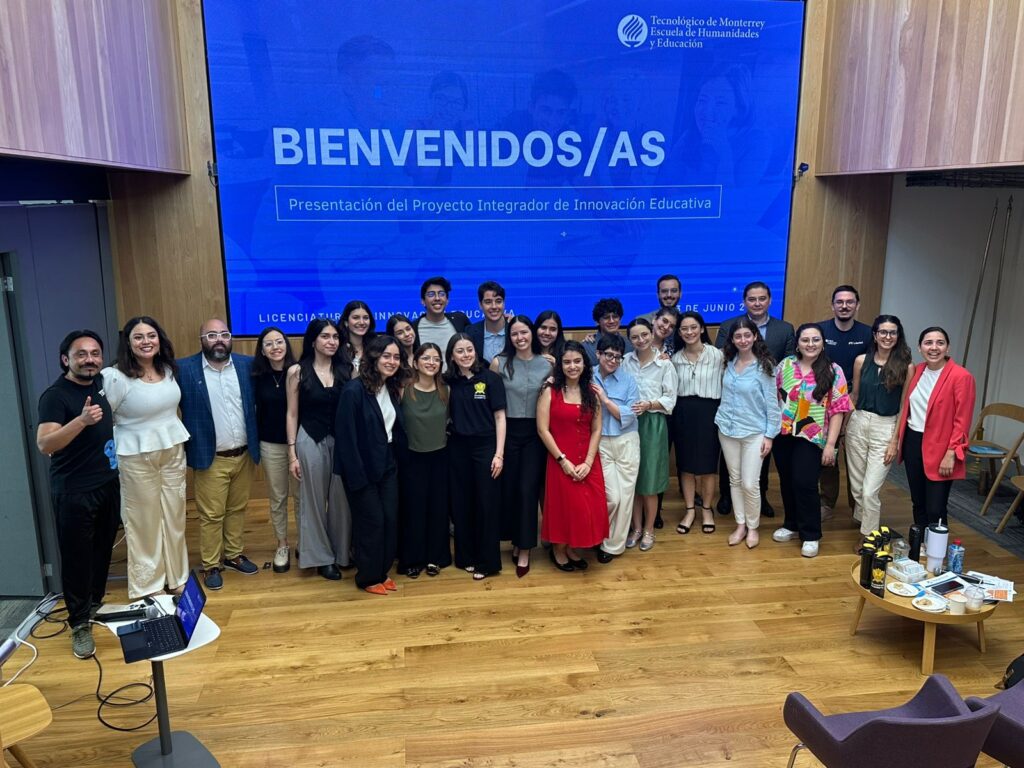
As part of the Demo Day for the Integrative Learning Block of Educational Innovation: Entrepreneurship for Quality Education at Tecnológico de Monterrey, held on June 3, 2025, students of the Bachelor’s program in Educational Innovation at Tec de Monterrey presented their degree projects, hosted by the School of Humanities and Education and the Eugenio Garza Lagüera Entrepreneurship Institute. Through their proposals, they positioned themselves as emerging references in the field of education and as a generation committed to transforming the future of learning.
Priscila Rodríguez, facilitator of the block and professor in the Department of Education, led the opening session, celebrating the ingenuity, dedication, and venture spirit of future educational entrepreneurs. She recognized the students as the protagonists of the day, their teachers for their guidance and support throughout the program, and the special guests who served as judges and training partners, bringing external perspectives and experience that were crucial for enriching and assessing the students’ proposals.
The session had the special participation of Andrés Ayala, the EdTech leader of innovation projects; Rodrigo Caballero, professor of finance; Sara Segundo, coordinator of the TecPrize; Leonardo Glasserman, research professor at the IFE and the EHE; Rodrigo Correa and Marisol Díaz, coordinators of EdTech Entrepreneurship; and Mariana Garza, the CEO of Inverkids. These participants provided valuable feedback, evaluating the feasibility, innovation, and sustainability of each project.
Priscila Rodríguez explained that the main challenge of this block was ambitious: to create an innovative, intentional, and authentic educational enterprise focusing on quality education and lifelong learning. Over the ten-week course, the students comprising this generation participated in intensive ideation and documentation of proposals that addressed current educational problems, were economically sustainable, and focused on improving the quality of educational conditions for a specific population group.
“Each project that will be presented today is the result of the students’ dedication, perseverance, and entrepreneurial spirit. They have confronted challenges, overcome obstacles, and demonstrated their ability to devise educational and disruptive solutions in the field of education. This event is not only an opportunity for students to showcase their projects, but for all of us to learn from them and appreciate their talent,” said Rodríguez.
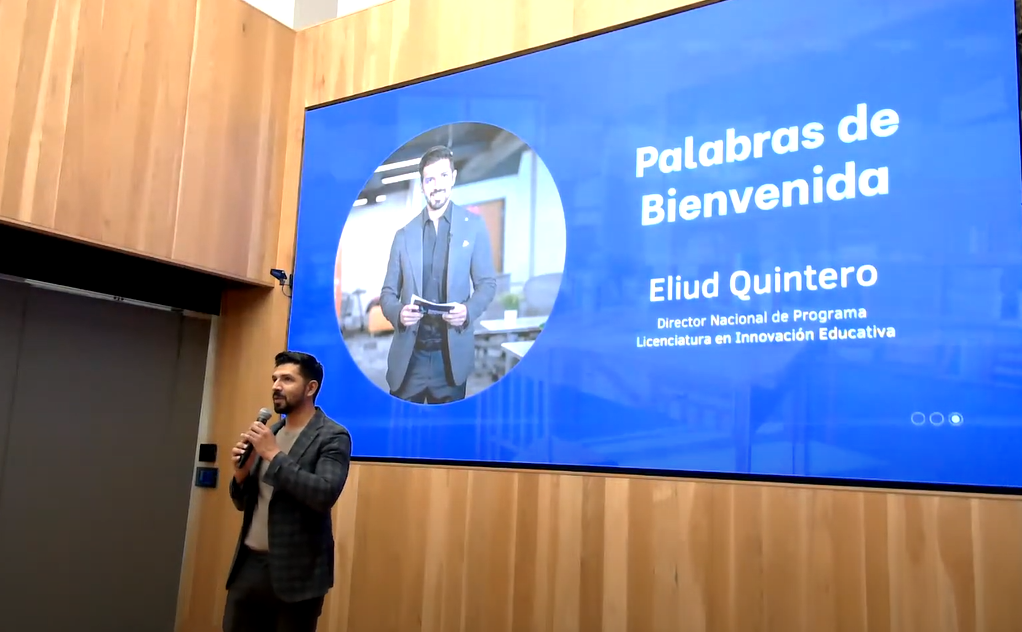
Eliud Quintero, National Director of the Innovation in Education program, addressed a few words to the audience to start and contextualize the presentation of these initiatives. He said that this was the last and most ambitious project of this degree program, undertaken at the end of the curriculum, where students not only analyzed but also designed and implemented real proposals for solutions to current problems in the educational field.
Likewise, Miguel Rodríguez gave a message on behalf of the Eugenio Garza Lagüera Entrepreneurship Institute, which serves as a training partner. “For us, it is important to have these links with schools to attract new entrepreneurial projects and new companies to our economy, especially because they are high-value companies that have a tangible social impact, and they are led by people with a genuine interest in changing education in Mexico,” he said.
“[As a teacher] I loved experiencing your process of transforming your social perspectives, forming visions of positive impact that improve education in Mexico through a tangible project, product, or service, something marketable with long-term sustainability. I am confident that you will be able to elevate your projects to a higher level, whether as participants in a company or as leaders of a social initiative. I hope businesspeople will recognize the need to address the reality that Mexico faces in its educational issues. Notably, what you are trying to change is going to have an impact on the next generations,” he added.
The students faced complex challenges that tested their critical capacity, creativity, and commitment to educational improvement, reaching a high level of specialization. Through these impactful initiatives, they have become recognized as future leaders capable of guiding the evolution of education in Mexico.
The 16 presented projects of the Bachelor’s Degree in Educational Innovation were:
- Success Academy
- DEYPREV
- Feelings Quest
- ConnectED
- Aquí y Ahora (Here and Now)
- Emotiva Plus
- The Hermit and the Moon
- Nutriva
- Despertar Mental (Mental Awakening)
- ReCreo
- Salvavidas Educativo (Educational Lifeguard)
- RE.D 360
- Piélago
- Familia Docens (Home Schooling)
- Docéntica (The Faculty)
- Red Sencia (Sencia Network)
Success Academy | Abihail Segura and Yolanda Pastrana
This extracurricular educational program rethinks how new generations prepare to face future challenges by developing soft skills (empathy, critical thinking, resilience, adaptability, among others), which are essential twenty-first-century competencies. It employs an active, experiential, and gamified methodology. Unlike other programs, Success Academy contemplates the future, combining the strengthening of socio-emotional and cognitive competencies with the incorporation of artificial intelligence, alignment with the school curriculum, and implementation in public schools.
DEYPREV | Dafne Navarro
This educational platform, focused on eating disorders (ED), is aimed at Mexican adolescents’ parents and caregivers. In collaboration with the Empezar de Nuevo A.C. (Begin Again) clinic, it supports the early detection and prevention of eating disorders by raising awareness among those who play a role in guardianship. The platform offers a practical guide to healthy care of the body in adolescence, including tips on dealing with ED among young people, and a workbook designed to help detect possible warning signs. Everything is presented in clear and accessible language, consolidating essential information in one convenient location.
Feelings Quest | Viridiana Adrianofabre
This project comprises a kit designed to promote socio-emotional development in early childhood, with a particular focus on children between one and five years old. The product offers 15 activities designed for use during vacation periods to develop skills outside the school environment. Its purpose is to strengthen the bond between school and home, offering families practical and fun tools to accompany the emotional growth of their children at home. The goal is to deliver meaningful kits, with some of the proceeds donated to support homes, public schools, and children’s communities in vulnerable situations.
ConnectED | Rodrigo Romo
This matchmaking platform enables the presentation of projects or their integration into existing initiatives within the same organization or work team in just seconds. The process is simple: you create your profile, explore the available projects that match your interests, and take the first step to initiate a collaboration. The tool brings people together in various project areas in entrepreneurship, teaching, and research. It also incorporates artificial intelligence resources to help visualize the potential collaborations. To ensure a safe and spam-free experience, connections must be accepted by all parties involved in the collaboration.
Aquí y Ahora (Here and Now) | Daniela Quevedo
“Here and Now” offers children a space of calm and presence. This mindfulness proposal is designed for children aged six to nine who reside in urban environments that can lead to overstimulation. Continuous digital exposure and multiple daily demands often leave no time to pause, center oneself, and be present. This offering invites participants to take a break and engage in playful, accessible, and brief micro-practices. It does not require prior training, so teachers, parents, or guardians can easily implement it at any time of the day as a way to sensitively accompany the emotional well-being of minors.
Emotiva Plus | Anna Cristel Saldaña
This project encompasses e-learning solutions specialized in developing socio-emotional skills to strengthen the performance and cohesion of work teams. It utilizes interactive micro-courses with dynamic presentations and short exams, realistic simulators for decision-making, instructional tools for specific situations, and customizable learning paths tailored to the needs of each company. This platform enables organizations to integrate these resources into their websites seamlessly.
The Hermit and the Moon | Mariana Parra
This collaborative learning network revolves around the richness of the textile arts, comprising a community that practices these arts and shares both materials and technical knowledge to promote various activities. The Hermit and the Moon offers a cozy, cheerful, and functional physical space where people can gather to engage in crafts such as embroidery, sewing, and knitting, among others. Additionally, accompaniment and guidance are provided to those who need them. This approach eschews digital technology, emphasizing direct human connection and working with analog materials, thereby strengthening the face-to-face creative encounter.
Nutriva | Celeste Ortega
Nutriva is a platform that provides nutritional education to school-age children in a playful and dynamic manner. Nutriva transforms the teaching of eating well through an immersive experience, using the basic Mexican basket as a starting point to explain nutrients in an accessible way. It aligns with the school curriculum, allowing this site to be easily integrated into teachers’ planning activities without creating an additional burden.
Despertar Mental (Mental Awakening) | Lizette Guerra
This 40-day program focuses on neuro-wellbeing, utilizing principles of neuroscience and habit formation to foster new neural connections and prevent cognitive decline in older adults. Its booklet consists of approximately 30-minute daily activities involving various elements such as cognitive stimulation, variety, novelty, physical activity, social interactions, creativity, mindfulness, and habit development. Consistent practice of these daily activities helps to keep synaptic connections active and strengthen mental well-being.
ReCreo | André Gracia
Recreo is a flexible and personalized educational advisory service that is adaptive to the student rather than the student adapting to the system. Its comprehensive perspective comprises six fundamental pillars: neuro-learning, critical, creative, systemic, and reflective thinking, time and effort management, effective study strategies, motivation, and cognitive flexibility. Its 16 services expose users to relevant topics such as procrastination, metacognition, and effective ways to utilize learning strategies, all aimed at understanding how learning works and developing effective learning competencies.
Salvavidas Educativo (Educational Lifeguard) | Raquel Gaytán
The title “Educational Lifeguard” aptly describes this training program, which provides a contingency protocol to help primary schools ensure educational continuity during health, natural, or social crises. To address this, it offers a practical guide, teacher training, ready-to-use resources, and immediate attention in emergency contexts, thus ensuring resilient educational communities. This program places teachers at the center of the response. It offers them concrete tools, such as curricular adaptation, digital literacy, socio-emotional skills development, and drills, to effectively face critical scenarios and ensure that quality education continues.
RE.D 360 | Nadia Peralta
This educational network focuses on promoting attention to diversity, offering an accessible and practical space for teachers and caregivers. Employing the Universal Design for Learning (UDL) methodology and gamification through badges, the platform proposes editable exercises that are easy to apply, organized by training field. Each section includes activities, clear explanations, and downloadable files ready for customization. In addition, it has specific materials and instruments to support people on the autism spectrum, with attention deficit hyperactivity disorder (ADHD) and language disorders, promoting a truly inclusive education.
Piélago (The Deep) | Aarón Rodríguez
This project seeks to bring middle and high school students closer to the principles of media and information literacy. Primarily, it is a course that integrates multimedia elements, gamification, and artificial intelligence to strengthen metacognitive processes. In the next stage, a story version offers a more immersive experience conforming to Mexican reality, stimulating participants to make decisions using critical thinking.
Familia Docens (Home Schooling) | Ana Belén de la Garza
This is a curricular support program for families who educate their children in primary education at home. Its purpose is to alleviate the stress associated with organizing learning through a training workshop that utilizes an annual planning methodology, which includes an action plan booklet (available in both digital and physical formats). Additionally, it offers group accompaniment sessions to educator mothers, thus creating a community of support and shared learning.
Docéntica (The Faculty) | Mariana Márquez
This gamified and collaborative educational platform uses active methodologies to facilitate efficient planning and strengthen educational and technological competencies in teachers and students. This proposal addresses the need for teacher training tools that do not increase their workload. In Docéntica, the teaching staff has four specific plans: create, collaborate, learn, and evaluate. The didactic sessions are developed and completed through learning modules, accompanied by graphics that allow progress in the classroom to be monitored. In addition, resources can be shared with other teachers and evaluated by coordinators to ensure their quality.
Red Sencia (Sencia Network) | María Paula González
Red Sencia is a civic association dedicated to building strong, resilient educational communities that support the empowerment of schools to evaluate their processes, create participatory improvement plans, and lead deep and sustainable transformations from within. A comprehensive vision of what happens in schools is generated through four dimensions and 20 indicators. It even features an assessment platform, where managers and administrative staff can conduct a self-assessment of their community, accompanied by a completely intuitive results report and open-access resources to enhance their plans.
Red Sencia also offers a participatory intervention plan, which involves working groups comprising teachers and family members who facilitate implementation and impact assessment.
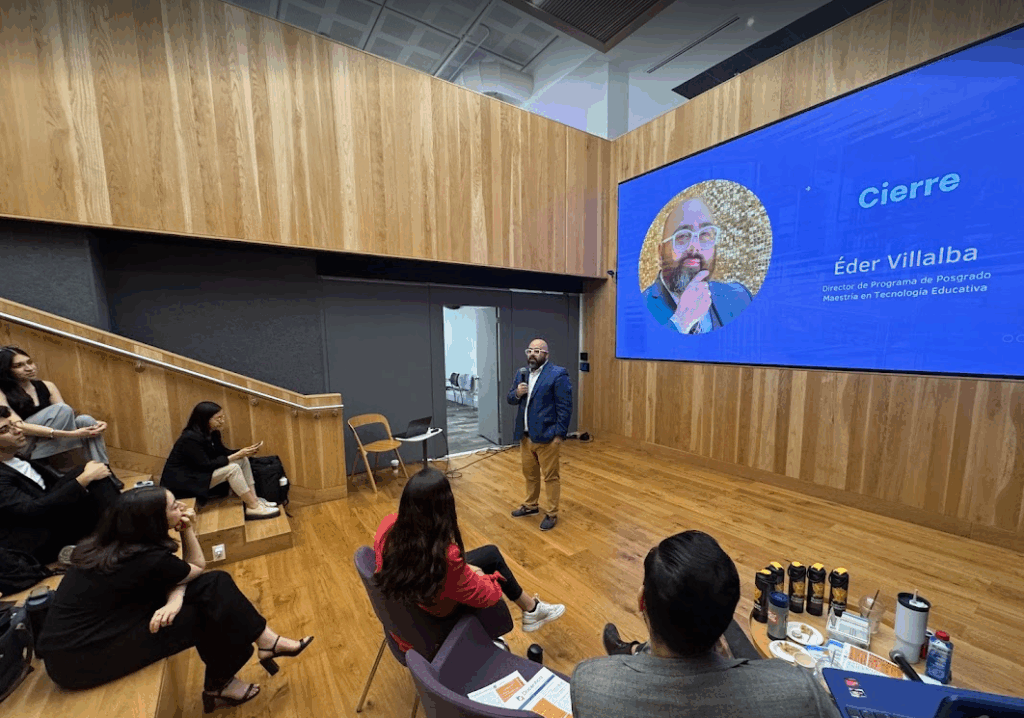
Éder Villalba, Director of the Master’s program in Educational Technology, offered a few final words to the graduates: “Look at what can be achieved in such a short time with such a valuable project, with a vision of specific education, and that is what we seek with you… to work with you and for you in the creation of educational innovation. That’s our profession, and I feel very proud of everything you have achieved,” he said.
In the afternoon, the Nutriva initiative, developed by Celeste Ortega and nine other projects, was presented to an audience comprising members of the entrepreneurial community on the Spark Stage during the Demo Day organized by the Eugenio Garza Lagüera Entrepreneurship Institute. This exhibition was held after Nutriva was selected as the winning proposal, followed by Aquí y Ahora by Daniela Quevedo and Red Sencia by María Paula González. Additionally, Raquel Gaytán received a special mention for Salvavidas Educativo.
Projects like these are a testament to the commitment, creativity, and capacity for action of those who undertake the challenge of designing concrete solutions to transform Mexico’s educational landscape. These initiatives not only strengthen learning communities but also pave the way for a more sustainable education focused on individuals’ well-being. Events such as Demo Day are essential for making visible the potential of educational entrepreneurship as an agent of social change, building a new generation of professionals prepared to transform education, and promoting a culture of innovation that responds, with sensitivity and vision, to the challenges facing education in the present and the future.
Translation by Daniel Wetta