
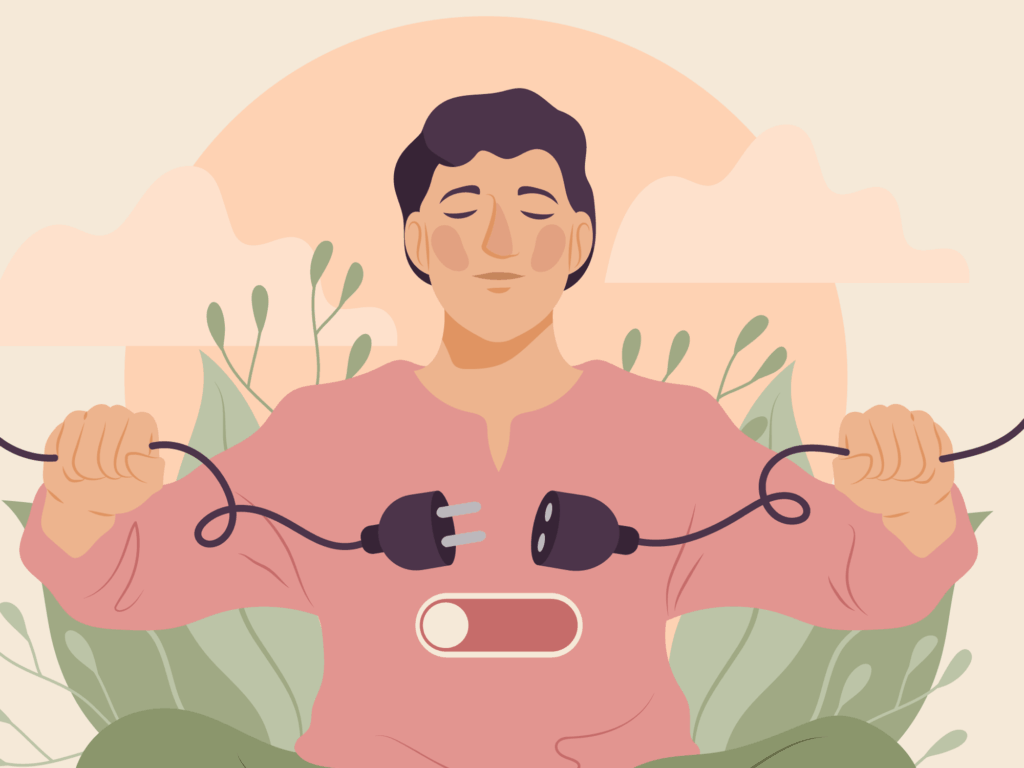
The silent treatment that an acquaintance can give you, the stillness during an exam, the awkward silence in a conversation after an inappropriate comment, or solitary confinement in prisons: It is not new to associate these silences with negative or strict elements such as punishment, discomfort, formality, or strong emotions like anger, sadness, or even loneliness. Which reminds me of a particular scene in the discontinued animated series Regular Show of the Cartoon Network, which was very popular on social media and is regarded as funny or even morbid:

Notably, the fear of silence is timeless. Blaise Pascal, a French mathematician and philosopher of the seventeenth century, said, “All of humanity’s problems stem from man’s inability to sit quietly in a room alone.” Since ancient times, human beings have been concerned with carrying out activities; it is impressive to consider this, given that life in previous ages was not as busy and was less noisy than it is today. Suppose it was challenging to sit still before: how much more is it now with constant visual pollution, to such an extent that the United States Environmental Protection Agency has considered it a health risk, which causes high blood pressure, stress, and sleep disruptions.
We are continuously exposed to noise, not only due to external factors like traffic but also because of ourselves: We are perpetually immersed in an environment devoid of silence from the videos we watch on social media, the nonstop music and podcasts we listen to, or the television’s blaring in the background while we do other tasks. While we cannot control outside sounds, why must we keep the noise going?
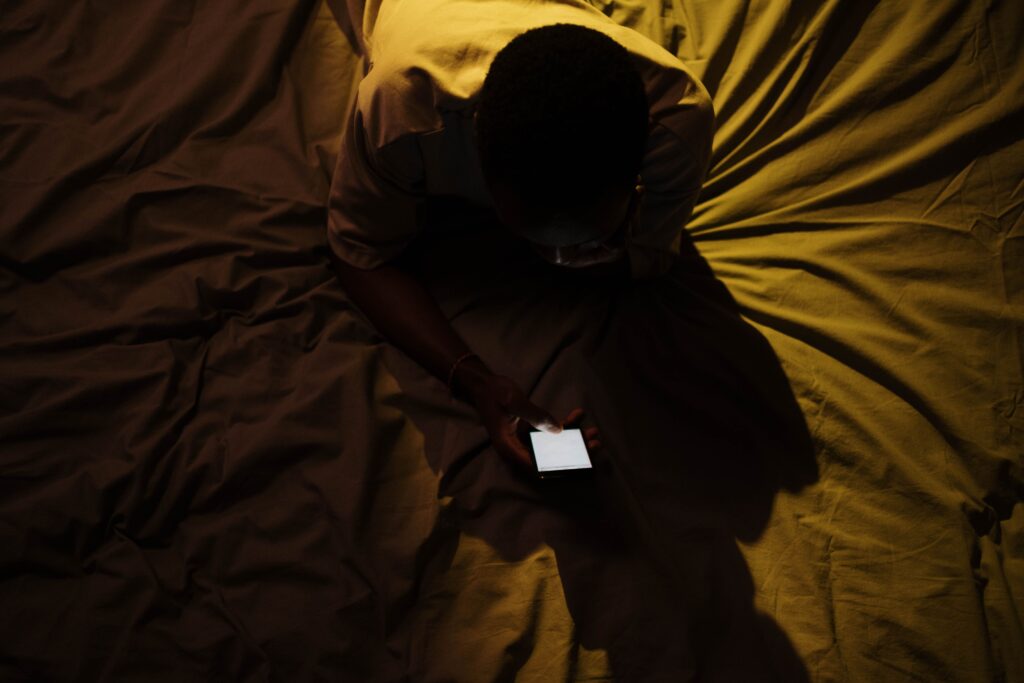
Of course, watching videos and listening to music are ways to relax or even enhance our activities. Still, there comes a point where their consumption becomes so excessive that there is no room for a single moment of silence. To escape this predicament, we often grab our smartphones and immerse ourselves in the infinite worlds and possibilities of the tiny yet powerful screen.
Incredibly, Ray Bradbury‘s short story “The Murderer,” published in 1953, predicted the world we see now: filled with music, noise, commercials, and incessant conversations. This hustle and bustle is so normalized that the main character (the Murderer) is seen as a villain for destroying electronic and entertainment devices, trying to get a moment of silence, which is an extreme alternative to a choice that could have been made: finding answers through more peaceful options.
Bradbury’s story prompts us to reflect on the reality we currently live in, where unconditional availability, continuous presence on social networks, and submission to infinite audiovisual media are the new norms. As in the story, in our times, the Murderer would be the equivalent of people who do not have accounts on trendy social networks or those who do not have a smartphone. Such people are seen as different and strange.
The vast amount of content we are exposed to daily, where time passes unnoticed as we are constantly entertained by multiple screens at home, in our pockets, and even at work, is also a significant factor that reduces moments of peace and tranquility. The vast majority of apps and sites we visit compete for our attention, resulting in a massive amount of content. Additionally, algorithms adapt to our tastes and preferences, encouraging us to stay engaged in these applications for as long as possible.
Minimal spaces of time, in minutes or even seconds, are filled with entertainment provided by our smartphones while we wait for transportation, stand in line at the supermarket, take breaks at work, among others. The instantaneous dopamine gratifications we receive when we open a notification on our phones or watch a funny video do not help either.
Hustle Culture and the glorification of Productivity
While technology has benefited us enormously in various areas of our daily lives, moments of silence and reflection have become increasingly rare. This is because hustle culture prevails, encouraging people to work tirelessly at all times to succeed in life, as multiple social media platforms have portrayed this as the path to success.
Social networks, particularly, have influenced people’s ideals, where continuous work and determination have reigned as the actions elevated by society. While these values are crucial for achieving great results, they have also led people to view limitless productivity, constant busyness, and multitasking as essential virtues for success and self-definition through social platforms. This is why people often seek to fill any silent or tranquil space with as many activities as possible, as many view such calm moments as non-productive or a waste of time.
Productivity has been glorified to such a degree that every action we perform must have a benefit, that it “produces something.” We forget that taking care of ourselves is essential for our mental well-being. In her book, “How to Do Nothing,” Jenny Odell tells the story of Old Survivor, the oldest tree of its species (Coastal Redwood) in California. Unlike other trees, it survived due to its location, crooked shape, and unattractive wood. Because of this, the lumberers considered it useless and made no effort to cut it down, passing by it to chop down the other trees.
So, what the lumberers considered useless was what saved Old Survivor’s life. Moreover, its productivity and benefits were different from what was sought from a tree. While it was not used for urbanization, it functioned as a refuge for many animals, providing shelter and shade. Additionally, currently standing and imposing in size, it is a historical symbol of Oakland, California, in the United States. It remains a testimony against massive deforestation and nature’s resilience.
In the example of Old Survivor, in the face of the hustle culture, Odell proposes to ask ourselves: “Productivity that produces what? Successful in what way, what form?”
Returning to the scene from Regular Show, at the beginning of this text, the idea of the pink character being alone with their thoughts is terrifying and unthinkable because staying still without distractions is a crazy idea to them. Being alone with our thoughts and listening to our inner voice can feel uncomfortable and even a waste of time. However, several studies have proven the physical benefits of silence, which are activated instantly in those moments of reflection or when we let our creativity work. These benefits include:
- Lowering blood pressure.
- Reducing muscle tension.
- Reducing cortisol levels, the hormone our body produces in response to stress.
Additionally, it is during a quiet time that our cognitive processes also improve:
- It increases concentration and our presence in the now.
- It encourages creativity, where our imagination can run free, increasing problem-solving abilities.
- It improves the processing of emotions and stimulates self-reflection.
However, being quiet or still does not necessarily mean simply sitting and staring at a blank wall; it can include slow and analogous activities and easy tasks, such as contemplating the environment or monotasking, i.e., doing one thing at a time. Even so, getting accustomed to silence can take time. Still, just a few minutes a day and small actions positively impact our being. Some ideas you can implement are the following:
- Make space in your schedule: Finding space in our full agendas can be challenging, especially when our days are exhausting or it is almost impossible to find time for ourselves. However, some ideas include getting up a few minutes earlier to sit down and have a coffee or allocating these minutes for the end of the day (which could also improve sleep quality).
- Give your ears a break: Although it may seem like a passive activity, music or audiovisual media that many of us play in the background are still considerable noise sources. Trying to reduce this at home, spending a few minutes driving without listening to anything, or not using headphones during a walk, helps clarify our thoughts and refine our perception of our environment.
- Make nature your ally: There is a reason why there is a plethora of playlists of sea sounds or rain; if these relax us, imagine what listening to them live would do! An outing to a park without cell phones or music raises our sensory awareness, allowing us to enjoy the birds’ songs or the trees swaying their leaves gently in the breeze.
Tranquility and silence are not a luxury and are much less unproductive. They are necessary for our overall well-being, especially now that we are surrounded by incessant noise and digital chaos. Just as we care about being “useful” to our society, we should care for ourselves and carry out activities (or not) that nourish our spirit.
Translation by Daniel Wetta