

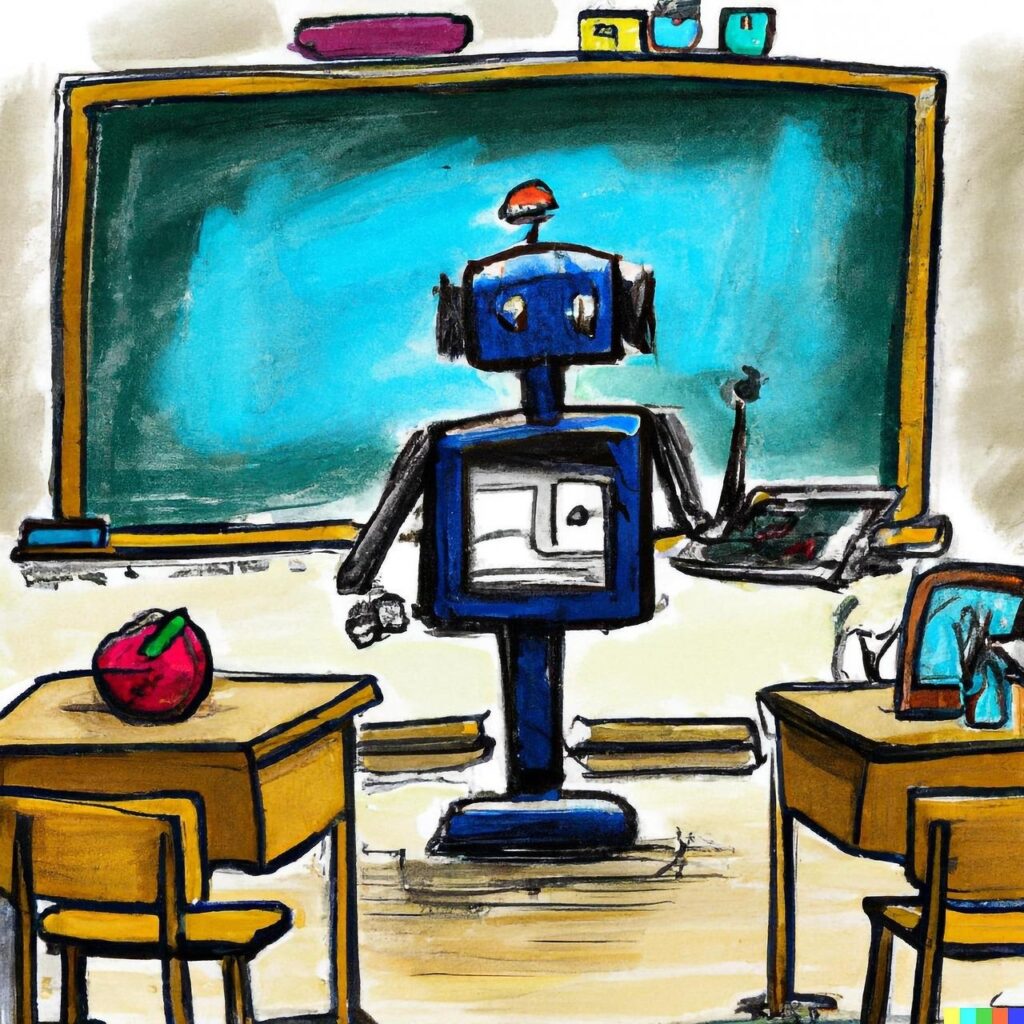
In recent years, much of the discourse on the future of education has centered on technology, particularly artificial intelligence. Although technology is vital, it is not the most important thing. Of course, it is crucial to research and stay current to integrate and leverage new technologies, and to understand their impact on students. However, this should not be the central point.
If the discussion focuses only on technology, it overlooks the human side in the classroom: the teacher and the student. How do their brains work when learning? How do students learn? How’s their attention? How can teachers ensure that students are learning?
The future of education must focus on human development, well-being, mental health, meaning, and the why of educating. At the end of the day, education is a human relationship; learning occurs between people who think and feel, people with different contexts and needs. You have to look at the mind that learns, not only at the tools used.
Of course, these tools offer relevant opportunities and need to be discussed. Still, it is necessary to give more space to other dimensions such as mental health, the so-called power skills (also known as soft skills), teacher well-being, and cognitive and socio-emotional development, to mention a few. To me, it is alarming that institutions and teachers are preparing for a future of education without considering how these students arrive in the classroom. The reality is that today, children no longer imagine; their cognitive development is affected by screens, resulting in, among other things, attention problems, a lack of critical thinking, and an inability to follow long instructions.
What can be done to mitigate these adverse effects of technology? How can we prepare teachers to teach the next generation? In the educational field, when talking about technology, most people focus on “how can it help me?” rather than “how can it help me enhance student learning?”
The future of education cannot be reduced to technology
When discussing the future of education, much of the public, institutional, and media discourse centers on technology and artificial intelligence. Congresses such as the IFE Conference, international reports, educational blogs, and opinion articles follow an optimistic narrative that presents AI, adaptive learning, and automation as the main drivers of educational transformation. However, although technology is a relevant and necessary dimension, it is not, nor should it be, the central axis of the discussion.
I reiterate that the problem is not artificial intelligence, but instead talking almost exclusively about it while leaving in the background a much more uncomfortable and urgent question: how are the new generations arriving in the classroom? And how can teachers ensure the learning and success of those students?
The Human Side of the Future of Education: Teachers and Students
Accumulating evidence shows that we are not dealing with “less capable” generations, but with minds that have developed under radically different conditions, resulting in reduced ability to sustain attention, difficulties with tasks that require sequencing and sustained cognitive effort, problems with deep reading and complex comprehension, among others. This is especially concerning because formal education continues to rely on these functions. The cognitive assumptions of the educational system have not changed at the same pace as the mental structures of the minds entering the classroom.
Generations Z and Alpha indeed have different cognitive and emotional profiles from those of previous generations, profoundly shaped by digital culture, immediacy, and constant screen exposure. Studies cited in educational outreach spaces indicate that Gen Z may be the first generation to show a decline in specific cognitive abilities compared to their parents, particularly in sustained attention, emotional regulation, and critical thinking. Not only that, the New York Post noted that Gen Z is the first generation to be considered “dumber” than its predecessors.
The brains of these generations are adapted to speed, multitasking, and fragmentation. They learn quickly, yes, but struggle to go deeper. This implies that learning today requires more structure, more human mediation, and more pedagogical intention than before.
The reality is that, although these students are known as “digital natives,” they have brain plasticity pertinent to multitasking and instant access to information. In addition, “infoxication” or an excess of information can lead to cognitive overload that prevents deep learning, making knowledge superficial.
In addition, as I mentioned in a publication in the Observatory last year, attention is declining. The average concentration capacity of Generation Z is around eight seconds, compared to twelve seconds for the so-called Millennials and twenty-four seconds for Generation X. Irrespective of the exact figure, the consensus is clear: prolonged attention, deep reading, and tolerance for frustration have deteriorated.
Even my own master’s research supports these concerns: excessive screen use during childhood is associated with adverse effects on cognitive, linguistic, and social-emotional development, especially when it substitutes for relational and free-play experiences. Not only that, but children are also currently unable to create images in their heads, that is, to imagine, because that ability is being replaced by images being produced for them on screens.
One of the most alarming points of the discourse on the future of education is the scant attention paid to early childhood (from zero to six years old). Organizations such as UNICEF and the Spanish Association of Pediatrics have warned that early and prolonged exposure to screens interferes with fundamental maturation processes, reduces working memory, and affects attention span. During the IFE Conference 2026, researcher Sandra Reyes commented in her presentation that it is just as difficult to “climb Mount Everest” as it is to raise awareness in society about the importance of early childhood education.
This is even more evident when discussing the future of education, since the prevailing narrative tends to focus exclusively on secondary and higher education, as if the student body arrived cognitively “neutral” to the system. Platforms, algorithms, and digital skills are discussed without considering that many children begin their school careers on extremely fragile foundations, marked by deficits in attention, imagination, and emotional regulation.
And where are the teachers in this scenario?
Another recurring element in technological discourses is the idea that AI will “free” teachers from repetitive tasks, allowing them to focus on what is truly human. However, this promise contrasts with the reality that many teachers express in formal and informal spaces. Academic and pedagogical articles agree that the role of the teacher has changed from being a transmitter of knowledge to being a mentor, mediator, and emotional guide (simultaneously and without adequate preparation).
In most cases, technology is not replacing the teacher; rather, it is increasing the complexity of their work.Studies on teacher training for Generations Z and Alpha indicate that teaching these generations requires skills that go far beyond the technical domain, including consideration of emotional intelligence, design of meaningful experiences, and socio-emotional accompaniment. Also, the pedagogy of presence, first promoted by Carlos Gomes Da Costa, emphasizes the affective and relational accompaniment of the student, with the teacher’s physical and emotional presence being fundamental to integral development.
Organizations such as the Teacher Task Force have been clear: the benefits of artificial intelligence in education depend directly on educational institutions. Teachers are not replaceable because learning is a profoundly human and relational process, even though there are already schools, such as Alpha School in San Francisco, California, where teachers have been 100% replaced by artificial intelligence.
The risk of educational techno-solutionism
Several authors warn about the danger of techno-solutionism, that is, the belief that educational problems can be solved mainly by technological tools. This approach risks automating teaching and reducing learning to metrics, monitoring, and efficiency, forgetting that learning involves emotions, bonds, mistakes, contexts, and people, not numbers or metrics.
Systematic reviews on artificial intelligence in education warn that the use of technologies to continuously monitor or measure students can generate cultures of control, decrease autonomy, and affect emotional well-being. The real risk is not the technology itself, but integrating it into educational systems without transforming their human dimension.
Beyond the academic sphere, concern about this disconnection is evident in non-academic spaces. In opinion articles and teacher discussion forums, a shared feeling is repeated: the discourse on innovation advances faster than students’ actual capacity to learn.
These spaces do not offer rigorous evidence, but they do function as testimony. Many teachers report increasing difficulty getting students to follow lengthy instructions, maintain attention, read complex texts, or develop critical thinking skills. These observations align with scientific findings and reinforce the idea that the problem is not anecdotal but structural.
Talking about the future of education requires broadening our perspective. It is not enough to ask what tools we will use or how to prevent students from cheating; we also need to understand the students who will use them and the cognitive, emotional, and social conditions they will bring to the classroom. Education does not happen on platforms or algorithms, but among people who think, feel, and learn in specific contexts. Let us remember that we are dealing with human beings.
This implies giving more space to dimensions that today appear marginal in the debate: mental health, socio-emotional development, teacher well-being, ethical literacy, and strengthening of basic cognitive processes, such as attention and self-regulation. As several authors point out, the success of educational technology will not depend on algorithms, but on how well we prepare and accompany those who teach.
It’s important to remember that artificial intelligence is a powerful tool, but it’s still young. ChatGPT, for example, was launched in November 2022, and its long-term implications, mainly when used in childhood, are still not fully understood. Betting the future of education exclusively on technologies whose profound, long-lasting impact we do not know is, to say the least, unwise.
If the educational system fails to account for how students arrive in the classroom, it risks designing solutions for an ideal student who does not exist and failing to adequately prepare teachers to address these issues and ensure student learning. As recent research and teaching experiences show, many children arrive with deficits in attention, imagination, and critical thinking that were not addressed in early education levels. Teachers are then required to fill these gaps without adequate accompaniment and training.
The future of education should not be about technology alone; it should also consider human development. Because at the end of the day, educating is still a deeply relational act, and learning happens in minds that need to be understood before they can be optimized.
Also, the future of education is not just about algorithms or code. Although conferences on the future of education, articles, and discussions discuss artificial intelligence, automation, and adaptive learning. It is more important to understand who the student is arriving in the classroom and sitting in front of that screen, how their attention is, their emotional regulation, and their ability to imagine and think critically. We must remember that we will be building the future on fragile foundations.
To reiterate, technology is not the problem. The problem is making it the center of the conversation while the human side becomes a footnote. Today, we know that many students arrive in the classroom with attention difficulties, a fragmented relationship with knowledge, and fewer experiences of play, deep reading, and imagination. We know that screens are displacing early childhood. We know that teachers face increasing emotional complexity. And yet, we insist on asking ourselves what tool to use, rather than wondering what mind we are forming.
The risk is not that artificial intelligence advances too quickly. The real risk is that we advance technologically without stopping to look at whether our students are ready to sustain that future. Because educating is not optimizing processes. It’s not automating responses. It’s not measuring every interaction. To educate is to form criteria, to strengthen attention, to cultivate humanity.
If the future of education does not put cognitive development, mental health, imagination, and teacher well-being at the center, it will not be an innovative future; it will be a limited and superficial future. And although artificial intelligence has the potential to transform education, this will only be possible if we first decide that education remains, above all, a human encounter.
Translation by Daniel Wetta