
Lately, when I visit my friends, and they decide to play music, it is no longer “Alexa, play Spotify,” but a small ritual where someone gets up from their seat, chooses a vinyl record, and plays it on their record player. In my case, this process always sparks a conversation about the artist, the person’s record collection, our musical tastes, among other related topics. Thus, a command or action that takes seconds is replaced by a small ritual that takes much more time.
Regardless of it being a great conversation starter, we have seen the resurgence of analog activities that had, for some time, become unpopular. For example, Kodak filed for bankruptcy in 2013, and its case exemplifies the “innovate or die” slogan. However, the company is currently expanding its production capacity due to the rise of analog photography, as more and more people are joining in and buying film cameras or Polaroids.
Previously, media outlets were discouraging about printed books. Some have even predicted that ebooks would eventually dethrone them and bookstores would eventually cease to exist. This was the reality for several bookstores, which unfortunately went bankrupt for a few years; meanwhile, digital sales platforms such as Amazon promoted e-book sales and even became one of the main platforms for both e-book and book sales. Surprisingly, we have now seen a boom in reading on several social media platforms, which has led to independent bookstores resurfacing. Even Barnes & Noble has announced plans to open 60 new bookstores in the United States.
Now that technology has evolved and we can have cameras that produce high-quality, instantaneous photographs, as well as books that can be purchased in a matter of seconds, it makes sense that the companies mentioned above could go extinct. However, the opposite is happening due to the interests of current generations. Why are young people returning to the past and adopting analog technologies and experiences?
Nostalgia that you can touch
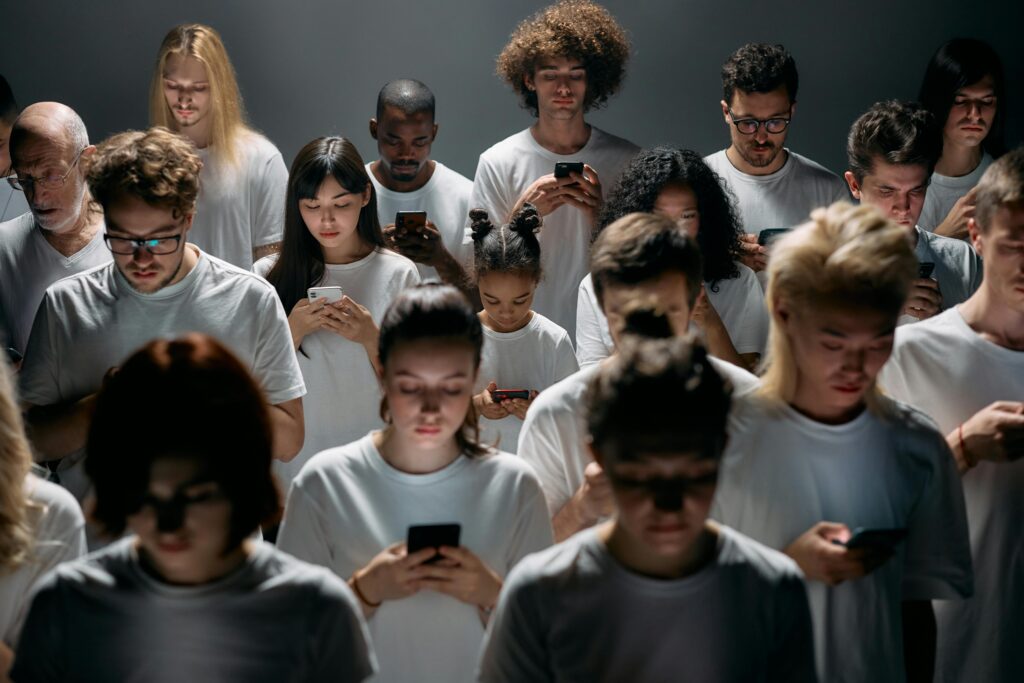
Let’s remember that Generations Z and Alpha were born when the Internet was fully developed, so many technological and digital advances already existed; many were “iPad kids.”These young people have been surrounded by screens throughout their lives, with most of their activities taking place on one or two devices; however, in previous generations, such activities were carried out in different ways. Writing a letter on paper, going to the movies, taking film photographs, reading the news in magazines or newspapers, and listening to music from a portable audio player had to be done separately, each requiring its own space, concentration, and time.
Now, for newer generations, these activities are combined into a single device; you can access various activities by sliding a single finger across the screen or keyboard, rather than switching from one to another. Instead of writing a letter on paper, they use email; watching a movie is easy on a streaming platform; reading the news can be done through social networks or a phone application; similarly, taking photos and listening to music can be done using specialized apps such as Spotify, all on one device.
The separation that previously existed for each activity is now available on a single device. For these generations, the tangible media that previous generations enjoyed because it was the only way to access them (such as CDs, VHS movies, printed photographs) have been replaced by easier digital access.
Young people can avail themselves of non-tangible products and services without possessing them, subject to restrictions. Paying for a subscription to a streaming service for access to books, music, or movies really means that the user obtains permission to use the platform’s catalog. However, a person’s favorite movie or song can suddenly disappear at any time due to external factors affecting these digital channels, thus eroding the sense of belonging of newer generations, who never really owned their favorite works. Taking ownership of this type of media demonstrates the new generation’s longing for things they can interact with directly.
However, consuming analog media and devices can be considered a luxury. While a significant increase in the acquisition of physical products such as books, film cameras, movies, and DIY materials is a reality, most people cannot afford them. The cost of several of these can be higher than a monthly subscription cost for digital access. For example, access to an expansive music catalog is usually less than buying a single vinyl record. Similarly, developing and printing photographs is much more expensive than taking photos on a cell phone, which offers much more storage and the ability to view, edit, and delete unwanted pictures on the spot.
Nostalgia has also led young people to choose analog devices and activities. The nostalgia for the times before the emergence of the Internet has been quite recurrent among newer generations, when worries were minimal for many children and teens, social networks were non-existent or just emerging, and, above all, there were no algorithms that encouraged users to spend more time-consuming irrelevant content. It was a time when sporadic, imperfect photos were the norm, rather than images edited or entirely generated by artificial intelligence, which today has been normalized.
Not to mention the current state of our hyperconnected world, where it is easy to access the most devastating news in real time; previously, the access we currently have was impossible. This news saturation causes people to feel overwhelmed, depressed, and anxious.
“Gen Z’s interest in things they can touch, hold, and physically possess helps them find stability in a turbulent world.” – Alan Cross, 2024 for Global News.
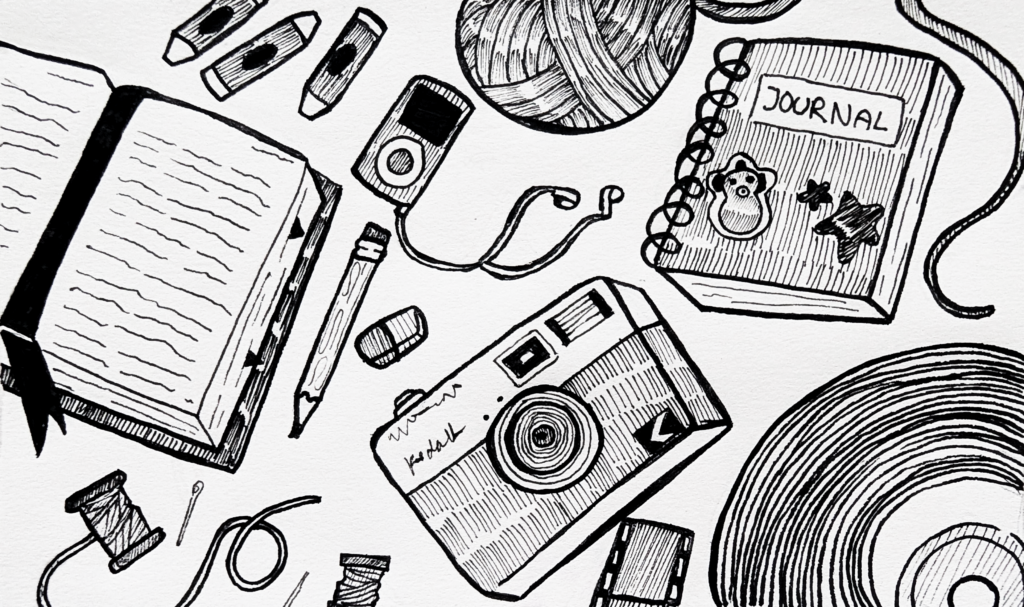
Therefore, the longing for a disconnected environment manifests as a trend circulating on social media platforms such as TikTok. The analog bag, which consists of a bag filled with books, music-listening devices, newspapers, crossword puzzles, drawing or knitting materials, among other activities, looks to avoid more complex technological equipment such as cell phones or tablets. Paradoxically, users share the contents of these bags on social networks to avoid doomscrolling and make minimal use of their phones, showcasing various hobbies, allowing people to remain offline for as long as possible.
Being offline is one of the main goals of returning to analog use. Although there are applications to increase productivity, physical products have been introduced to reduce people’s cyberactivity, such as dumb phones with only basic functions and no Internet access, such as making and receiving calls and SMS messages. Moreover, the Brick prevents applications that are blocked on a phone from being accessed by the user unless the user physically unlocks them by scanning the Brick device.
Returning to analog… in the classroom?
While modernity pushes us to move forward with new technological and digital trends, it is also important that teachers observe students and recognize and understand the issues of the moment that affect their behavior and perspective of the world. The implementation of technologies must be carried out with intention and purpose to provide high-quality learning for students. It is necessary to pause and carry out activities that prioritize our humanity and values, such as patience and perseverance, to navigate this complex world, and not emphasize so much the speed or efficiency with which these activities can be carried out.
The manifestation of this behavior reflects the weariness of young people, continuously surrounded by algorithms, AI-generated content, and unsolicited product and service advertisements. Newer generations seek to compensate for lost time with habits and activities that keep them in the present, provide enjoyable breaks from screens, and time to form close bonds with the real world around them.
Translation by Daniel Wetta