
The COVID pandemic-19 has shown us that an essential part of the school ritual is fulfilled simply because the school exists. Good or bad, seen from a distance and with all the possible irregularities, the preservation of schools during the last year has allowed us to perceive –above the catastrophe– the durability of humans, that essence of ours that is free of the contingency’s oppression (see “The Educational Ritual During the Pandemic”).
Another characteristic of the school ritual (that community place to which one goes to learn) reveals itself to us if we attend to the etymology of the word “school” that comes from the Greek “scholé,” meaning leisure. The truth is that the idea that learning is a form of rest, not something obligatory, applies not only to that idle old school but also to the everyday ritual, which equally preserves the idea of something “done for pleasure and not duty.” I dare to say that even when school learning has connotations of work and even hard work, in its essence, there is always an underlying idea of rest and amusement. Nothing can override this; not the most boring of teachers nor the most pragmatic educational model, nor the most authoritarian school administration, can override it.
This is because the essence, the leisure characteristic, derives from something we know well: we cannot know everything. Yes, despite how many efforts we make to learn, we will always face our ignorance, and at that point, we had better relax and settle for what little we have learned.
The opposite can be fatal. Dr. Faust signed his famous pact with Mephistopheles out of anxiety to understand “infinite nature” and because he could not bear the thought that his mind could not take in everything that existed. Some, not wanting to fall into such ugly temptation, settle for knowing only part of what exists (what the French philosopher and educator Edgar Morin calls “islands of certainty in an archipelago of uncertainty”). Moreover, aware that we cannot know precisely what we do not know, we assume that what we learn is also subject to uncertainty. Therefore, we should not settle for what we know but recreate ourselves in it for no purpose other than to enjoy it. Learning then presents itself to us – at least in part – as a game.
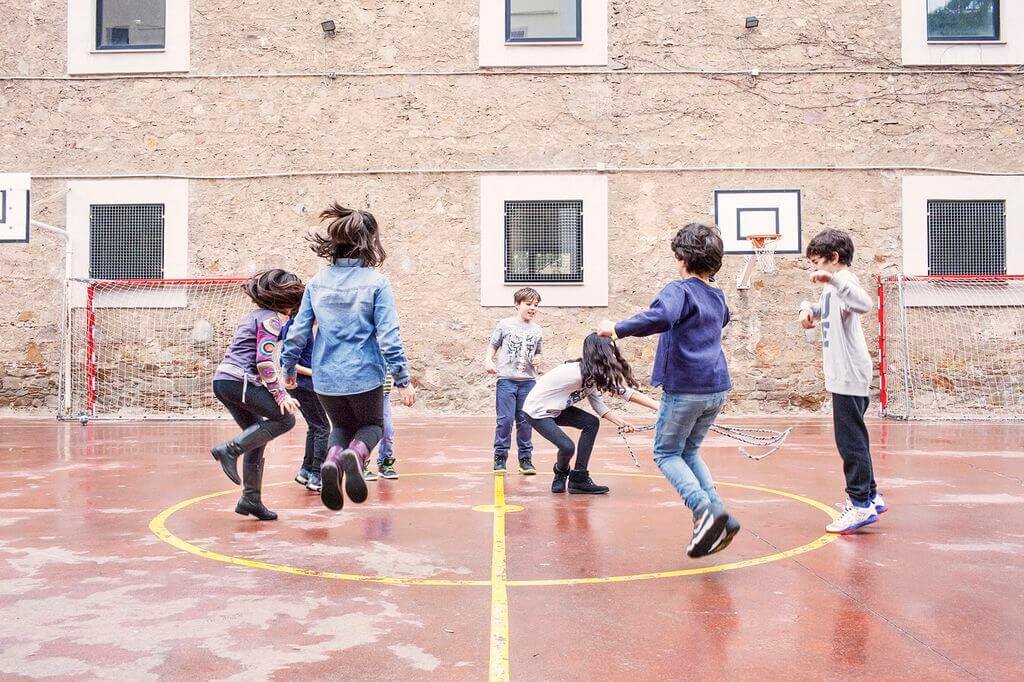
Many education models that have emerged in recent centuries place great emphasis on playing to learn. In our quest to turn everything into something useful, modern humans continue trying to discover the game rules and use them to build an educational tool. However, again, the humility of the school ritual reminds us that we will never be able to know the ultimate essence of play and that we will have to settle for knowing only a little, bringing that little to reality, partially, accompanying our students in learning that is always incomplete.
That’s ok. As we say, the school ritual –at least in part– is not looking for anything. Perhaps, by unpretentiously acknowledging inevitable ignorance, it can put us, at least for an instant, in tune with what exists.
Translation by Daniel Wetta.
Disclaimer: This is an Op-ed article. The viewpoints expressed in this article are the author’s own and do not necessarily reflect the opinions, viewpoints, and official policies of Tecnológico de Monterrey.