
We are all engrossed in our screens, and many people find it difficult or impossible to be separated from them because they have become portals for work, entertainment, and communication. Moreover, beyond screens, the amount of content we find on streaming platforms keeps increasing, offering children and their families a robust menu of series they can watch on their tablets, televisions, and smartphones.
Educational programs for children have evolved considerably throughout history. One of the first academic programs to premiere in the United States in 1952 was Ding Dong School, which was recorded live on black and white television. In it, a teacher performed different educational activities on camera, positioned as if it were a small child’s perspective. It was not until the seventies that educational cartoons such as the animated School House Rock! (1973) and Sesame Street appeared, the latter was a mix of animation and live action. Subsequently, television programs focused on the children’s audience began to appear, and much-loved series such as Dora the Explorer and Blue’s Clues, among many others, began to gain traction.
How things have changed since then! Today’s programming still involves adults who teach children to pronounce words or do crafts, such as Ms. Rachel and Blippi. However, the way they present their content is very different due to technological advances and accessibility, where people can edit and share their materials on free platforms like YouTube.
However, more does not mean better. It is common for family members and guardians to have the desire to introduce their children to the best programs that support their development, while avoiding content with violent scenes, explicit language, or other negative themes. However, the superficial elements comprising a series do not guarantee its quality, so it is imperative to analyze what children watch. Similarly, cartoons differ greatly from before due to technological advances that have made new forms of animation possible, such as 3D, and accessibility to a broader and more vibrant color palette.
Throughout time, research has helped large companies and content creators, which has dramatically influenced how these series are made. They integrate attributes that improve children’s learning but also ensure they’re gaining their precious attention and making them want to keep watching for long periods, which can be problematic.
What is an overstimulating program?
Screens can act as an “instant babysitter” for adults, giving them a break by having children stay still for a while. However, abusing screentime can have counterproductive consequences in the minds of children as young as three. At first glance, they may seem harmless, but very successful programs such as CocoMelon, Baby Einstein, and Paw Patrol have similar characteristics that parents and experts usually describe as high-stimulation programs, because they capture young children’s attention almost instantly:
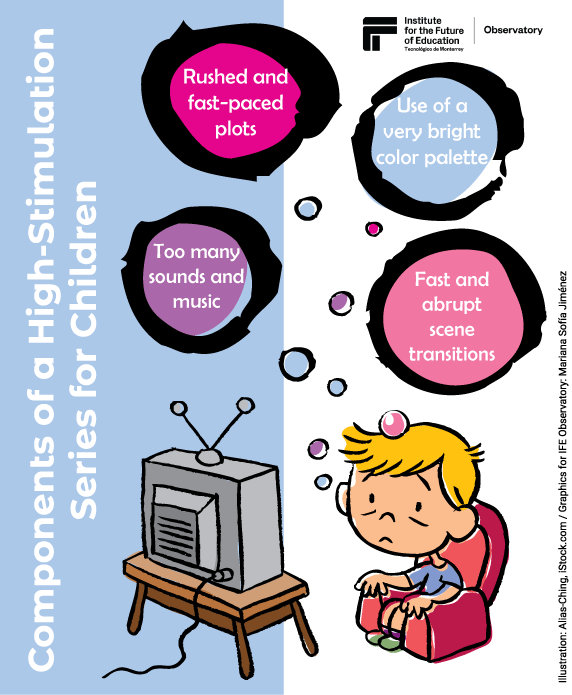
Elements of a high-stimulation children’s series
- Very bright colors: color palettes are incredibly bright, making the hues easier for the developing eyes to discern.
- Erratic scene changes: Many of these shows cut between scenes in as little as two seconds, which is rapid compared to a normal children’s series, where the transitions last between eight and ten seconds. Quick scene changes capture children’s attention, even more so when all the scenes have a lot of movement and different camera positions.
- Large number of sounds and volumes: Different rhythms and sounds at once can easily confuse little ones, especially when the sounds overlap. Some series overuse this, creating overly repetitive songs to keep children’s attention.
- Zero or rushed plots: In this type of series, the program’s elements are prioritized over the content, so the plot may be non-existent, overly simple, or have such an accelerated pace that the message is hard to understand. This only offers an intense sensory experience without any valuable content for children.
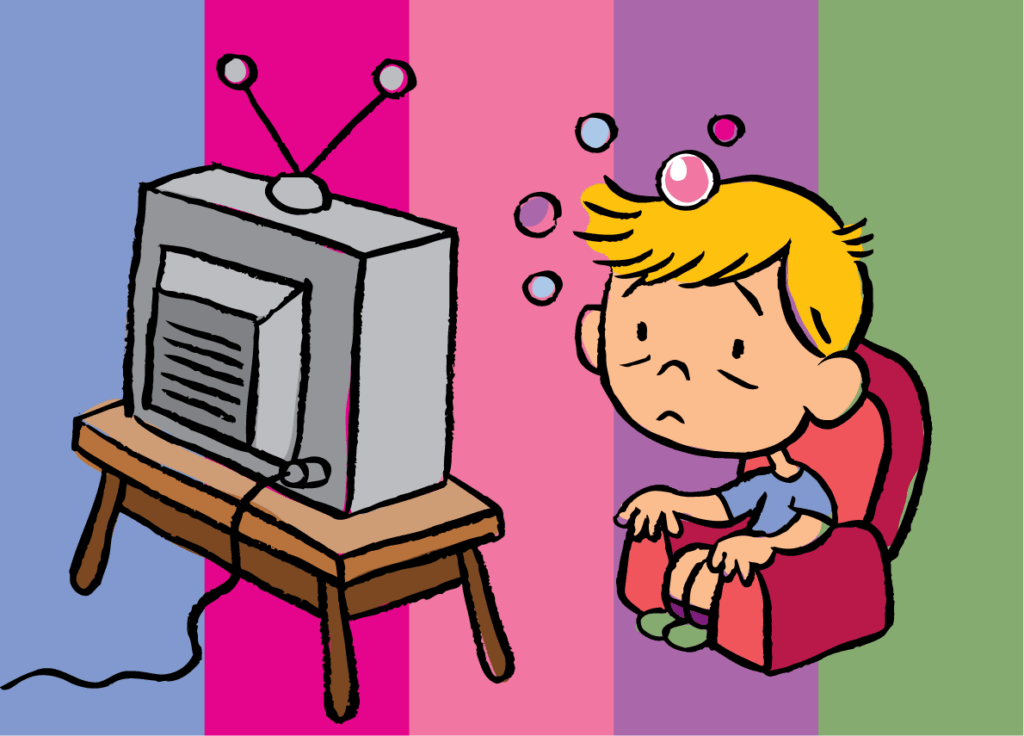
At first glance, it may seem intriguing or even funny that a child does not take their eyes off the screen and looks very focused when watching a children’s show. Still, the problem is that the incentivization of bright colors, quick movements, and loud sounds happening simultaneously causes kids’ brains to work faster to process all the stimuli their brains are receiving. Then, when the show ends, their brains continue functioning at high speed, but now without the stimuli, which can cause negative emotions such as despair, anger, or boredom once the screen is turned off.
Possible effects of high-stimulating shows
How does so much on-screen stimulation affect the little ones? Psychologist Zabina Bhasin, who specializes in infants and adolescents, specified for ABC News that watching these programs constantly can have an impact on the following:
- Behavior: When children’s brains are not constantly stimulated, as with this type of series, they can produce irritable, aggressive, and hostile attitudes when they do not have the instant gratification these programs provide them.
“Young children need their dose of boredom. It teaches them how to cope with frustration and control their impulses. If young children are constantly being stimulated by screens, they forget how to rely on themselves or others for entertainment. This leads to frustration and hinders imagination and motivation.” – Zabina Bhasin.
- Emotional self-regulation: Bhasin compares the stimuli mentioned above to a drug, so kids’ compulsive attitude is like a withdrawal symptom; being so young, children find it difficult to control their emotions, which can also lead to anxiety and low adaptability to change.
- Attention span: As mentioned above, these television programs have all the necessary elements to keep children’s eyes glued to the screen. The accelerated pace of this type of content makes it difficult for children to maintain the essential patience to interact with their environments and carry out quieter activities that require concentration, such as coloring, socializing, or listening to a story. These activities are necessary in these stages of life to develop imagination and other cognitive skills.
Low stimulation programs
Modernity and technology seem to be to blame for the cocktail of overstimulation that some television series or programs have. The reality is that many platforms offer programs with educational value that benefit children. Many parents and guardians have joined the trend of revisiting cartoons from their childhood, such as Blue’s Clues, Franklin, Pingu, and Winnie the Pooh. Similarly, some relatively new series that, in addition to being popular, are suitable for children and have educational utility; examples include Puffin Rock, Bluey, and The Stinky and Dirty Show with Big Truck.
Low-stimulation programs convey peace, tranquil sounds and music, slow transitions, subdued colors, long-lasting scenes, and simple themes with slight conflicts. Through these series, children can develop a healthy relationship with their screens and leverage them educationally.
While series can provide children with new knowledge, songs, and values, interactions with other people and experiences in their environments will be the primary source of learning. Screen content is only a source of support that can be effective if family members and guardians know how to distinguish the programs that contribute significantly to children’s development.
However, it is possible not to avoid high-stimulating programs altogether but to complement them with adult interactions. Imposing time limits, watching the program with children, asking them what they’re looking at, and dancing and singing to the program’s songs reinforce their social and speaking skills.
Distracting children with overly stimulating programs for a few minutes of relief can have long-term consequences, damaging their attitudes and cognitive processes. Moderation is key in many areas, and screen time limits are no exception. Parents, relatives, and guardians have the responsibility to manage their kids’ time on screens and observe, reflect, and continuously examine the content their children consume to protect their overall personal integrity.
Translated by Daniel Wetta