

Turnitin sponsored content
At the Observatory, we have published countless articles, webinars, dialogues, and reports on artificial intelligence (AI), particularly on the use (and abuse) of generative AI tools in the classroom, since 2022, when OpenAI publicly launched ChatGPT. Since then, we have heard, read, and responded to the concerns of the teaching community about the excessive number of assignments, texts, and exams in which they have detected the use of generative AI. We are aware that students are also alarmed by this dependence on AI and the havoc it can wreak on the development of cognitive skills and critical thinking in children and young people.
However, it is not just the younger generations that have been “hooked” on AI assistants such as ChatGPT. In this space, we have warned and reported that this dependence is not exclusive to the new generations. Teachers, directors, and administrative staff in educational institutions are also numbered among those people who, practically automatically, resort to intelligent AI assistants for any query and task, ranging from the most mundane, such as composing a supermarket list and answering emails, to bigger queries, like developing entire presentations and reports. Some are even replacing health professionals with AI advice for medical consultations, or replacing psychoanalysis with discussing their problems with artificial intelligence to seek advice.
Although relatively recent, this dependence is on the rise. It is already wreaking havoc, particularly in the development and strengthening of critical skills such as critical thinking, information retention, and the ability to analyze and synthesize information, to name just a few.
For this reason, and because we know that banning the use of these technological tools is definitely not the solution, we approached Turnitin, one of the pioneering companies in the creation of technological solutions for academic integrity, to broaden our perspective on what academic integrity looks like in times of AI and what we can do as educational institutions not to stop the use of AI in the classroom, but to use these tools transparently and responsibly.
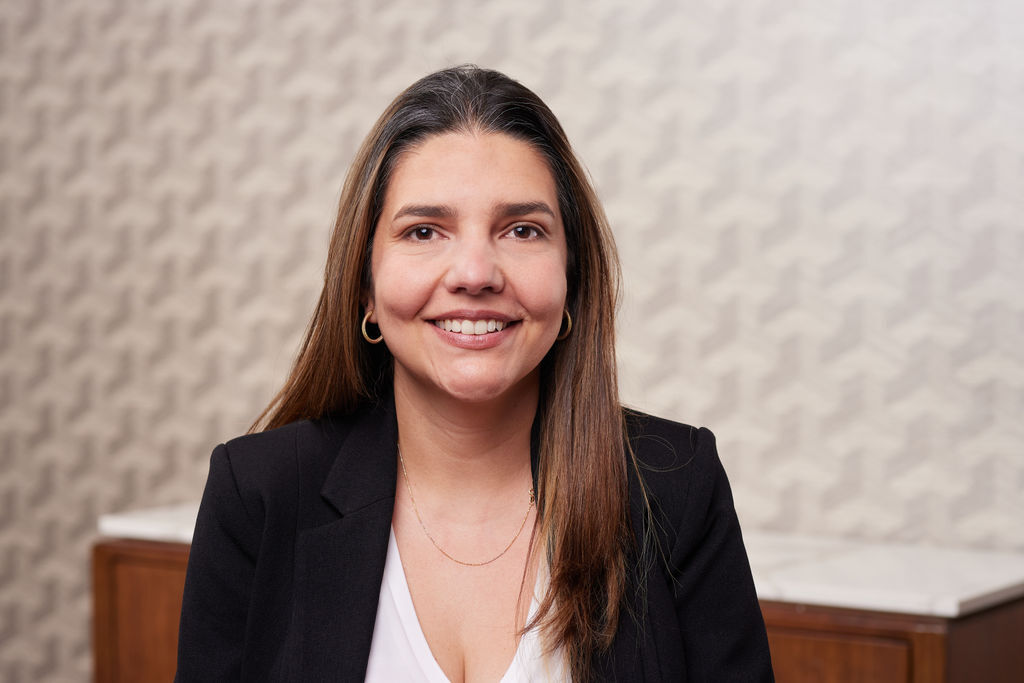
With this in mind, I spoke with Catalina Londoño Cadavid, Ph.D., Global Director of Customer Onboarding at Turnitin, a few days ago. Catalina has worked in academia for more than 15 years, serving as Director of the EIA Journal of Scientific Dissemination. In her current role, she seeks to support the implementation of Turnitin tools to promote academic integrity policies in educational institutions and to develop students’ original writing skills.
In this conversation, we discussed the current concerns of the educational community, as mentioned at the beginning, regarding the excessive use of generative AI tools that are currently being observed, and how the concept of “academic integrity” has evolved in just a couple of years, specifically from 2022 to now.
What does academic integrity look like in 2025?
Londoño commented that, as a result of these concerns of academia, Turnitin conducted a global survey of 3,500 people, including academic administrators (500), educators (500), and students (2,500) in Australia, New Zealand, India, Mexico, the United Kingdom, Ireland, and the United States. This survey aimed to understand how AI is currently used in classrooms and, most significantly, the academic community’s views on its impact on education, including teachers’ and students’ perspectives.
They recently published the results of this global study. The white paper Crossroads: Navigating the intersection of AI in education was produced by Turnitin in conjunction with Vanson Bourne. The research, broadly speaking, revealed that “although the people surveyed recognize the benefits of AI, they feel overwhelmed by its magnitude and availability.”
On the latter, Londoño mentioned that she was particularly struck by two statistics: the first, that 95% of the people surveyed recognize that AI is being misused in their educational institution. The second, no less significant, is that 86% of respondents say that it is the responsibility of academic institutions to teach both students and teachers the ethical use of AI.
“Currently, the prohibition of AI use in the classroom is not an option,” said Catalina. “Let’s be realistic, even if the institutions decide to prohibit its use, both students and teachers are going to use it,” she emphasized. “That is why Turnitin has opted to ‘fight technology with technology.’”
Transparent and responsible use of AI is possible
Recently, Turnitin announced the launch of Turnitin Clarity, a writing tool designed to foster academic integrity and responsible use of AI in and out of the classroom. More than a screening tool, Turnitin Clarity is an environment of accompaniment for students and teachers throughout the writing process.
How does Turnitin Clarity work?
Turnitin Clarity integrates easily with the LMS (Learning Management System) used by the educational institution. Once integrated, the teacher can assign tasks with their respective rubrics, and the student can write the assigned text right there, without leaving the environment, using a built-in AI assistant (totally optional) that can help them review and provide feedback on their writing.
This environment tracks all the steps the student follows when writing a text, from start to finish: whether they copy and paste, change their mind and delete an entire paragraph, or restructure it, and so on. “Think of it as a replay of the writing process,” says Londoño. Thus, the process is totally transparent; both students and teachers have access to this “recording.” It is one of the most innovative advantages of this new tool.
Serving as a student-teacher bridge, Turnitin Clarity provides a complete transparency of writing assessment for both, simultaneously promoting reflection and dialogue between teachers and students. “It is important to emphasize that this tool does not evaluate or give feedback,” says Londoño. “The aim is for dialogue between teachers and students, so that they are the ones who reflect, not AI.” Therefore, more than a similarity detector or the use of artificial intelligence, Turnitin Clarity is an environment that promotes integrity with complete transparency of the writing process.
The importance of AI literacy
Today more than ever, Catalina told me, “we want open dialogue and reflection to be promoted in the classrooms.” In a world where AI is increasingly used, we need tools to guide us in the ethical and responsible use of technology, “not with a punitive vision, but rather a reflective one about the why and the how of using AI.”
As the previously mentioned study revealed, the academic community is aware that artificial intelligence is used without much reflection, and that both students and teachers feel overwhelmed by the increasing availability of AI assistants. However, 50% of students surveyed reported that even with that accessibility, they do not know how to leverage AI in their classrooms.
On the other hand, both teachers and educational institutions are becoming increasingly aware that the current panorama is much more challenging than they realized. “Many universities are already asking, ‘Who am I giving a degree to? The student or an AI?” Londoño points out. That is why it is crucial to empower the teaching community to use AI effectively while encouraging students at all levels to use it responsibly in their studies.
If you want to know more about Turnitin Clarity, visit this link.
To download the report Crossroads: Navigating the intersection of AI in education, click here.
Catalina Londoño Cadavid
Catalina Londoño Cadavid, Ph.D., Global Director of Customer Onboarding, Turnitin.
Catalina has worked in academia for over 15 years, holding various roles in teaching, research, and extension activities. She has been an associate professor and the Director of the EIA Journal of Scientific Dissemination. She advises on formative research and the design of virtual subjects. Currently, as Global Director of Customer Onboarding, she supports the implementation of Turnitin tools to promote academic integrity policies in educational institutions and to develop students’ original writing skills.
Education
- Ph.D. in Agricultural and Applied Economics – University of Illinois at Urbana-Champaign, United States.
- Master’s Degree in Forests and Environmental Conservation – National University of Colombia.
- Ingeniera Ambiental – Universidad EIA, Medellín, Colombia.
About Turnitin
With more than 20 years of experience, Turnitin was created as a project by four students at the University of California, who sought to develop an application that would enable peer review among students themselves. Since then, Turnitin has helped ensure the integrity of writing for more than 71 million students at all levels of education across more than 16,000 institutions in more than 185 countries.
This personalized content is sponsored by Turnitin and developed by the IFE Observatory content team.