
From job security to safe spaces for the LGBTQ community, the U.S. Supreme Court verdict points to a more equitable education system.
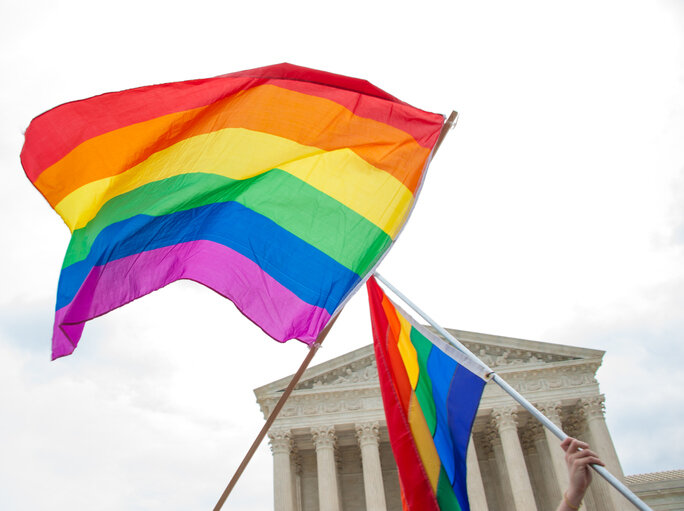
The U.S. Supreme Court made history this past June 15 by passing a federal law prohibiting employment discrimination against LGBTQ people. These new federal protections were approved with a majority vote of six in favor and three against the proposal. Based on the study of three cases, the Supreme Court decided that any employer who fires a person based on their sexual orientation or gender identity violates Title VII of the Civil Rights Act of 1964.
This federally valid document prohibits discrimination in the workplace based on race, the color of skin, religion, sex, or national origin. The question before the members of the Supreme Court before the verdict was whether aspects such as gender identity and sexual orientation fall within the spectrum of sexual discrimination mentioned in the Act.
Even conservative judges chosen by President Donald Trump agreed that the statute that mentions sex discrimination also applies to the LGBTQ community. Judge Neil Gorsuch said that “An employer who fires an individual for being homosexual or transgender fires that person for traits or actions it would not have questioned in members of different sex. Sex plays a necessary and undisguisable role in the decision, exactly what Title VII forbids.”
The Supreme Court’s verdict will significantly change labor dynamics in the United States in the near future, but what does this mean for teachers and the classrooms they lead?
No more fear in the classroom
“The U.S. Supreme Court’s decision this week will have determinant repercussions for the future of the LGBTQ community, and also for education,” explained Eliza Byard, executive director of GLSEN (Gay, Lesbian, and Straight Education Network) for Teaching Now.
The first consequence of this ruling in schools, Byard argues, is to allow teachers and LGBTQ auxiliary staff full participation in school life and performance of their work duties without fear of negative repercussions that jeopardize their present or professional future.
Also, it opens paths for representation and guidance while offering personal examples to follow to help LGBTQ students who are bullied, as well as potentially providing free and safe spaces from homophobic bullying. In previous articles, we have discussed the incidences of this problem in schools and how harmful these can be for non-heterosexual students.
A history of discrimination
The verdict of the United States Supreme Court is not a final solution to this problem. Still, without a doubt, it will represent a positive, humanizing force for the protection and representation of LGBTQ people in all educational levels. For teachers who have historically faced sex discrimination, homophobia, and transphobia, these protections are the change they have awaited to be able to practice their profession with the same stability enjoyed by their fellow cisgender and heterosexual peers.
Still, in recent years there are thousands of cases of teachers who are pushed out of the profession because of their sexual orientation or gender identity. Andrea Hawkman, ex-professor of social studies at a rural high school in Missouri (USA), talks about the experience of practicing teaching and the impossibility of revealing her sexual orientation for fear of possible negative repercussions.
Hawkman, who no longer practices as a teacher, explains that the psychological weight of being an LGBTQ teacher made her feel as if she were divided into two halves that could not coexist in the same space. Being silent on such a fundamental issue was exhausting for her personal and mental health, Hawkman commented. Something as simple as providing LGBTQ students with a safe space to be themselves was also troubling because it could have attracted discrimination from fellow teachers, superiors, and families. That was the reality that a lot of LGBTQ teachers were living in the United States before the Supreme Court ruling.
Indeed, a legal ruling will not resolve the problem of homophobia at the teaching level in U.S. schools. However, it is a step toward admitting the existence of LGBTQ teachers and staff in educational spaces and providing them the fundamental rights to educate a generation more open and humane towards people in non-heterosexual spectra.