
I share with you, dear readers, some ideas that came to mind this week after reading an article providing statistics about the unhappiness of today’s young people. According to the figures, the young people in past times did not suffer as much as today’s. Historically, the happiness curve tended to stay high in the early stages of life (childhood and adolescence), then decline in adulthood and rise again in old age. In today’s times, the descent into pain begins earlier.
This information is not new; many people have heard similar data lately. However, the truth is we do not need much external information to be aware of young people’s current emotional condition. We all know, or at least intuit, that they are not having a good time.
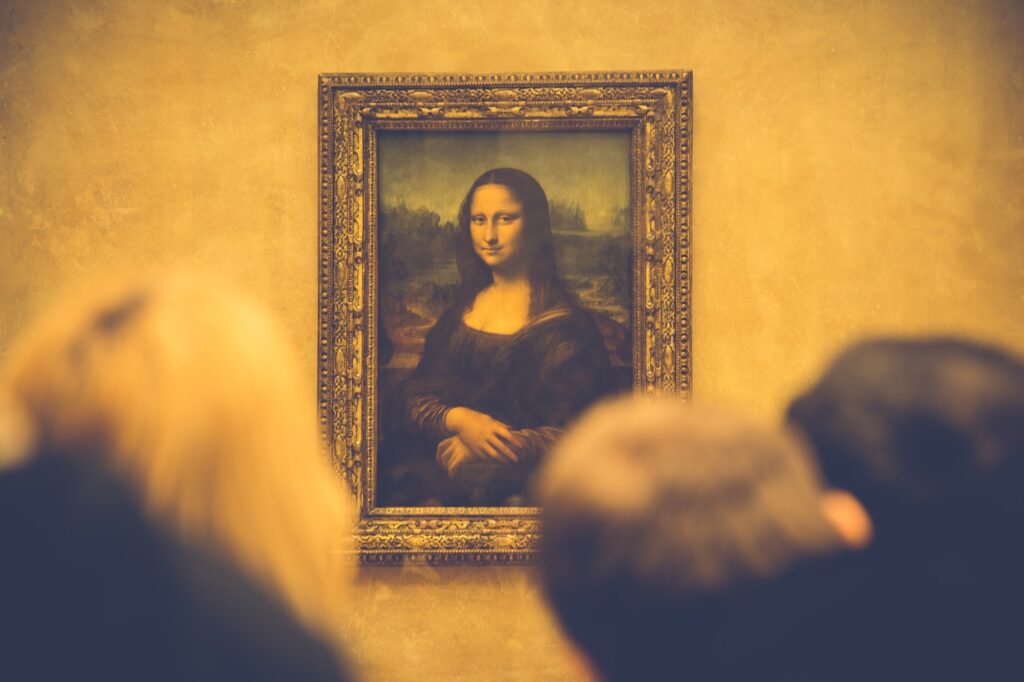
For me, for example, it was enough to read a couple of paragraphs of that article for my thoughts and feelings to take me back in time to the history of the Renaissance, remembering Nicolaus Copernicus’s discovery that planet Earth is not the center of the universe, Charles Darwin’s Theory of Evolution, and Sigmund Freud’s arguments for the existence of the subconscious. I associated all this with the little I have read by and about Jacques Derrida, the Algerian/French deconstruction philosopher.
The reader will see how all this relates to the suffering of today’s youth.
Certainly, we can all imagine what fifteenth-century people felt when Copernicus discovered that the Earth moved and did not eternally occupy a fixed point in the center of the cosmos. Humanity must have felt stripped of one of its pillars of identity, which placed humankind at the center of creation as God’s favorite creature.
This crisis, as significant as the one now, would have shaken those capable of becoming aware of the tremendous change. Fortunately, all was not lost: the new cosmic model was accompanied by a powerful awareness of our individuality, which lets us disagree with what the majority thinks and even discover new truths for ourselves. The image of Galileo Galilei confronting the Inquisition is one of an individual opposing the mainstream with the power of his consciousness. “I think, therefore, I am,” René Descartes said almost at the same time.
So, although the discoveries made it increasingly difficult to believe in our cosmic hegemony, at least the starry sky, the entire planet, and lush nature surrendered at our feet, revealing their sacred mysteries through our gifts of observing, doubting, reasoning, and experimenting. Yes, we were still exceptional in the order of creation: heroes of the world—our world!
Unfortunately, everything crumbled again centuries later in the nineteenth century, when Charles Darwin discovered that, in reality, very little distinguishes us from plants and animals and that we are just one more species in the evolutionary chain, just one more link in nature that we had assumed subject to us. Suddenly, we confronted our ancestors: monkeys, opossums, and even the guavas and the nopales (to mention just a few of the closest)! This news jolted humans again to seriously doubt their privileged and central position in the world.
Again, science came to our aid, sufficiently weakened, to resolve the most profound human dilemmas (e.g., our position in the cosmos) and protect doubting humans. Science had to exacerbate its image and present itself as infallible knowledge. Science could solve everything! The time of positivism filled people with enthusiasm, eager to find a new center for their lives. But the Achilles heel of science was human weakness in general. This ended up becoming evident, plunging us into a chaos of ideologies, advertising, and wars and putting us at the mercy of totalitarianism and its false superiorities (racial superiority, economic superiority, class superiority, intellectual superiority…).
Shortly after Darwin’s announcements, a Viennese doctor living on the margins of science (i.e., psychology and the human sciences) began propagating horrible ideas. According to him, the consciousness to which we human beings attributed the ability to know and reason everything, and which would, therefore, save us from barbarism, that acute and infallible thinking Self that each of us claimed, was just a tiny visible part of an immense psychic structure, one that decidedly governs us but which maintains itself hidden in our unawareness.
Things seemed to have no end in this horrible nightmare of losing our center and ourselves! As part of his discoveries, Sigmund Freud (the Viennese mentioned above) did his bit for the solution by spotlighting the revealing and reconstructing power of the spoken word when carefully heard. By talking to others and listening to oneself, the human being could sustain the Self over the abyss that had opened under his feet. This vindication of the word gave psychoanalysis a fundamental place in the history of self-knowledge and communication (and with it, by the way, education). However, as a good scientist, Freud stopped right on the precipice of mystery, quickly reassembling the human being (albeit fragmentarily) so as not to fall into it.
However, if we really wanted to understand things, we had to deprive the human soul of all its artificial supports and birth a more radical way of thinking!
In a 1966 conference, young Algerian-French philosopher Jacques Derrida presented some shocking ideas: he spoke of a radical “decentralization” of the world. According to him, everything human beings have as structures of reality and thought lacks anything that could be called “a center.” Nothing in the world has an “objective,” universal, common-to-all point of support, nor is there a basis to affirm the truth of things or infer other truths. Everything moves as if in a playground with mechanical equipment that lacks support.
The worst or best thing is that our language is also part of this strange movement. In fact, we had always believed that our words were part of an orderly, meaningful system, but now Derrida has shown that this was not the case. If one thought about it, even language had no center, an axis on which one could stand for definitive truths or even provisional ones; there was no word or a definition in the entire lexicon whose meaning would allow other words to be successfully oriented. So, while his contemporary, the prominent psychoanalyst Jacques Lacan, argued that language could extract the subconscious into the light and thereby give hope to the reconstruction of the Self and the world (at least a personal world), Derrida chose to “decenter” the whole of reality to find what was underneath, knowing that immersing himself there would confront him with “a monstrosity.”
I don’t know how many horrible things he must have found in his processes of deconstruction of all centers, but I do know, from a dialogue in which he participated in 1977, that one of the beautiful things he found was what we call “the others,” the other people. Apparently, in the dissolution of human psychic integrity, what emerged as an option was not a new quality within the individual – as thought happening throughout modernity since Copernicus – but a first opening to the outside, an encounter of the impoverished Self in other people. As the Mexican poet Octavio Paz said in those years:
“In order to be, I must be another,
Leave myself, seek myself among others,
The others who do not exist if I do not exist,
The others who give me full existence.”
However, there was nothing simple and romantic in this new thought. Derrida had a particularly shocking way of seeing things. According to him, other people appear as part of our world but not as our “fellow men,” not with a presence in which we can see ourselves reflected. The others are so radically different from us ( as “others”) that if we look for them by conventional means (believing that there is order and meaning in the world), we will never be able to find them. Just as Octavio Paz found that even if I am partially absent from myself, I can “seek myself among others,” Derrida showed that after much time groping in search of someone, I could finally realize that the others are in me only as an “absence,” as a kind of ghost or trace. I could never refer to their clear “presence;” there would always be an infinite distance between us.
This meant that relationships with others could only occur as an act of faith, a leap across that distance, an act of faith “beyond knowledge,” that is, without conditions, concepts, interpositions between us, or even language, without even asking the other for his name or giving him one.
Derrida’s philosophy about this unconditional encounter with others is not only a theory but a profound assimilation of consciousness that has been developing for years and that today is the main engine of our young people. Dissolving the boundary between known and unknown people, his concept of friendship, for example, anticipates the idea of friends/followers that we have today on social media: beings with whom differences and distance unite us. It is a relationship not based on proximity and presence (that is, it does not need to be face-to-face), one that has nothing to do with exchange (a word brought from the commercial sphere, where “I give you, you give me back” prevails, i.e., debt) but a lot to do with mysticism and, as I say: faith.
Recently, I attended a seminar on “Philosophy at School,” where a young influencer whose TikToks are seen by millions of people reminded us that behind all the information we find on the internet, there is, ultimately, a human being, a person. No matter how widespread artificial intelligence and algorithms are, nothing in our world is generated without someone’s intervention—someone with whom, ultimately, we are linked by that unconditionality of which Derrida spoke.
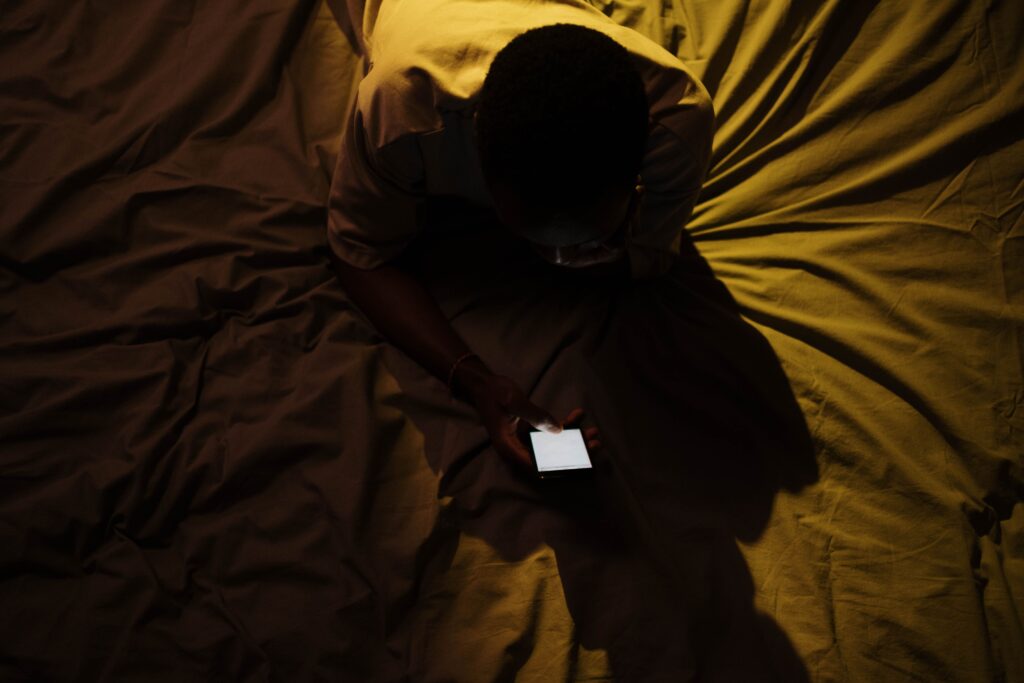
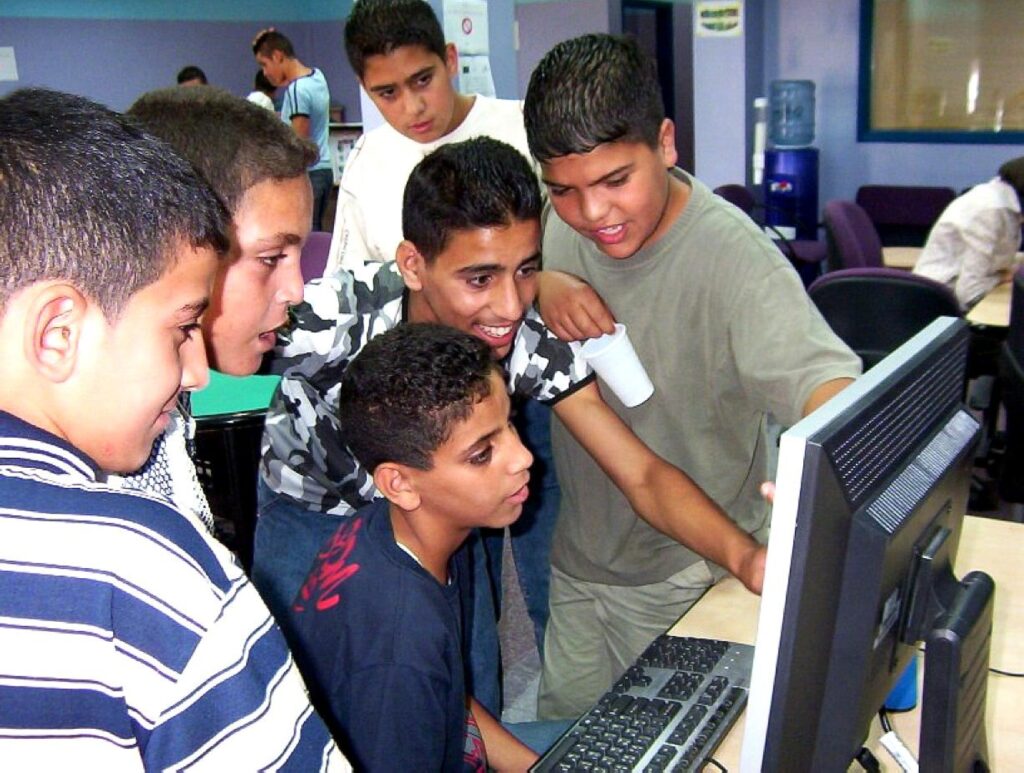
I believe that young people demand our faith. It is not true that they choose the impersonal relationships of the networks over the face-to-face ones with family and real people. We “adults” (fathers, mothers, and teachers) have become stagnant in our image of them as young prisoners to their screens, absorbed in a nothingness without people, like automatons that have been extracted from themselves to renounce their intelligence and be manipulated. No, like that young influencer, they remind us that they are always in contact with others, now perhaps more than ever, although in ways that the older generations are reluctant to understand. However, this form of contact is the only one appropriate for the new era: the other that young people are discovering is not the other in person, the neighbor, or the fellow sitting at the table with whom they can make plans. It is not the one they talk to on the phone or Zoom. It is not even the other on the couch to whom the psychoanalyst listens. The other they have found is conspicuous by his absence, the one hidden behind electronic devices, those who seem inhuman to us and yet contain Derrida’s imprint of someone. (I always think of the times when printed books were invented; it was a time when oral transmission seemed healthy, with readings aloud around the table or in church and recitations of poems and stories in the public square. What would people have thought about those crazy people who began to read silently, having a dialogue with nothing or no one, instead of choosing the company of others?)
Perhaps we should stop talking about “alienation” and begin to conceive of a faith in the absent other. What is at stake at this moment is our trust in our daughters, sons, male, female, and gender-declared students (which, by the way, is nothing more than the trust that we claim for ourselves). To put it once and for all, young people feel pain because inaugurating a new historical period is not easy; however, that pain becomes suffering because we, their only possible accompaniers, choose to remain in the past, withdrawing our support from them. “I am not a robot” seems to be the motto of this youth; they demand respect for their consciousness.
Perhaps a world as challenged as ours generates the superstition that young people backing down will make everything return to how it was before. But we must consider that our children are not in a position to withdraw. This world is their destiny, although we tremble at the thought of witnessing, as Derrida might have, the birth of a monstrosity.
We cannot let them go without giving them our faith. Doing so would be as if society had developed an exploration laboratory promoting human reconstruction for more than sixty years and then threw everything overboard at the last moment.
The truth is that even if we continue to reproach them for their way of life, they of all genders will depart for the era that is dawning, with or without us. For all, this is the moment of faith, and adults must choose between remaining in the past or taking the leap.
Translated by Daniel Wetta