

Audrey Watters, an educational technology writer, argues that knowing the beginning of this field’s history is crucial for conceiving the present and future of education. They may recognize the transcendence of inventions employed since the end of the fourteenth century or prolong the belief that engineering can remedy all problems and mold solutions.
EdTech (educational technology) is a field born from combining pedagogy and content knowledge on a physical device; we must remember where the tools that support learning come from and their purposes. The author describes many physical devices for teaching and learning throughout history, such as the Hornbook (an alphabetical tablet from medieval times that served as a book to teach reading) or the Quintain (a training aid for jousting). Some relevant EdTech contributions have come from the military, such as blackboards or flight simulators. Understanding these events and valuing the precedents directly impacts how the teaching practice is appreciated.
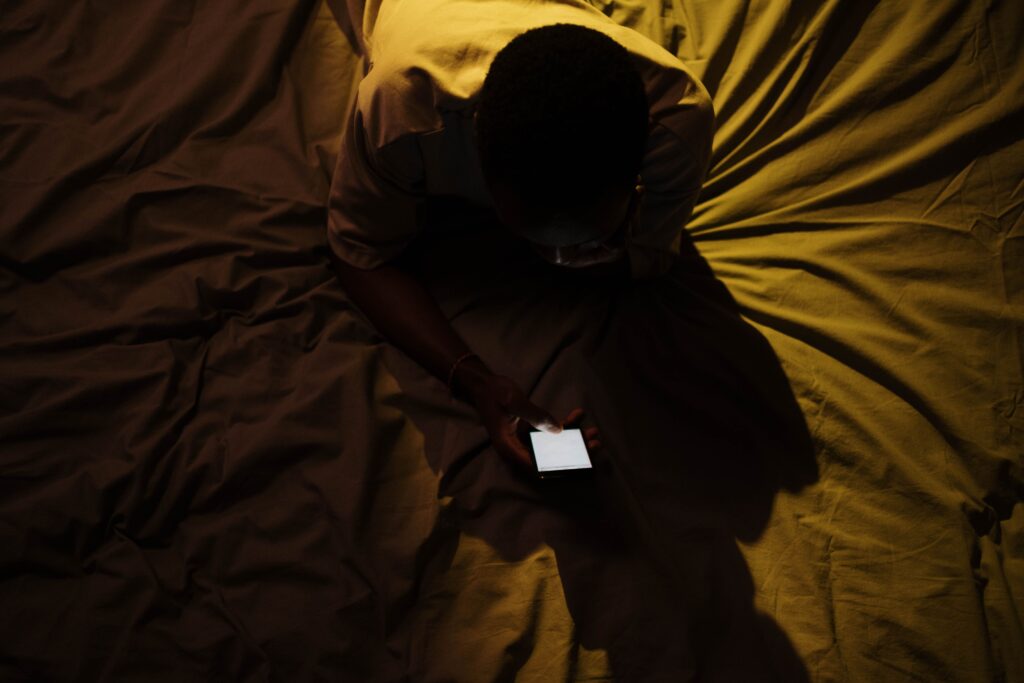
However, nowadays, educational technology often dismisses corporeality, the role of the human body in learning. Watters explains that although the exercise of learning by doing is proclaimed, there is a tendency to fall into learning by clicking. Therefore, the importance of teaching and learning with our bodies in physical spaces with other bodies falls by the wayside.
Watters explains that acknowledging the erasure of embodiment is crucial for understanding educational technology because its omittance essentially suppresses the differences between bodies and promotes hierarchies that prioritize “brains.”
For her part, the digital technologies philosopher Alejandra López Gabrielidis explains that the technical advances of virtuality have mediated and transformed how people act and relate to the world. Thus, the somatic body has moved to the background, no longer in the current approach, and the body’s role as the structuring axis of human experience and affectivity falls further behind.
In addition, she highlights that in a world that worships data, some are concerned about the difficulty of finding congruence between the dimensions of digital abstractions and tangible bodily experience. For example, she describes that, although the number of likes or followers increases, people feel lonely, or the accelerating pace of work and the economy do not represent progress in life but instead an increase in competition and precariousness.
López Gabrielidis also suggests that “new modalities exploiting our flesh-and-blood bodies emerge that are no longer exercised directly but surreptitiously through our data.” Therefore, he invites us to analyze the extent to which corporeality is transformed into data and consider what would happen if these data were conceived as a dimension of corporeality.
“With the notion of corporeality, we want to indicate the possibility of continuing or prolonging the process of psychic individuation in the areas of the exosomatic. This notion points to the possibility that the tensions caused by datafication are resolved through innovative splitting, inaugurating a phase where digital technologies become a second medium associated with our psychic individuation, a second body,” she says.
Thus, managing two bodies helps to ensure that digital ubiquity does not lead to individualism being isolated behind a screen with emotional disconnection. Extending the spectrum of corporeality-reality helps to create a consolidated basis for developing digital rights since personal data refers to claiming rights over what belongs to a person, while the concept of a body of data would be part of their identity.
Sense of Corporeality
A study by Yesenia Pateti defined seven categories comprising the principles of corporeality: social context, sense of freedom, value of play, motor maturity, teacher training, physical education, and teaching process. The body, in turn, is an acting entity. Therefore, corporeality implies a visible manifestation of what is invisible in the human being.
This research also highlights the term as an element involving the vivid and protagonist body, based on the German words körper and Leib. This means the body carries two meanings: the object body (körper) and the existential nature in its living and acting function (Leib). Hence, corporeality is the protagonist body behind every visible and invisible human act.
School is a space for intercorporeality, where contact, attachment, and detachment converge. It is also where someone is forged, and culture is appropriated. Learning occurs through the body and the whole being inside and outside the classroom. For this, the little recurring playful learning is practical. Therefore, this analysis spotlighted the need to uproot the body exclusively from physical education because, according to corporeality, the body’s transversal character performs naturally in any academic area.
Consequently, separating subjects between those that require the body and those that use the mind is reductionist. In formal or informal education, the logic of the mind/body dichotomy molds an educational perspective that assigns superiority to the mental; hence, subjects are categorized according to performance, qualifying physical education and the arts as adherents to the curriculum. Scant attention to the education of the body (ignored in subjects and addressed technically in physical education) translates into rigid movement patterns, especially for those who are considered “less gifted” or less physically skilled.
The study mentions that this practice makes citizens regard themselves as puzzles; they are not granted the complexity of the person who accumulates experienced knowledge. Additionally, it argues that prioritizing theoretical education over physics produces gaps in children’s motor development, along with restricted body expressions, deficiencies, and insecurities. The study also discusses phantasmatic corporeality, which is the absolute lack of motor skills a student should possess according to age and school grade. For example, if a student does schoolwork well, it is assumed that they can cope with different demands, but the physical limitations that will prevent progress in their career later are not seen at that point. This results in the collective anxiety of the students and their educators when they see their progress “stagnate.”
The text cites Chilean authors Maturana and Sima, who write that “education can be understood as a phenomenon where all the dimensions of the human are integrated in such a way that body and spirit are involved in every manifestation of life; otherwise, there would be alienation and loss of social and individual meaning. For this reason, it is necessary to highlight Bourdieu’s (1972) idea of how learning should be conceived: as a global and holistic process where the body inevitably intervenes so that what is learned is not only known but also the configuration of the being and identity with culture and social class.”
Likewise, they establish that corporeality is enriched with the time and influence of relevant adults. If the body can be educated, the question arises as to what that education should be like – one that merely involves bodily techniques or one where every educational act includes the body somehow.
As if these premises were not complex enough, some authors determine that while there are solid reasons for these affirmations in the historical events of this field, ignoring the body in school does not directly infer a lack of bodily consideration because there is always activity in institutions, and bodies are the first exercise of power. Thus, embodied learning (or built-in learning) allows students to participate holistically with proprioceptive, sensory, and cognitive information.
Although EdTech involves integrating new technologies, specialists indicate that, in general, these resources facilitate interaction and, therefore, active learning, where there are opportunities for communication and collaboration, favoring socially mediated learning. Virtual tools offering presence and immersion generate a perception of reality for students in online environments.
Touch, sensor, and mobile technologies provide various perceptual experiences, such as handling physical objects with digital components. These advances are crucial to understanding the growing interest in corporeality in technological fields. However, this concept has a complex history and has been debated in multiple disciplines. For these reasons, it is essential to reevaluate the body’s relevance in any educational process. Regardless of the area of knowledge, corporeality serves as a means of communication, teaching, and learning.
Translation by Daniel Wetta