

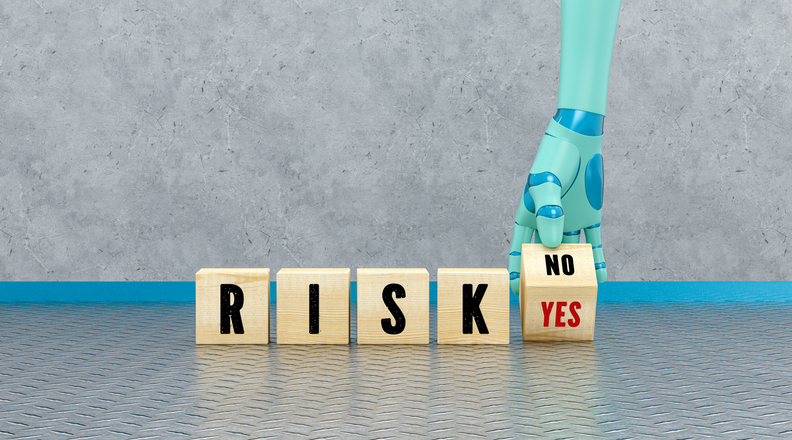
Artificial intelligence (AI) in higher education has generated high expectations in universities worldwide due to its ability to personalize learning, automate tasks, and optimize administrative processes. However, we must put on the table the risks and ethical challenges of using AI in higher education, such as technological dependence, degradation of intellectual autonomy, decrease in problem-solving skills, academic integrity, and its impact on critical thinking development. This article spotlights some advantages and disadvantages of AI usage in the classroom for our awareness and generation of more in-depth research.
Eighty-eight percent (88%) of surveyed undergraduate students on the Tecnologico de Monterrey in Guadalajara Campus reported academic improvement between August and October 2024 after using generative AI. The benefits mentioned included improved essay and presentation writing, summary creation, complex math problem solutions, and exam preparations. Moreover, 30% indicated they significantly reduced the time spent on complex tasks. This information suggests that many students turn to AI as a support tool and a key resource for automating learning processes, such as generating predictions or synthesizing extensive information on one-page summaries. This trend raises questions about technological dependence and its effects on critical thinking, intellectual autonomy, and educational equity.
AI tools to empower business learning
AI tools have been integrated into Tecnologico de Monterrey’s EGADE Business School to explore and improve the student learning experience. The objective is to foster innovation, prepare students for their future work, promote creativity in problem-solving, and provide access to advanced educational resources. The AI resources used are ChatGPT, Grammarly, Gamma.app, Fliki.ai, Wolfram Alpha, Consensus, Quillbot, Jenni.ai, Google Bard, DALLE, and Custom GPTs.
We find that tools like ChatGPT and Wolfram Alpha make it easier to solve problems and organize academics. It is common for business students to face difficulties when applying predictive models, linear programming, and waiting lines (queuing theory). AI can significantly support these cases, providing guided solutions and facilitating understanding of complex concepts. Likewise, AI tools allow students to prioritize their activities, improve their effectiveness, and better manage their time, thus possibly improving their academic performance.
However, these tools must be regulated for learning to avoid technological dependence, academic dishonesty, and the loss of critical thinking competency. AI should complement learning, not replace it. We must implement strategies like oral assessments, applied problems, and argumentative individual evaluations to ensure that AI does not replace student effort. It encourages students to explain their reasoning, defend their ideas, and adapt information rather than copy it. In addition, some teachers regulate AI usage with detection software like Turnitin, Copyleaks, and SciSpace, among others, to avoid excessive dependence. The key is not banning AI but integrating it effectively to enhance learning without affecting the development of autonomous thinking.
Ethical challenges and technological dependence
Despite its advantages, artificial intelligence in higher education presents significant risks. A primary challenge is technological dependence. 34% of students surveyed expressed concern that excessive use of AI could affect their ability to learn independently and think critically.
This fear is not unfounded. Students who delegate more tasks to automated systems risk losing essential problem-solving and critical analysis skills. Studies like those by Holmes and Tuomi (2022) warn of the need to balance automation with traditional teaching, ensuring that AI complements, but does not replace, teaching.
Another significant survey finding reveals that 55% of the students perceived that generative AI could impact academic integrity. This concern lies in the potential misuse of these tools, including generating essays automatically and resolving exam problems without student effort.
Also, using AI raises serious concerns about data privacy. Educational platforms collect and analyze large volumes of students’ personal information, which may be used for commercial purposes or, even worse, leak sensitive information. The lack of transparency in using this data is an issue that requires explicit, strict regulation to prevent its misuse (Harouni, 2023).
The role of the teacher in the age of AI
In the era of artificial intelligence, the teacher’s role must evolve from merely transmitting knowledge to facilitating critical and reflective learning. While algorithms can personalize content and provide immediate responses, they cannot understand students’ emotions, motivations, or challenges. Therefore, the teacher must focus on guiding the appropriate use of artificial intelligence, teaching students to question, analyze, and contrast the information generated by these systems, thus promoting learning based on critical thinking and intellectual autonomy (Khlaif et al., 2024).
In addition, teachers must prepare students to understand algorithms’ limitations and biases, fostering a critical attitude towards technology. Education should transcend the use of AI tools to include training in digital ethics, explaining how AI models can reinforce pre-existing biases and why blind trust in these systems can be risky. In this way, the teacher becomes an essential guide who helps students balance using AI with developing irreplaceable human skills, such as creativity, empathy, and ethical judgment.
Personalizing learning with AI
One of the main benefits of artificial intelligence in higher education is the personalization of learning. AI-powered platforms, including intelligent tutors and adaptive learning systems, allow for adjusting content to each student’s needs. Thus, disciplines such as mathematics and science have seen significant student performance improvements by providing real-time feedback and optimizing the learning process (Zawacki-Richter et al., 2019).
In addition, AI has changed how students manage their academic loads. Automated writing assistants and content generation tools have facilitated writing essays and summaries and solving advanced math problems. Previous studies suggest that these technologies increase efficiency and reduce the education access gap, allowing more students to benefit from personalized and affordable resources (Holmes et al., 2023).
Automation in educational management
Beyond its impact in the classroom, AI is also transforming educational management in universities. Many institutions have begun using algorithms to analyze student community data, optimize resource allocation, and improve evaluation systems. It has reduced the administrative burden on teachers and facilitated monitoring students’ academic progress.
However, this automation raises fundamental questions: Can AI systems make objective decisions about a student’s journey? How can we ensure that AI algorithms do not reinforce biases that may affect equity in access to education? Without adequate regulation, implementing artificial intelligence in educational management could exacerbate pre-existing inequalities, benefiting only those with access to advanced technological tools (Adams et al., 2022).
The Impact on Educational Equity
Another critical challenge is equitable access to AI. While this technology can improve higher education, it could reinforce existing inequalities. Not all universities and students have access to advanced artificial intelligence tools, thus generating a digital divide between those who benefit from these innovations and those who do not.
Adams et al. (2022) warn that if educational institutions do not establish mechanisms to ensure equitable access to AI, students with fewer resources could be excluded from the advantages offered by this technology. To mitigate this risk, inclusive policies must be developed to ensure that these technologies are available to all learners, regardless of socioeconomic background.
Reflection
AI in higher education is a powerful tool with great potential, but ethical policies and appropriate regulatory frameworks must accompany its implementation. This technology must be used fairly, transparently, and in a way that complements traditional teaching methods.
Future studies should focus on assessing artificial intelligence’s impact on more qualitative disciplines, such as the humanities and social sciences, where its effectiveness is still uncertain. In addition, further research is required on its long-term impact on education, especially regarding intellectual autonomy and the development of critical thinking.
Artificial intelligence can potentially revolutionize education, but its adoption must be done cautiously. The key will be finding a balance between technology and traditional teaching, ensuring that AI does not replace the human role but enhances it.
About the Author
Dr. Mauro Rodríguez Marín (mauro.rodriguez@tec.mx) is a professor at the School of Business in the Department of Marketing and Analytics. He is also a researcher in Organizational Strategy and Data Science at the School of Business at Tecnologico de Monterrey and a member of the National System of Researchers (SNII).
References
Adams, A., Greenhow, C., & Harouni, H. (2022). Ethical considerations of AI in education: Privacy and bias concerns. AI and Ethics Journal.
Harouni, H. (2023). Embracing artificial intelligence in the classroom. Harvard Graduate School of Education.
Holmes, W., & Tuomi, I. (2022). State of the art and practice in AI in education. European Journal of Education, 57(4), 542-570. https://doi.org/10.1111/ejed.12533
Khalif, Z. N., Ayyoub, A., Hamamra, B., Bensalem, E., Mitwally, M. A., Ayyoub, A., … & Shadid, F. (2024). University teachers’ views on the adoption and integration of generative AI tools for student assessment in higher education. Education Sciences, 14(10), 1090.
Zawacki-Richter, O., Marín, V. I., Bond, M., & Gouverneur, F. (2019). Systematic review of research on artificial intelligence applications in higher education. Research in Science Education.
Editing
Edited by Rubí Román (rubi.roman@tec.mx) – Editor of the Edu bits articles and producer of The Observatory webinars- “Learning that inspires” – Observatory of the Institute for the Future of Education at Tec de Monterrey.
Translation
Daniel Wetta