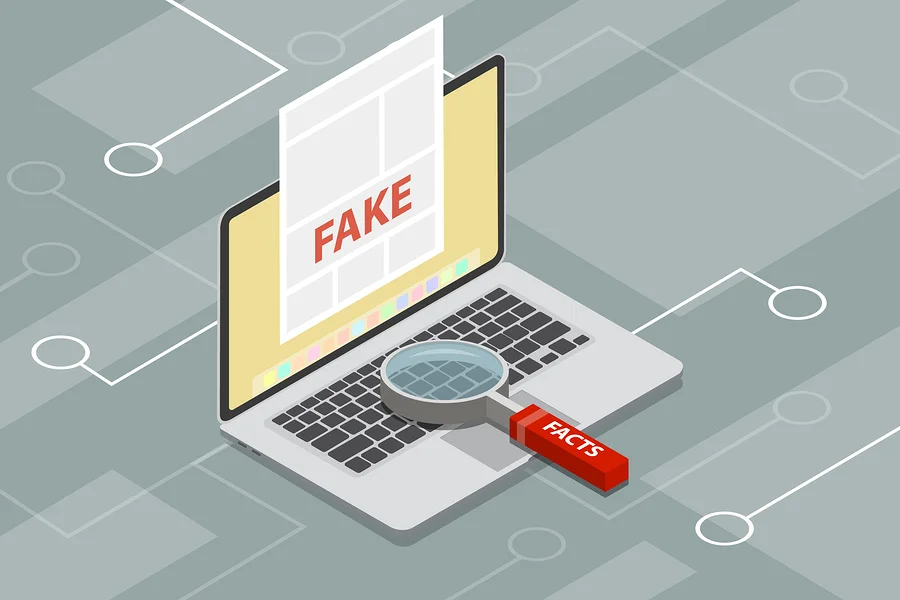


“It is one thing to guarantee freedom of expression and another to disclose false information. Social responsibility should start in school.”
We live in an age where information is considered a valuable asset for making better decisions. Society requires that media companies and the agents involved in the communication process be considered valid interlocutors who believe and look out for the legitimate demands of the public when generating information that affects them. This means that the activity of news reporting is considered a public function because of the impact, benefits, risks, and implications that come with the professional exercise of communicating.
Universities involved in the training of professionals related to the generation, communication, and dissemination of media content are participants and equally responsible for this new vision of the management of information. Through their academic activities, the priorities and values of future actors involved in the work of informing are built.
“We must foster a level of deep reflection in future communication professionals; that is decisive to develop a sense of commitment about what the responsibility to inform means.”
The obligation to provide legitimate information is the responsibility of any individual engaged in communication. Journalists and communicators are subject to a moral obligation to procure and respect the information they provide, avoiding the influence of ideologies, beliefs, or particular interests that could accentuate or mitigate what they share. The right to information is not the property of the communicator nor the media company, but the citizens. Therefore, the objectivity of the information provided turns out to be one of the most significant responsibilities that such organizations and professionals have (Cortina, Martínez, and Siurana 2005).
Besides the informative function, the process of acquiring knowledge is greatly influenced by the media. Therefore, the information that media companies and professionals share should not be taken lightly. Reporting must be clear, concise, timely, relevant, accurate, and complete. When information that does not adhere to these qualifications is disseminated, both the company that owns the media and the communicator are responsible for the negative consequences that could impact the direct consumers who are the readers, and this includes the social perception of the fact in question.
“A full professional is one who exercises his freedom with responsibility, acting with empathy and inclusion, and always putting people first, respecting their dignity and valuing the role they play in their community.”
It is one thing to guarantee freedom of expression and another to disclose false information. The media and the communicator professionals have a responsibility to ensure that well-founded assignations or reasonable interpretations support the information they provide, given that their social responsibility also includes providing contrasting views, which promotes sufficiently reasoned and argued public opinion.
As educators, it is essential to foster a level of deep reflection in students, who are future communication professionals and information generators; that is determinant for them to develop a sense of commitment to understanding what the responsibility to inform means. Communication and Journalism educators should pay special attention to include in the curricula academic activities and projects where students can develop skills of integrity and moral judgment through reflection and analyses of content that allow them to appreciate the consequences of the ethical exercises of their professions.
Unfortunately, curricula mostly focuses on developing disciplinary competencies that can be measured by the media impact of what is reported, putting little or no interest in the social relevance that the communication has nor the objectivity or subjectivity of how it is put out. The so-called fake news has shown that the person who says things is highly regarded than what it’s said, reaching a point that the falsehood and distortion of what is reported are less critical compared to the high impact that communication has. This distorted view of the moral commitment to information denigrates the importance of objectivity and veracity at the moment of reporting.
It is equally contrary to social responsibility when professionals involved in journalism or communication take biased or tendentious stances on tragic situations. In many cases, this practice gestates a set of responses that resound with the population who, when reading the news, reproduce similarly unfounded opinions. Therefore, the information provided must have cautious media coverage, because regardless of the information provided, the media is equally responsible for the possible generation of trends that could occur consequently, due to the influence of opinions or ways of thinking embodied in their media products.
A full professional is one who exercises his freedom responsibly, acting with empathy and inclusion, and always putting people first, respecting their dignity and valuing the role they play in their community. Therefore, the social responsibility of the future communication professional starts in the classroom, in which the young person must understand the social relevance of his profession and the impact that his actions may have on the establishment of opinion among consumers of content.
About the author
José Carlos Vázquez Parra (jcvazquezp@tec.mx) is a Professor-Researcher at the School of Humanities and Education. He is also Director of the Regional Department of Humanistic Studies at the Tecnológico de Monterrey on the Guadalajara Campus. He has a Ph.D. in Humanistic Studies with accentuation in Ethics. He is a member of the National System of Researchers Level 1, and his lines of research focus on the study of social responsibility, behavioral rationality, and human rights.
Reference
Cortina, A., Martínez, E., and Siurana, J. (2005). Ética de las profesiones. Monterrey: ITESM.