

“The integration of fruits and vegetables in an electrical circuit is not a frequent practice; this situation triggers students’ natural curiosity to understand the phenomena that occur.”
In the absence of face-to-face learning experiences in a physical laboratory, we can use alternative activities through simulators that provide detailed electrical circuit behaviors, in the electrical engineering fundamentals subject. In this article, we will discuss some simulator options for practicing the concepts learned in class to understand these better, making use of homemade elements to analyze the results of voltage measurements on lemons, oranges, pears, and potatoes. These fruits and vegetables generate small differences in electrical power when interacting with some metallic materials, based on the theory of electrochemistry.
The purpose of electronics laboratories is for students to develop analysis and design competencies through the construction of electronic circuits. Students apply their theoretical knowledge to the integration of electrical materials and components such as resistors, capacitors, inductors and measuring instruments, and sources of energy generation, multimeters, function generators, and so on, into test tablets known as protoboards to create a particular configuration or topology called an electrical circuit. In this exercise, students determine each component’s parameters, for example, the voltage between terminals, the current circulating through a device, and the corresponding absorbed or generated power.
However, what happens if the students suddenly do not have access to these electrical instruments and materials? How do we give a practical feeling to the activities performed in the classroom? With this in mind, we redesigned the laboratory practices, considering the available software and the materials students have at home.
“Learning takes place through the active behavior of the student: he learns through doing himself, not what the teacher does.” – Ralph W. Tyler
When working with virtual laboratories, the class dynamic must be transformed and become focused on extending the type and variety of applications developed from the concepts learned in class. The activity designs can incorporate more complex elements that allow us to contrast alternative solutions, explore unconventional proposals and compare them with traditional ones, using simulators that will enable us to modify parameters and focus on the discussion of the variants.
Designing exercises for virtual labs using simulators
For the first approximation, we suggest using simulators that provide a visual representation of the operation of electrical elements that very much resemble the physical components, but that, unfortunately, offer few ways to analyze the behavior of a variable over a range of time. These simulators focus on generating an experience for students to know how the circuits are connected and observed in real life. However, they have minimal functionality in the analysis of variables.
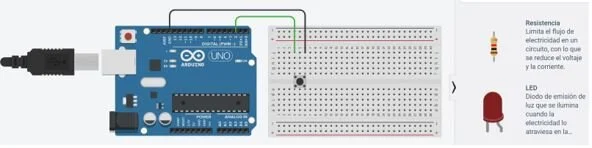
Image 1: Example of Tinkercad simulator.
The second most popular alternative is the use of specialized interfaces in which we can create a schematic diagram; it looks like more to electrical circuits explained in textbooks than the physical circuits connected on a protoboard. However, the number of tools to edit the elements (their insertion in the editor, the variation of values, diversity of functions, parameterization of operation, etc.) can produce a simulation closely resembling the behavior measured in the electrical circuits with real instruments. However, the diagram may be far from similar.
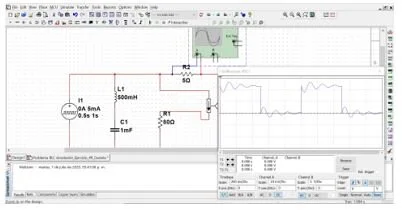
Image 2: Multisim simulator example.
The third alternative provides the opportunity to perform the combined editing of a schematic. In some cases, the diagrams representing the instruments of generation, deployment, and measurement of electrical variables highly resemble the interface, configuration, and operations (albeit in a virtual way) of the real instruments. It gives the student the feeling of using the physical devices of a laboratory.
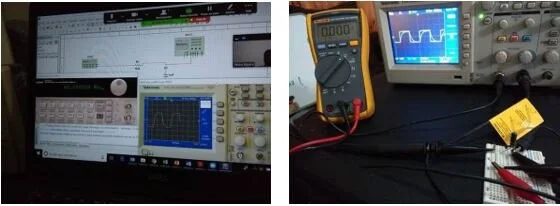
Image 3: Example of simulator vs. laboratory instruments.
Once the concepts of voltage, current, and resistance developed in class through the simulators are understood, it is important to relate these concepts to the students’ environments. For this, we select some elements available at home, mainly the fruits and vegetables that, when coming into contact with copper and zinc materials, would generate a difference in power through oxidation-reduction, measure with the help of a multimeter.
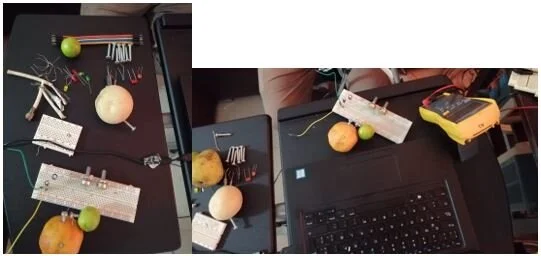
Image 4: Measuring the power differences generated by fruit.
The creation of different series configurations, parallel with fruits and vegetables, allows broadening the analysis to include the concepts of Kirchhoff’s laws applied to electrical meshes, incorporating terms like open-circuit voltage and short-circuit current, for example. It leads to other topics such as Thevenin’s theorem, linearity, and maximum power transfer, which allows us to use the different simulators again to validate electrical concepts and reinforce the learning of the students in their processes of analysis.
Learning acquired using simulations
The generation of a power difference through natural elements such as fruit is a lab practice rarely done with students, a situation that triggers in them a natural curiosity to understand what causes the phenomena. Understanding this allows them to enjoy, appreciate, and corroborate electrical principles by generating, measuring, and interpreting the corresponding variables.
The first impression of the students upon finding out that they would work with homemade elements was uncertainty because they did not have a clear idea of how fruit could produce electricity and how this would relate to theoretical concepts. However, it was precisely the process of generating and measuring electrical variables using these natural elements that provided the opportunity to get involved in more general discussions of electrical principles and to attain greater clarity regarding what the measurements signified.
We observed a greater understanding of the topics when reviewing the concepts and associating them with their practical applications, something that continually motivated the students to come up with designs and describe in their own words what they had done. Also, we observed them eager to develop such activities and being remarkably satisfied with their achievements. Noteworthy is that one of the necessary conditions for a successful operational experience is to have a multimeter for each of the students, which must be requested in advance.
To conclude, we would like to recall the phrase of Ralph W. Tyler (1949): “Learning takes place through the active behavior of the student: he learns through doing himself, not what the teacher does.” The professor should serve as a guide and facilitator in the teaching-learning process. This phrase makes it clear to us that the student should be the main actor in this process.
Therefore, we must have these innovative activities in the Flexible and Digital Model of Tecnologico de Monterrey. We invite you to explore using different simulators combined with common household elements to teach electrical circuits and be ready with a measuring instrument.
About the authors
Ramona Fuentes Valdéz (rfuentes@tec.mx) is a professor in Computer Sciences and Mathematics and imparts teacher training courses. She received the 2017 Inspiring Professor award at Tecnologico de Monterrey, Campus Cuernavaca.
Pedro Nájera García (pedro.najera@tec.mx) is a professor of various subjects in Electronics, Computer Sciences, and Mechatronics. He received the 2016 Inspiring Professor award at Tecnologico de Monterrey, Campus Cuernavaca.
Editing by Rubí Román (rubi.roman@tec.mx) – Observatory of Educational Innovation.
Translation by Daniel Wetta.