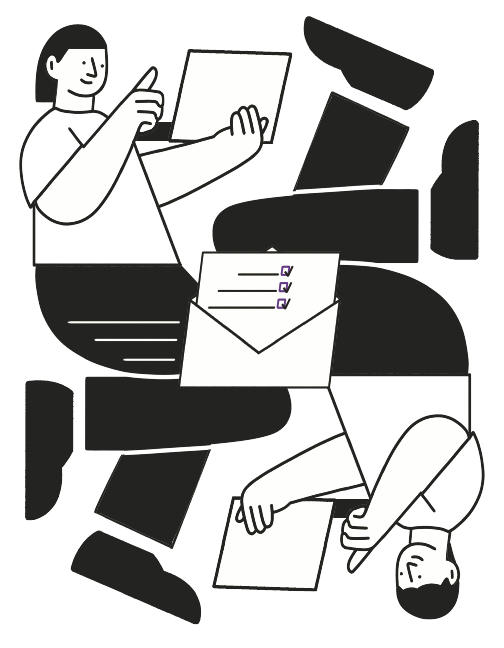


Generative artificial intelligence (GenAI) has revolutionized the ways humans create various types of content. Whether to support writing an email or creating animated versions of us, it has become indispensable for thousands of users. However, discussions about its use, and in this case, the possibility of creating art with generative artificial intelligence, continue to spark debates.
Content created with generative AI
Artificial intelligence (AI) advances have given rise to a new way of producing resources, including texts, images, videos, music, codes, and other materials, that are not created by people but by machines—better known as “AI-generated content.” These tools work thanks to AI models trained on vast amounts of data. Through pattern recognition, machines can generate coherent responses to questions, instructions, or any user input or prompt.
However, although this may seem innovative, the results it yields are not. These models “learn” from already existing human production. A situation that has caused considerable discontent in recent years is the unauthorized use of recognized artists’ voices and characteristic styles to generate content without their authorization or any form of remuneration.
The discontent has spilled over into the artistic guild, which expresses its disagreement with auctioning works created using AIGen tools and awarding prizes to these creations in art competitions. Many have argued that using artificial intelligence cannot be considered authentic art, calling it an unethical and dishonest practice.
In addition, some artists have begun incorporating measures to “poison” their works, preventing them from being identified by specified prompts in these technologies. This practice has sparked debate about generative AI’s ethical and legal limits, highlighting the need to protect authors’ rights in this new context.
Copyright and fair use
A widespread debate regarding copyright and AI addresses complex factors that revolve around the legal and ethical environment. The controversy focuses on two aspects: 1) the possibility of registering those products made with generative artificial intelligence, and 2) the massive use of protected products to power these tools.
Ellen Glover mentions the particular case of Kristina Kashtanova’s graphic novel Zarya of the Dawn, which was granted intellectual property registration and later partially annulled because the work had “non-human authorship.” The text, organization, and arrangement of the written and visual elements remained protected. Still, the images did not, as they were considered elements that lacked sufficient human creative intervention.
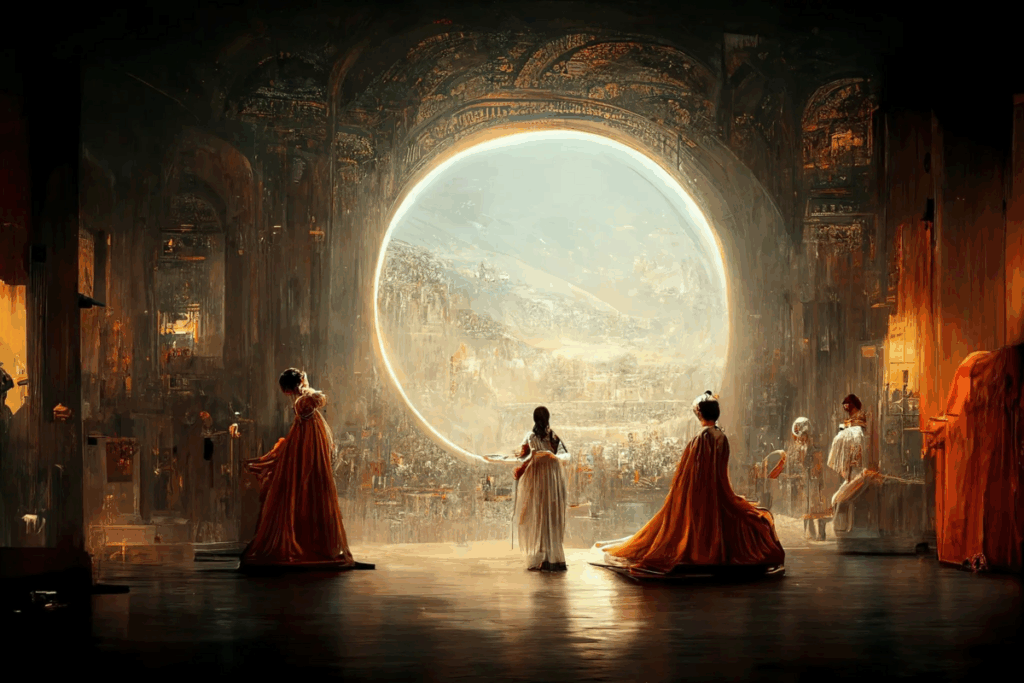
Similarly, Théâtre d’Opéra Spatial, an artistic work created by Jason Allen using the Midjourney AI image generator, won an art contest in 2022; however, the U.S. Copyright Office refused to register it, arguing that it lacked human authorship. Allen sued the office, alleging that his creative contribution to the work should be recognized. However, it was established that the term “author” does not extend to non-human entities.
Notably, creators and companies have raised their voices to defend their products and work against unauthorized use. In contrast, generative AI companies justify particular practices under the doctrine of “fair use.” According to attorney Mariana Medrano, “Fair use is a legal doctrine that allows using a limited part of a work without authorization from the creator.” This concept greatly benefits the education sector, as it allows using images, texts, or other audiovisual materials without the author’s permission when the purpose does not involve commercialization.
However, creators and companies note this does not apply to generative AI. They note the lawsuit by Getty Images against the generative AI company Stability AI, claiming that Stability AI copied and processed millions of copyrighted images without making fair payment for them.
To this demand is added that of Kelly McKernan, who commented to Kyle Chayka of The New Yorker:
“At that point, things started to get weird. It (the generative AI production) was starting to look pretty accurate, a bit like an infraction. […] I can see my style in these things, see how my work was analyzed and mixed with that of others to produce these images.” – Kelly McKernan
Chayka explains that McKernan, recognized for her paintings depicting female figures similar to nymphs with a vibrant style that combines Art Nouveau and science fiction, noticed that her name was being used more and more frequently in artificial intelligence image generation programs. Also, a website called Metaverse Post published a list that recommended using the name “Kelly McKernan” as a term to feed an AI image generator to create art inspired by The Lord of the Rings.
“It allows you to participate in something similar to plagiarism, but you don’t feel guilty because even you are not sure you are copying.” – Ted Chiang
Previously, if buyers wanted to own art in the style of a given artist, they had to pay the artist for those original works. Now, just by using their names, people can use these tools to generate such images, representing a significant loss of royalties for artists. In addition to using their works without authorization and violating their intellectual property rights, generative AI replaces artists.
According to Butterick and Saveri, the production by AI generators is not considered truly transformative, as it does not reinterpret or surpass the original content. These tools automatically and systematically combine elements. Butterick and Saveri emphasize that the discontent that led to the legal case is not focused on individual images; instead, the methodology used by the technology is questioned. After all, training these models requires an immense amount of information, which involves a significant investment, substantial energy consumption, carbon emissions, and human labor, not to mention the unauthorized use of the said information.
The accelerated development of this technology has outpaced the ability of legal frameworks to adapt at the same rate, resulting in regulatory gaps that some companies have exploited to operate without clear or sufficient regulation.
The conversation about art and generative AI underscores the need to establish regulatory frameworks that safeguard the rights of creators without impeding innovation or artistic development. However, as Mael Vallejo points out, the factual background to the debate around large language models (LLMs), such as ChatGPT, Claude, or Grok, is that their ability lies in generating language in various forms – text, voice, images – but not in producing genuine knowledge.
In addition to the ethical, technological, and legal implications, it is also necessary to consider the risks we face as users when utilizing these tools. Unauthorized use of photos for commercial purposes, impersonation by deepfakes, and excessive access to personal data are some of the threats to which we can be exposed; these can compromise the security of the device by requesting sensitive permissions. Moreover, some fake versions could contain malware or be equipped for phishing attacks.
Art and AI
While some defend these technologies’ creative capacity, others question their legitimacy, arguing that art requires human authorship and an emotional connection that AI cannot replicate.
Artificial intelligence is transforming multiple aspects of our daily lives with advances that are, in many cases, beneficial. However, the fact that LLMs (Large Language Models) use human creative, intellectual, and scientific content without authorization, credit, or compensation raises profound ethical and legal implications. Such practices risk perpetuating a culture of impoverished imitations versus genuinely innovative works.
These models can generate content that appears true without being so. They are not designed to understand or possess knowledge but to produce results that seem plausible, which can lead to error if one cannot distinguish between superficial credibility and veracity.
One of the arguments often given in favor of generative AI imaging tools is the idea that there is no original art and that everything represents a recreation or copy of existing works. However, artists have come out to refute this idea, such as Roberto Arturo Morales Cruz: “Generative AI is incapable of creating new artistic styles. Today, AI mimics the art styles used in its training. It can combine colors and fuse styles, but it is incapable of creating something completely new […].”
Similarly, it is possible to consider the position of Rob Biddulph, British author and children’s illustrator, who in an interview with Sarah Shaffi expressed that “A human artist brings emotion, nuance, and memory into the process, especially regarding their failures.” Biddulph argues that AI-generated art diminishes the value of professional illustrators’ work. He explains that it leads some people to mistakenly believe that their digital creations have the same merit as works made by artists with years of experience. To illustrate, he compares this idea to taking a photograph with a mobile phone. Although the result is aesthetically pleasing, it does not equal the work of an established photographer like Irving Penn. Yes, generative AI does devalue the work of artists, whose work, moreover, was already undervalued.
The logic of this argument has also been employed by those who defend artificial intelligence, as seen in the case of Craig Boehman, who notes that photography was previously considered not art because anyone could do it and represented a threat to traditional painters. This vision devalued the creative process of photography, portraying it as mechanical or soulless. Boehman argues that the same thing happens today with products generated by artificial intelligence; they are victims of rejection due to similar arguments, stating that they cannot be considered art because they are not created “traditionally,” thus questioning the resistance to accepting new forms of art.
On the other hand, Ted Chiang says this comparison is a fallacy. Initially, photography was not regarded as an art form because it appeared to be a mechanical process with limited room for artistic decision-making; it was sufficient to point the camera and capture the image. However, over time, it was discovered that photographic art lies in the multiple choices that the photographer makes, from framing to lighting. Although these decisions are not always easy to identify or describe, the difference between an image taken by an amateur and one by a professional demonstrates the creative value of the process, highlighting that art cannot be separated from effort and the detailed decisions that shape it.
In his blog, Matt Corrall writes an interesting reflection on the use of AI in art. The designer notes that artificial intelligence models do not generate original ideas; instead, they reorganize existing data. Their apparent creativity stems from identifying patterns and replicating styles with great accuracy but without the understanding, imagination, or interpretation that a human being brings to the process. Although these models are promoted with promises of transforming society, their functioning remains limited and flawed, falling short of the ideal that some enthusiastic discourses attempt to present.
“As numerous specialists have been warning, behind the marketing suggesting the potential of AI to reduce working hours, collaborate in the fight against global warming or other promises, a story repeats: large technology corporations monopolize the knowledge of millions of people to continue concentrating profits in very few hands […]”. – Esteban Magnani
On the other hand, the commercial adoption of AI to generate images has replaced artists, prioritizing speed and low cost over quality and creativity, says Corrall. As a result, art is treated as disposable content, and tasks are delegated to less skilled workers, thereby weakening the value of human artistic work.
Ghibli Case
In recent months, after OpenAI‘s update that allows image creation, social networks were flooded with users’ illustrations in different formats, such as action figures, the styles of Wallace and Gromit, or Sailor Moon, or the characteristic yellow from The Simpsons. Internet users were excited to share how fun, fast, and economical it was to convert their photographs to these distinctive styles.
Although the boom encompassed hundreds of styles from various media, one style in particular captured the attention of thousands (if not millions) of network users: illustrations with the distinctive Studio Ghibli aesthetic.
And why not? Ghibli’s films have impressed generations, and their characters are beloved worldwide. However, notably, one of the most widespread reactions to artificial intelligence in the artistic field is that of Director Hayao Miyazaki of Studio Ghibli, who was shown an AI-generated animation in 2016. His response, far from being a simple technical criticism, was interpreted as a statement about the essence of art, describing such creation as an “insult to life itself.” This position has been widely recognized as a stance on the ethics of human sensitivity in creative processes.
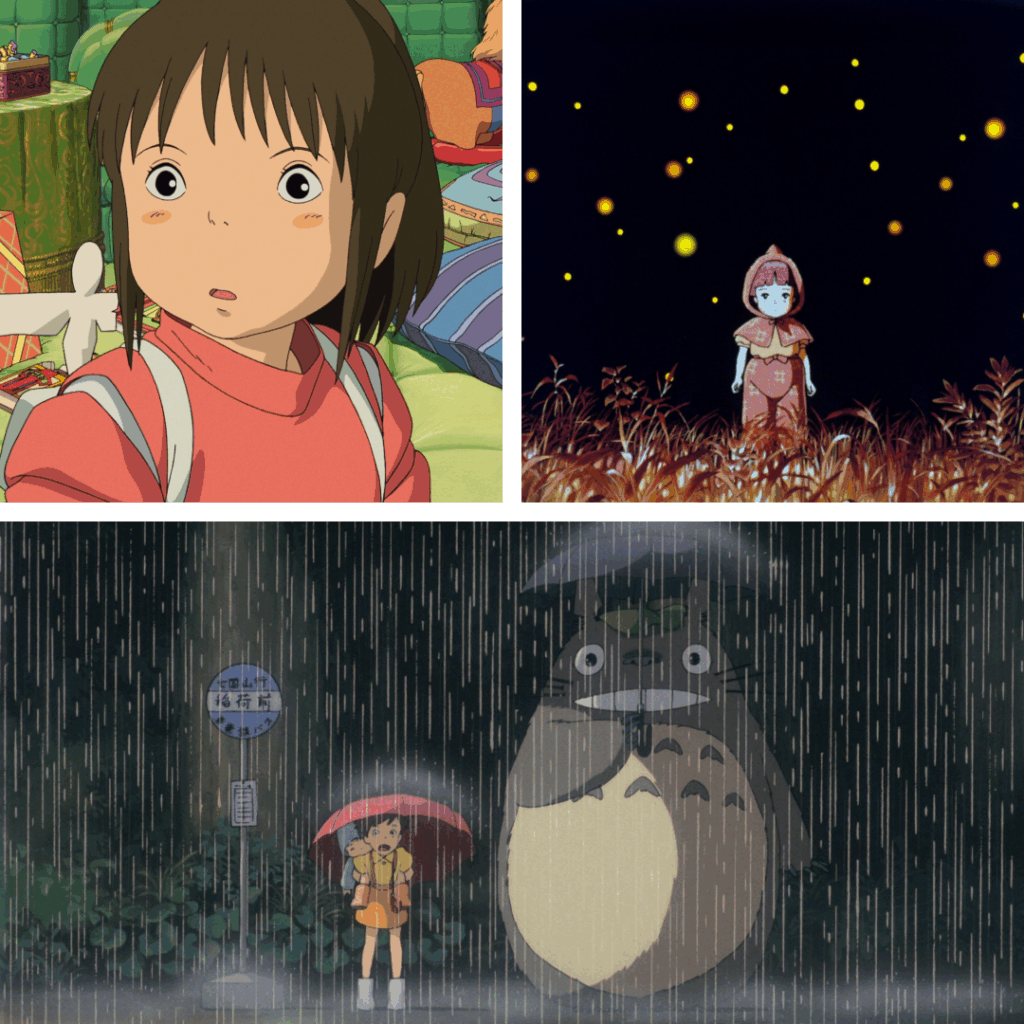
Studio Ghibli is technically distinguished by its commitment to traditional hand-crafted animation, a painstaking process that can take several years per film, reflecting both artistic precision and artisanal dedication. This approach translates into richly illustrated backgrounds, fluid movements, and a coherent and distinctive visual aesthetic that has made the studio a world reference in animation, contrasting entirely with the immediacy provided by AI.
“Art generated by artificial intelligence is vampiric: it feeds on works from past generations while absorbing the creative essence of living artists. Over time, this will impoverish our visual culture. Consumers will be conditioned to accept this ‘appearance of art,’ but it will lack ingenuity, personal vision, individual sensibility, and, ultimately, humanity.” – Molly Crabapple and the Center for Artistic Inquiry and Reporting
Miyazaki’s hard work in consolidating Studio Ghibli‘s style could be overshadowed by the massive proliferation of AI-generated imagery that mimics its aesthetic. This raises concerns about valuing authentic art in favor of superficial imitations because, as Jesse Hassenger says, “it would be a shame, then, for children to learn about the style of this study through the anti-magic of images generated by artificial intelligence (AI).”
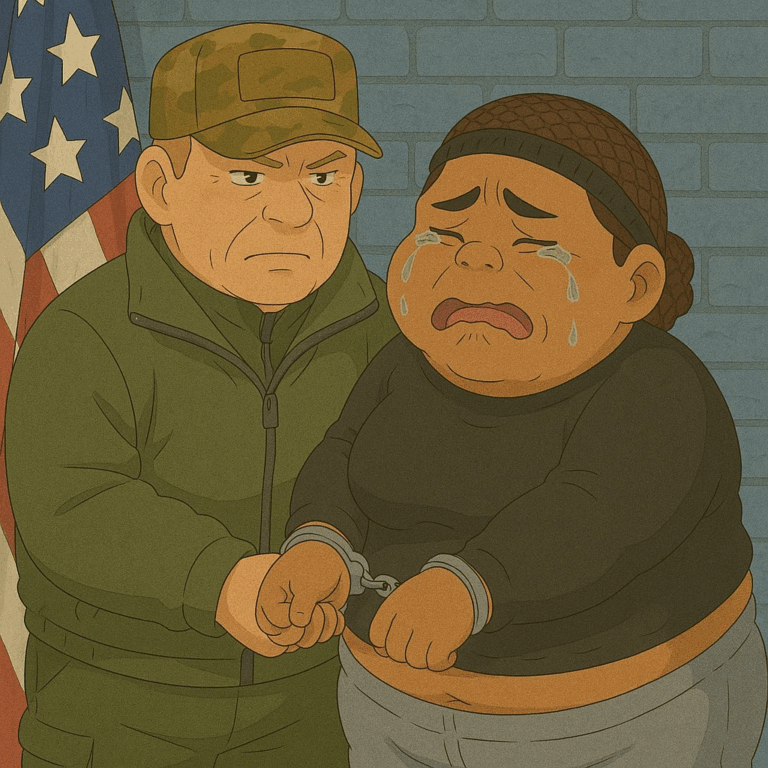
Worse still, as Kyle Chayka states in his “Infinite Scroll” column, AIGen has been used to “Ghiblify” questionable situations, some of which also violate the Japanese director’s beliefs: “a Ghibli-style Donald Trump raising his fist in defiance after an assassination attempt; a Ghibli-style plane crashing into the Twin Towers.” The most absurd culmination of this trend may have been reached recently, when the official White House account on “X” posted a leaked Ghibli-style photo of an alleged Dominican drug trafficker crying as he was arrested.
Although these systems can mimic artistic, philosophical, or musical styles, replicating illustrations by distinctive artists or studios, emulating philosophical theories, or composing songs in the style of certain bands, AI tools cannot create truly original styles or ideas, as they lack an autonomous creative faculty.
Human art
Art is a deeply human expression that arises from our emotions and experiences. Through the creative process, we discover what we want to express, unlike a machine that only assembles information without experiences or feelings.
In an article for The New Yorker, Ted Chiang presents a critique of the use of generative artificial intelligence in artistic and literary creation. The famous writer argues that writing fiction or creating art involves making thousands of conscious decisions, while generating images or texts using AI requires very few choices in composing a prompt. For him, this difference detracts from the creative process, which is where much artistic expression resides.
The author also argues that those who use AI to create without mastering the medium confuse inspiration with actual creation. Thus, he criticizes the automation of tasks that reflect a minimum of human intention and effort, such as personal letters (as in the much-criticized Gemini ad). Chiang points out that the value of art and language lies not only in originality but in authenticity and human connection.
“By allowing a machine to think for us, we rob ourselves of the joy and satisfaction that comes with the act of creating.” – Matt Corrall
In this aspect, I share Chiang’s vision: not every text needs to be a creative or profound work; sometimes, its purpose is just to exist at the right moment. Although much of what is written is not original, that does not detract from its value. In his words, the importance of phrases such as “I’m sorry” or “I’m glad to see you” lies not in their novelty but in the sincerity and the moment in which they are said. Its meaning lies in the emotional intention behind it, something that automatic models can only simulate.
Although technology has advanced and AIGen is revolutionary, why am I doing housework while AI is producing art? And I’m not insinuating that I’m an artist because I’m not, but after all these debates, I’ve learned to appreciate the watercolors I paint and the poetry I suddenly write; my self-demand has relaxed a bit. Nothing I do is perfect, but I have come to understand that art, beyond the final result, lies in the process and the mistakes we make along the way. As Melissa Dawn Pisnak says, AI does not feel. Its art was not created by someone who has just had an emotional crisis because of their cat.
Author’s Note
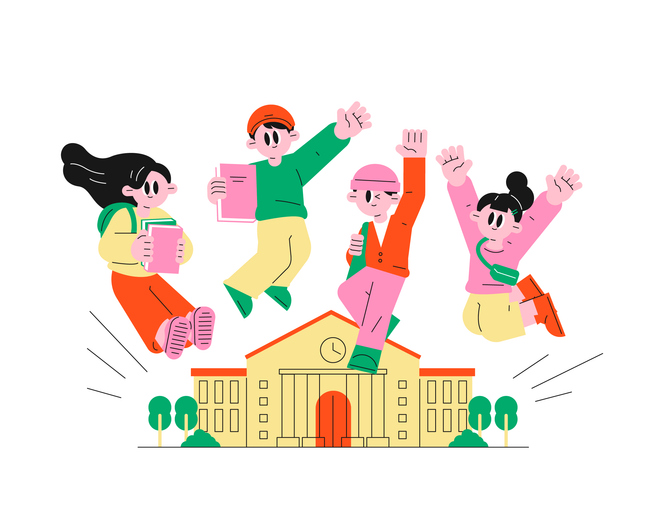
I would like to thank Mariana Sofía Jiménez for the illustration that accompanies this piece. Her talent enriches this text in a way no automated tool ever could, reaffirming the value of creativity in the age of artificial intelligence.
Translated by Daniel Wetta