)
)
)
)

Turnitin sponsored content
While artificial intelligence (AI)-based technologies have been used for decades in various industries, undeniably, AI has been more in vogue than ever since November 30, 2022. Why that particular date? On that day, OpenAI launched ChatGPT, causing a worldwide stir. Such was the furor in the first months after its launch that the free access to this tool collapsed under the demand; a waiting list arose to use it.
Since then, much has changed. “How can I help you today?” is ChatGPT’s greeting (now in its fourth version, ChatGPT-4. Do you need ideas? Create an image? Summarize a text? Write a text or a code? Need answers for a test? The truth is that using this tool is extremely simple; it is just a matter of asking, requesting, or “chatting” with this chatbot to receive answers in mere seconds.
Academia is one of the sectors most affected by the emergence of ChatGPT and other generative AI chatbots. Although plagiarism has always been one of the main concerns of teachers and academic directors, today, we could say that “cheating” is easier than ever, as students have these tools at their fingertips.
In the last two years, continuous conversations about academic integrity have occurred in educational institutions at all levels. This concern, which is stealing the sleep of many who work in the academic field, has prompted extraordinary meetings, the revision of academic guidelines and codes of ethics, and the creation of specialized committees.
How can academic integrity be ensured in the age of AI?
At the Observatory, we also asked ourselves about academic integrity. For insight, we turned to Turnitin, one of the expert companies par excellence in academic integrity solutions. There, we spoke with Belen Correa, Director of Turnitin LATAM and a graduate of EGADE Business School at Tecnologico de Monterrey.
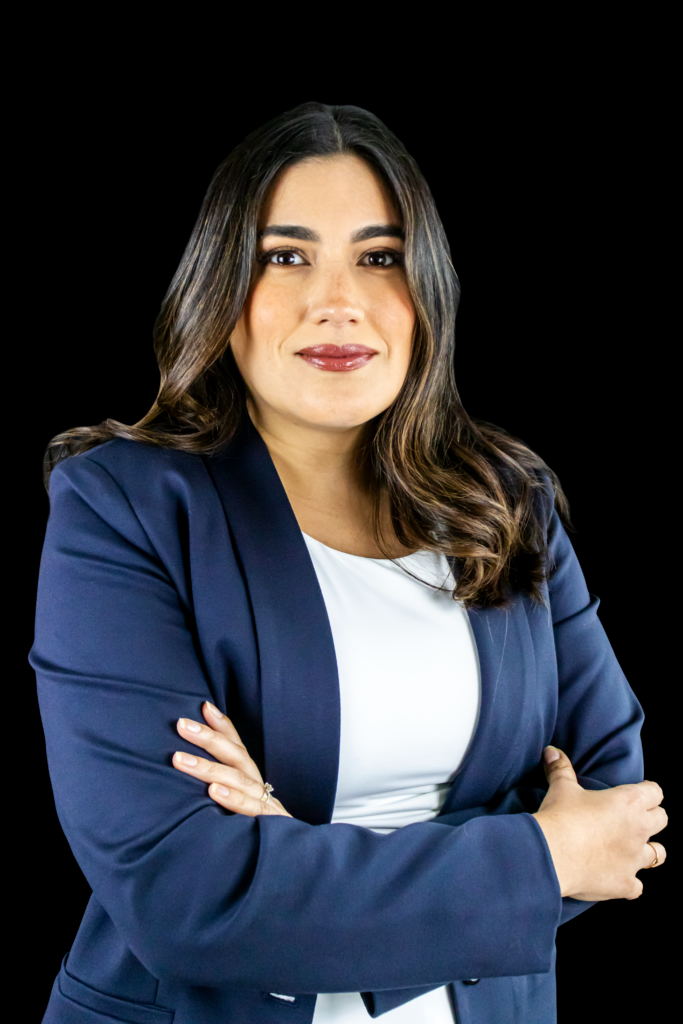
When Turnitin was created more than 25 years ago, academic integrity looked very different than it does today. “The main concern was the internet and how easy it was to copy-paste,” said Belen Correa. Although plagiarism has always been a concern in the academic community, today, more than ever, it is a primary challenge for educational institutions. Today, the needs are different. “We are responding to how those needs evolve,” said the Director of Turnitin LATAM. In 2020, its AI engineering team started working on writing-pattern detection, which allowed it to respond to the skyrocketing launch of ChatGPT in 2022.
Thus, four months later, in March 2023, Turnitin released the AI writing detector for texts written in English, now also available in Spanish. This detector has evolved with the pace of AI-based technologies. “The detector differs from the one we launched a year and a half ago,” Correa said. We’ve been evolving and responding to the needs of educators.”
“It is easier to guarantee academic integrity today than it was 20 years ago.”
However, technologies are advancing faster, and the educational community cannot always keep pace. “These technologies will continue to progress very rapidly; our commitment is to respond as it occurs,” she said. Therefore, listening first-hand to educators’ needs is one of her priorities.
One way to support the educational community is through creating open educational resources that help educators train in using AI-based tools. At Turnitin, a team of in-house educators works with colleagues worldwide to produce these resources. Designed for educators and directors of academic institutions, these educative Spanish language resources help develop or adapt academic integrity policies and rethink evaluations under the new AI context.
New Academic Integrity Solutions
“It is easier today to guarantee academic integrity than over 20 years ago,” Correa said. However, the challenges are entirely different. “…the challenge educators have today is to keep up with the pace.” Just a couple of years ago, many teachers tended to fear and prohibit these tools; now, they have a more explorative and curious vision.
However, the gap between teachers and students using generative AI is evident. A study in collaboration with Tyton Partners confirms this gap: Thirty-six percent of teachers surveyed said they use AI-based tools frequently, compared to 60% of students.
“Critical thinking cannot be delegated to an AI.”
The report Time For Class 2024, which collected the opinions of 1,600 students, 1,800 teachers, and 300 administrators, indicated that, although there is indeed increasing growth in the adoption of generative AI in educational institutions, students continue to outperform the teaching community. This study found that “those teachers who utilize AI regularly tend to have a more positive attitude towards using these technologies in learning than those who do not,” said Belen Correa. “Exploring and learning about AI helps change perspective.”
Academic Integrity Solutions Designed for the Spanish-Speaking Community
Noting the gap, more educational institutions have begun encouraging both teachers and students to use AI, “but from the approach of exploring, understanding how these tools work, and using them transparently with critical thinking,” Correa said. In Latin America, teachers approach AI from a perspective of understanding and exploration, trying to gather information on the current reality. They use this information to decide how to adapt their academic integrity policies and approach teacher training.
Although many Latin American educational institutions teach some courses in English, the needs of this community are very particular. That is why, on September 12, 2024, Turnitin launched the Spanish language AI writing detector. “The detector in Spanish has been requested for a long time,” confesses Belén Correa. Although it has only been a couple of months since its release, the detector has been widely accepted and, like the English version, continuously evolves, adapting to the particular needs of the Latin American market. “Now is a time of much learning,” Correa added.
Above all, the developers address the racial and gender bias detected in generative AI. With this significant challenge, Belen Correa pointed out that their detector is also an artificial intelligence model, “which we train to detect AI. So it is AI, detecting AI.” Thanks to the internal development of this model, biases can be detected in people who write in a second language. “For example, students whose first language is Spanish but write in English – their English texts tend to look more similar to the writing production of AI tools.” This detection was tested first with the English text detector. Starting from scratch, Turnitin has repeated the entire process for the Spanish text detector, aiming to eliminate or minimize racial and gender biases.
Finally, Belen pointed out that, although the concept of academic integrity has evolved over the years, today, “it continues to be based on the transparency of the process, on respect, on ensuring that technology is used, but without sacrificing learning – above all, that the student’s contribution and all the critical thinking entailed do not get lost because critical thinking cannot be delegated to an AI.”
Translation by Daniel Wetta
About Turnitin
Turnitin was born as a project of four University of California students who sought to create an application that allowed peer review among students. For over 20 years, Turnitin has helped ensure the writing integrity of more than 71 million students at all levels of education at over 16,000 institutions in more than 185 countries.
This custom content is sponsored by Turnitin and developed by IFE Observatory’s content team.

)
)
This article from Observatory of the Institute for the Future of Education may be shared under the terms of the license CC BY-NC-SA 4.0