
An entire generation is growing up using something that, until recently, did not exist: children and adolescents converse, learn, create, and seek advice (and even comfort) from artificial intelligence systems that respond almost instantaneously and with a surprising appearance of security.
This is not a futuristic prediction. It is happening now.
UNICEF (2026) warns that children are adopting artificial intelligence technologies more than three times faster than adults. Based on representative surveys conducted in ten countries, including Mexico, the agency estimates that at least 20 million children and adolescents aged 12 to 17 have used AI. Approximately 13 million reported using it to support their learning and schoolwork.
However, another, more disturbing statistic is that more than two million, about one in ten, said they turn to AI for advice on matters that concern them (UNICEF, 2026).
This is where the nature of the debate changes. We are no longer just talking about a student using a chatbot to solve math problems faster. Now our discussion includes adolescents who share their fears, doubts, or personal problems with a machine before discussing such things with their parents, teachers, or friends.
UNICEF (2026) summarizes it clearly: artificial intelligence is already part of our lives and is transforming childhood worldwide, for better or worse. The problem is that its adoption is outpacing the rules, research, and protection mechanisms designed specifically for minors.
The promise is real. So is the shortcut.
It would be a mistake to present artificial intelligence solely as a threat. Used well, it can become an extraordinary educational tool. It can explain a concept multiple times without losing patience, adapt exercises to the student’s level, translate content, provide immediate feedback, stimulate creativity, and expand access to knowledge, among many other examples
The Brookings Institution specifically recognizes this potential. Well-designed AI tools can enrich learning when they are part of a solid pedagogical strategy. The problem arises when they stop being instruments for learning and become substitutes for the learning process (Burns et al., 2026).
The difference may seem small, but it is fundamental:
Asking AI to “help me understand this problem” is different from telling it to “solve it for me.”
The PISA 2025 results raise an important red flag. More than 760,000 15-year-old students from 91 countries and economies participated in the assessment. For the first time, PISA thoroughly analyzed how students use digital tools and artificial intelligence to learn (OECD, 2026).
The results do not justify claiming that AI, on its own, causes lower academic performance. These are mainly associations, and the patterns depend on how the technology is used. However, the signal is strong enough to warrant attention: students who use AI tools more frequently for particular academic tasks tend to show less favorable educational outcomes than those who use them less or differently (OECD, 2026).
Andreas Schleicher, Director of Education and Skills at the OECD, uses a powerful analogy: just as no one improves their physical condition simply by watching sports, learning does not happen by consuming answers, but through the cognitive effort of engaging with new material.
The OECD (2026) calls this process the productive cognitive struggle: this occurs when we try to understand, connect ideas, make mistakes, correct ourselves, and finally solve a problem.
Precisely therein lies one of the greatest educational risks of AI. When technology strengthens that effort, it can scaffold learning. When it eliminates it, it becomes a crutch. Thus, a generation that systematically learns while avoiding intellectual effort could develop an enormous capacity to obtain answers and, paradoxically, a diminished capacity to construct them.
The real risk: delegating thinking.
Artificial intelligence has one particularly seductive characteristic: it responds fluently. An answer can be wrong and yet sound perfectly reasonable.
Therefore, AI literacy in this era cannot mean just knowing how to use digital tools. It requires learning to concentrate, interpret, cross-reference, synthesize, argue, and question the information received (OECD, 2026).
This radically transforms the role of schools. For decades, we taught students how to find information. Now we must teach them something more difficult: how to intelligently distrust a perfectly worded answer.
The fundamental skill of the future may not be formulating the best prompt, but knowing how to stop after receiving an answer and asking: How do I know this is true?
The risk is not the same at age 4 as at 16
Another mistake would be to speak of “children” as if a four-year-old and a sixteen-year-old had the same cognitive, emotional, and social abilities.
A review published in Pediatrics by researchers affiliated with Children’s Hospital of Philadelphia underscores precisely the need to analyze artificial intelligence from a developmental perspective. The potential effects change significantly between early childhood, middle childhood, and adolescence (Grundmeier et al., 2026).
In early childhood, certain applications can foster language, creativity, or learning. However, young children are still developing their understanding of what is real, who has intentions, and what the difference is between a person and a technological representation. Human interaction remains irreplaceable.
During middle childhood, AI can stimulate curiosity, personalize explanations, and promote creativity. At the same time, risks arise from misinformation, privacy concerns, dependence on automated responses, and the substitution of effort required to complete school tasks.
In adolescence, the issue takes on an additional dimension. Artificial intelligence can become not only an academic tool, but also an emotional confidant. This occurs precisely during a stage when identity, autonomy, interpersonal relationships, and coping mechanisms for frustration and conflict are formed (Grundmeier et al., 2026).
The specialists’ warning is super relevant: AI should be understood as a tool, not as a friend or a caregiver.
What happens when a machine starts to replace a person?
This question is perhaps even more important than the discussion about school assignments.
Adolescence is a crucial stage for asking oneself who I am, what I think, whom I trust, and whom I want to become. An increasingly large part of this exploration now occurs through conversations with artificial intelligence systems.
The risk is not simply that an adolescent “talks to a computer.” The problem arises when a technology designed to generate plausible responses starts to fill roles traditionally built on human relationships: friendship, trust, guidance, conflict, reconciliation, and companionship.
Recent pediatric research warns of the risks of developing false perceptions of AI as a friend or caregiver, as well as privacy and misinformation concerns (Grundmeier et al., 2026).
Personal growth is not achieved by receiving good answers; a human being evolves by learning to interpret silences, deal with disagreements, recognize emotions, tolerate frustrations, get to know other people, and discover that the world does not have an immediate solution to our needs. No chatbot should replace this learning.
When Risks Affect the Foundations
One of the most extensive international research studies on generative AI and education to date was conducted by the Brookings Institution’s Center for Universal Education.
Over more than a year, the team reviewed more than 400 research studies and conducted interviews, focus groups, and consultations with more than 500 students, teachers, families, education leaders, technologists, and specialists from 50 countries (Burns et al., 2026).
Their conclusion deserves attention:
“At this point in its trajectory, the risks of utilizing generative AI in children’s education overshadow its benefits.” (Burns et al., 2026).
The meaning is this: The benefits of AI tend to be additive. They can personalize explanations, generate activities, improve accessibility, or provide additional support.
The risks, on the other hand, are foundational: they can affect learning capacity, trust relationships with teachers and peers, socio-emotional well-being, safety, privacy, and the development of intellectual autonomy (Burns et al., 2026).
Technology can improve what a child learns, but if it undermines how they learn to think, connect with others, and trust, the problem runs much deeper.
A lesson from UNESCO’s Digital Learning Week
This concern is not unique to scientific articles or institutional reports. It is taking center stage in international conversations about the future of education.
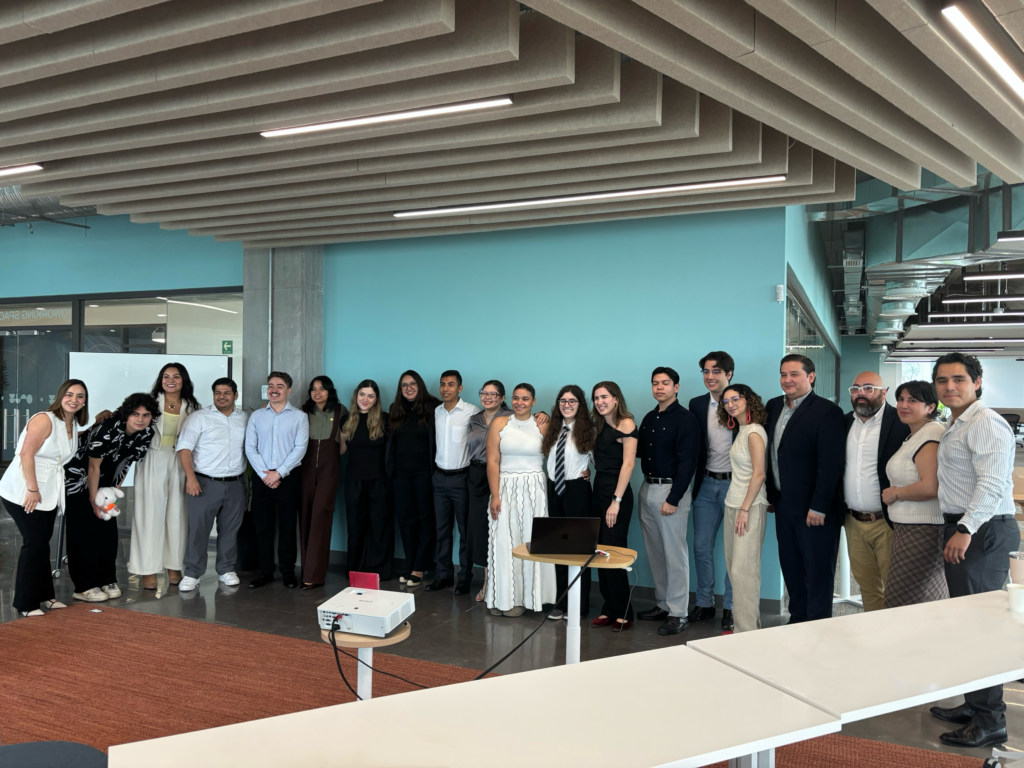
I recently participated in UNESCO’s Digital Learning Week, and one thing was especially clear among the scientific and educational community present: the main concern is not how advanced artificial intelligence can become, but how prepared it is to protect, include, and support children.
One idea that stood out most to me came during the session on “the inclusive educator ready for AI”. A particularly relevant paradigm shift was proposed there: educational transformation is not just about incorporating more technology into the classroom. It is about shifting from thinking about the speed of teaching to considering the scope of learning. The difference is profound.
If the only question is “what AI tool can we incorporate?”, we will probably end up implementing technology just because it is available. The educational question should be different: What learning barrier are we removing for each child?
This change forces us to invert the logic of innovation. Technology stops being the starting point, and the student returns to that place.
Another principle from those discussions summarizes this perspective: It’s not about the algorithm or the data; it’s about the individual student still in the classroom. This sounds simple, but it contains an important warning for those of us who design, research, or incorporate educational technology.
AI can be multimodal, adaptive, generative, and extraordinarily powerful. It can process large volumes of information that no one person could handle and offer increasingly personalized experiences. But if that technological capability doesn’t put the dignity, privacy, inclusion, safety, and development of each student at the center, then the sophistication of the algorithm matters little. It won’t be fulfilling its true educational purpose.
This reflection connects directly with our own line of research at Tecnológico de Monterrey on generative artificial intelligence in higher education. In a recent study with Mexican university students, we found that while generative AI is valued for its usefulness in learning and academic productivity, there are also significant concerns about academic integrity, confidence in its responses, and the risk of over-reliance (Rodríguez-Marín & Montoya-Bayardo, 2026).
Although the educational stages and risks differ, these findings reinforce a reflection that runs through the entire formative journey: from childhood to university, the fundamental challenge is not technological adoption itself, but how we design it to be ethical, inclusive, and genuinely focused on the person who learns. Perhaps this is one of the keys to reconciling innovation and caution. We do not need to adapt children to artificial intelligence. We need to build artificial intelligence that can adapt to human needs without replacing what makes us human.
The answer is not to ban the technology
Faced with these risks, it would be tempting to conclude that the solution is simply to keep children away from artificial intelligence, but this is probably not realistic either.
AI will be part of universities, professions, companies, and much of this generation’s daily activities. Completely preventing contact with it could create another form of inequality: young people without the skills needed to function in a society profoundly transformed by technology.
That is why the real challenge isn’t choosing between AI yes or AI no. It’s about deciding which AI, for what age, for what purpose, for how long, and under what supervision.
This concern is already generating institutional responses. In 2026, for example, New York City established a one-year moratorium on generative AI tools aimed at students from early childhood education through eighth grade and banned companion chatbots at all grades, while maintaining exceptions and specific pilot programs.
These measures do not necessarily represent a definitive stance against AI. They express something much simpler: when new technologies interact directly with minors, innovation must proceed with evidence, supervision, and protection.
The childhood we do want
We do not need a childhood without technology. We need a childhood in which technology does not replace what children should develop.
A machine can explain an equation, but it shouldn’t replace the experience of wrestling with it until it is understood.
It can help with writing, but it shouldn’t stop children from learning to sort out their own ideas.
It can answer questions, but it shouldn’t become the first “person” a teenager systematically confides his fears to.
It can support learning, but it should not raise a child.
Three simple principles for families and schools can be derived from the available evidence:
First, think before asking.
The student should try, reason, and formulate an answer before turning to AI. Afterward, they can use it to check, expand, or improve their reasoning.
Second, consulting does not mean believing.
Check every significant answer AI produces against evidence, reliable sources, or expert knowledge. AI literacy begins precisely when we stop confusing fluency with truth.
Third, adults still belong in the room.
Pedagogy, upbringing, and emotional support cannot be delegated to an algorithm. Teachers and families must understand what tools children use, why they use them, and what information they share with them.
Burns et al. add a particularly valuable principle: we need AI tools that teach, not simply respond (2026).
That should become a fundamental criterion for evaluating any educational AI.
Are we raising thinkers or users?
The future of childhood with artificial intelligence probably won’t look like science fiction movies. The risk may be far more subtle: A child who stops trying because there’s always an instant answer, a teenager who seeks emotional understanding from a tech product rather than a person, a student who delivers impeccable work they cannot explain, a school that confuses productivity with learning, and a society that discovers too late that it produced young people who are extraordinarily efficient at getting answers, but less prepared to ask questions, tolerate uncertainty, and think for themselves.
We still have time.
The available evidence does not force us to choose between rejecting artificial intelligence or handing over our children’s education to it. It compels us to consider a third option: teaching how to use it without letting it replace the human capacities we are trying to develop.
Perhaps the idea that best summarizes this challenge is also the simplest:
Children do not need more AI tools. They need technology that adapts to them, not a childhood that must adapt to technology.
The question, therefore, is no longer whether artificial intelligence will be present in childhood. It already is.
The truly important question is: Do we want to raise a generation that uses artificial intelligence to think better or one that ends up needing artificial intelligence to think?
The answer will not be decided by an algorithm.
We will decide it.
References
Burns, M., Winthrop, R., Luther, N., Venetis, E., & Karim, R. (2026, January 14). A New Direction for Students in an AI World: Prosper, Prepare, Protect. Brookings Institution.
Grundmeier, R. W., Fiks, A. G., Johnson, K. B., et al. (2026). Generative Artificial Intelligence: Implications for Families and Pediatricians. Pediatrics, 157(4), e2025074912. https://doi.org/10.1542/peds.2025-074912
Organization for Economic Co-operation and Development. (2026). PISA 2025 Results (Volume I). OECD Publishing.
Rodriguez-Marin, M., & Montoya-Bayardo, M. Á. (2026). Generative Artificial Intelligence in Higher Education: Student Perceptions and Ethical Considerations. 12th International Conference on Higher Education Advances (HEAd’26), 1–8. https://doi.org/10.4995/head26.2026.21684
Schleicher, A. (2026, September 8). PISA Findings on Artificial Intelligence Use, Reading Skills and Learning. Organization for Economic Co-operation and Development.
UNICEF. (2026, June 30). Children Are Adopting AI Technologies More Than Three Times Faster Than Adults. United Nations Children’s Fund.
UNESCO. (2026). Digital Learning Week 2026. United Nations Educational, Scientific, and Cultural Organization.
Translation by Daniel Wetta