)
)
)
)
The world of art and entertainment has become too accustomed to describing works as “productions”. This word, obviously, accentuates the material side of the matter and neglects the most important thing, the human presence. That is why this morning I was pleased to read an article about the cultural promoter and teacher Claudia Norman, a Mexican who lives in Manhattan, praised not so much for her ability to “deliver results” as for her desire to convene teams and provoke meetings. “She did not learn to produce but to bring together.” I also immediately realized that these simple words were what I was looking for to describe Bad Bunny here and the source of his magic at the Super Bowl LX halftime show. Those who would like everything in “commercial” art to be marketing have to understand this difference: the event organized by Bad Bunny was not a “production;” it was a coming together.
Let’s start with the simplest thing, a detail of something occurring in the seven minutes before the show, the preparation minutes. I am referring to the stupendous moment when hundreds of young people dressed as bushes ran onto the football field to form the huge cane field. Someone came up with the very good joke that these young people had been given a “plant job,” but the truth is that, although their participation was modest, it was essential: they were tasked with subtly swaying to the music’s rhythm to create the impression that the landscape was dancing. I remember, in my days as a beginning actor, my co-stars and I would make fun of anyone who received a supporting role, saying they were going to “come out of the tree.” At the Super Bowl event, that happened, literally, and I insist, it was crucial: the vegetation became, to a large extent, the life of the party.
This spirit of unity and humility was present throughout the team, most likely because the first to step down from his role as a star was Bad Bunny himself, who, of course, almost always occupied the center, but as an accomplice to everyone and an enabler of the show.
But let’s take it one step at a time.
There are works in which art and politics achieve a beautiful and powerful unity. This is the case of this event. A work of love and resistance, it begins by exalting a trait of identity (“How rich it is to be Latino”), but it also intends to summon unity and belonging. The same happens when Bad Bunny renounces his nickname in English and introduces himself by his first name, Benito Antonio Martínez Ocasio, identifying himself as Latino to get closer to people.
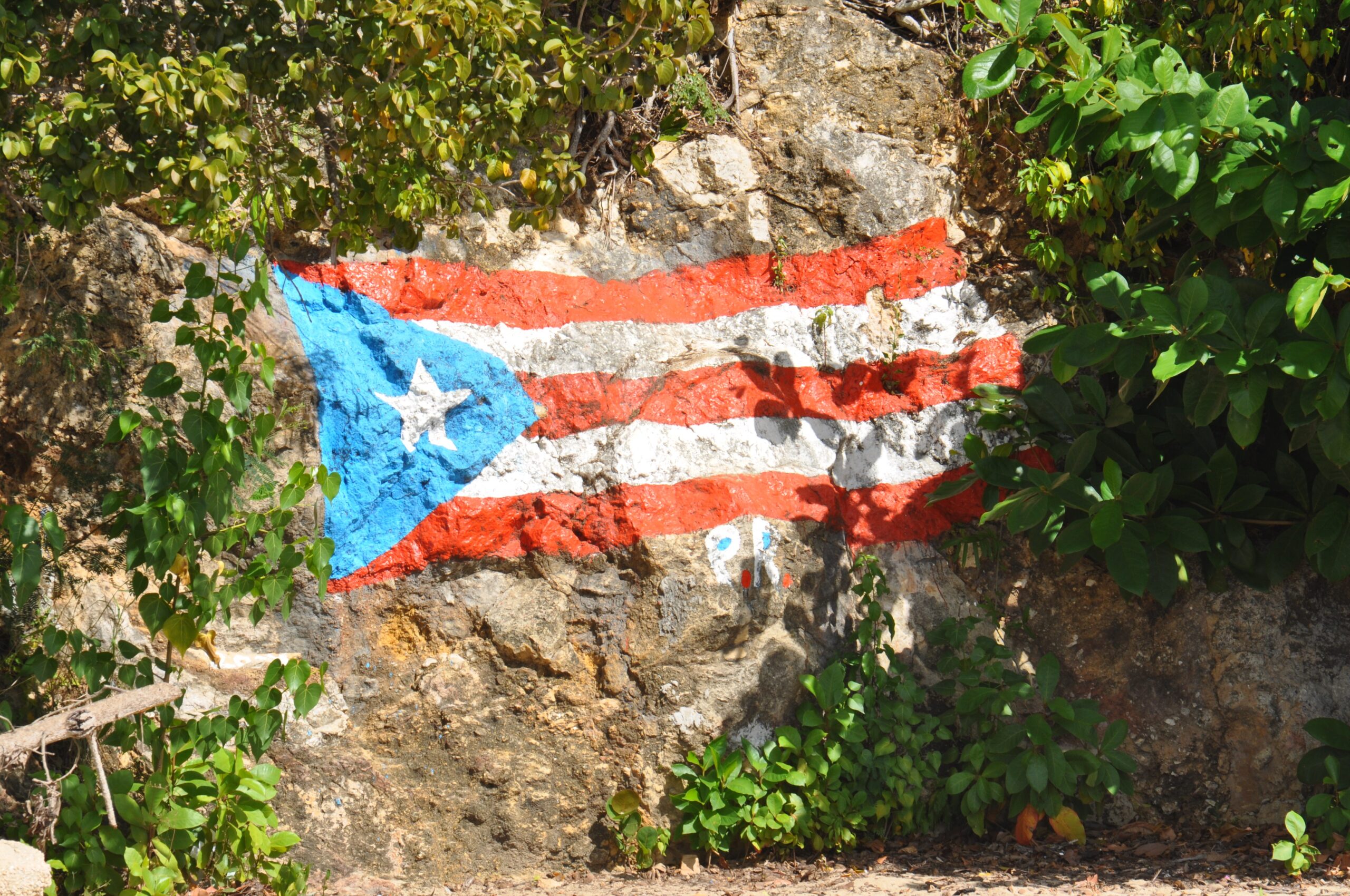
This desire to join people together highlights that segregation and difference are not the choice of Latinos but something that others establish. The Super Bowl event pointed to two issues: on the one hand, to the anti-immigrant campaigns of the U.S. Immigration and Customs Enforcement (ICE), and, on the other, to the absence of opportunities and rights of the Puerto Rican population, both in the United States and on the Caribbean island. (It is important to know that Puerto Rico, a Latin nation, is a United States territory; however, it is not considered “part” of the USA, it is not a state, it is not represented in the 50 stars representing the number of states in the U.S flag, and the people living on the island do not enjoy the same rights as full U.S. citizens. Since 1952, Puerto Rico has had its own official unrestricted flag with a single star.)
Denunciation and equality are also themes throughout the show. When the women collectively dance to the strongly sexual reggaeton music, it is apparent that they are not dancing that way to please a leading alpha male, but to reinforce their own identity: “Perrean solas,” as the song says (roughly, “women twerking for themselves” in English). The dance weaves pleasure and sensuality subliminally, with a social candor: the famous “perreo” is also an expression of identity, because phonetically, “perre” (the sound of P and R in Spanish) is an acronym for Puerto Rico.
A live wedding takes place during the show (another type of union, with a real judge and witnesses). Lady Gaga “enlivens” the wedding reception. She sings her song in English, but her delivery conveys joyously that she identifies with Latinos, who can include everyone. Benito also celebrates in the wedding fiesta and, at the end, enjoying himself, he lets himself fall backward from the roof of a small house into the reaching arms of his people, not like an idol who gives himself to adoration, but to show the confidence and faith of him and his people, just like the old hippie choreographies in which thousands of hands extended upwards to celebrate life.
The invited celebrities, friends of Bad Bunny, enjoyed and celebrated like everyone else, without any of them thinking it necessary to be spotlighted. The spirit of unity and the show’s social message were clear, uniting us in joy and pain. Ricky Martin, another Puerto Rican, deplored (with a song of lament) “what happened to Hawaii” might happen to his beautiful island, suggesting that Hawaii had been turned into a resort. When Benito and utility workers climbed the electric poles, it reminded all that in Puerto Rico, people suffer continuous power grid outages, and this energy crisis puts their daily lives at risk.
In the entire show, Bad Bunny said only three words in English, which were “God Bless America!” He did it to clarify that this blessing will be for all the countries of the American continent (including, by the way, Canada, whose inhabitants started dancing in their homes with a hot rhythm, amazed to hear that they, eternal exiles from the region, were mentioned, according to later social media reports). Another thing the networks later reported was that after the Super Bowl, language platforms registered a 30-something percent increase in interest in learning Spanish.
At the end of the march/dance/protest/geography lesson, the crowd of artists marched joyously off the football field under the flags of the host country (the United States) and that of Puerto Rico (as if its star was about to become the fifty-first on the USA flag). Above, on the stadium screen, visible to all the people present, was the forceful phrase, which from that moment onward should be learned and repeated in all forums, stadiums, platforms, tribunes, pulpits, and, of course, in all the classrooms of the world: “The only thing more powerful than hatred is love.”
Bad Bunny and his team presented a hurricane of love and scandal on stage. The union of bodies, desires, and wills made the field of play a field of complicity. Now echoes of what has happened in recent days resonate in the minds of the entire public: thousands of people, walking, mourning, holding lit candles, singing through the streets of Minneapolis in long, endless lines; a multitude of moved and suffering celebrities, who exercise their power and their voice to protest and spread their indignation, renouncing any personal privilege to exalt others; photographic compositions of the two murdered Americans, who will be in our memories like angels; elderly priests, young people, and schoolteachers who defend their communities and their temples with blows.
Like all of them, the Benito Bowl artists acted rebelliously, without permission and without offense, upholding truths. This particular Sunday in February will remain in our memories as an invitation to experience love as active resistance, with song and dance as ties supporting the reweaving of the shattered social fabric.
We now understand the transcendence of this event. It touches the ethical plane of art. It reminds us of the heroic degree of human beauty, and even more so, because, with its rebellious, horny, and even sporty style, it revealed the spiritual side of political art that can unite, for more than an instant, millions of hearts around the world.
*
Finally, in light of this example, I reflect on the educational mission. I find, then, that it is none other than to collect that memory together with our students, and, one day, entrust others with the task of keeping it alive. In the field of education, there can be many mistakes and many successes, stages of much darkness and much light, but this school ritual of preservation and permanence must be preserved. It is, in a word, what gives us meaning.
Many times I have dreamt of the emergence of a peaceful resistance movement led by young people, a kind of neo-hippism capable of taking the embryonic ideals of those young people of the 1960s a step forward, those who took this truth for granted: The only thing more powerful than hate is love. The Super Bowl show on Sunday, February 8, made even clearer to me the attributes that will comprise this movement, which, in these mystical keystrokes I see inevitably coming: spiritual, ethical, artistic; sentimental, rebellious, lucid; playful, testimonial, inclusive, sexually loving; exemplary.
Ah! And, please, in Spanish, if possible… Because really, how rich it is to be Latino!
Translation by Daniel Wetta

)
)
This article from Observatory of the Institute for the Future of Education may be shared under the terms of the license CC BY-NC-SA 4.0