)
)
)
)
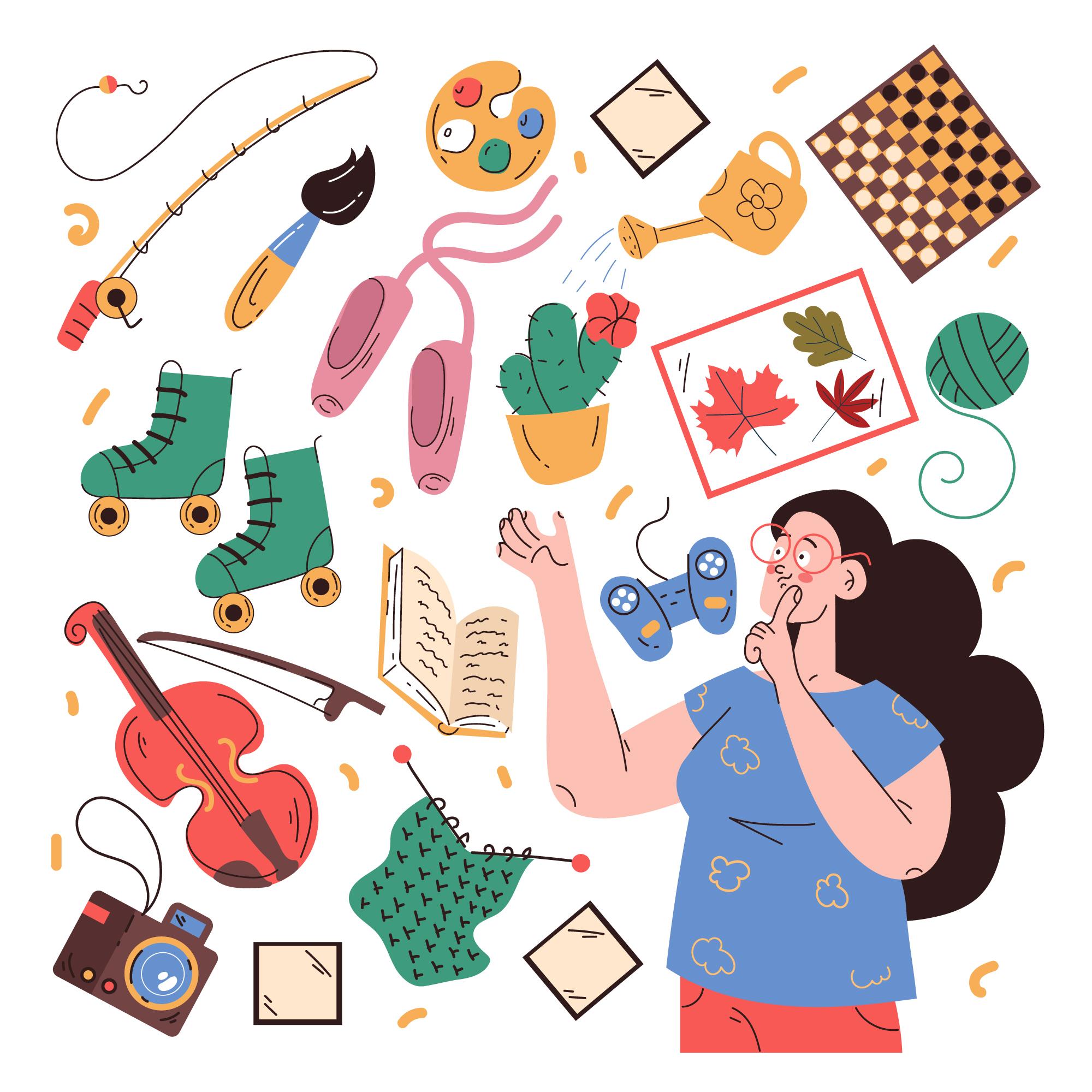
At the beginning of 2026, it is common to be bombarded with resolutions and goals for this new year. One of the most popular goals is to read more: read more books, get back into the habit, meet the annual reading challenge, and cross off titles from an infinite list. At first glance, this purpose seems positive. Reading, after all, is still associated with personal growth, culture, and well-being. Today, however, this seemingly innocent goal masks a more profound and troubling transformation for many: reading, like many other hobbies, has ceased to be a form of relaxation and has become a quantifiable, visible, and increasingly consumerist activity.
What was once an intimate refuge is today measured in numbers, exhibited on social networks, and optimized to meet external goals, especially among younger generations and people immersed in social networks. Reading, cooking, painting, knitting, writing, and even walking are no longer enough to be enjoyed. Nowadays, many people feel the pressure to document and monetize this type of activity symbolically. This forces hobbies, including reading, to risk losing their primary function: offering a space without demands, without metrics, and without spectators.
From hobby to productivity indicator
Today, we live in a society that translates almost any experience into performance. We sleep with applications that measure sleep quality, we walk by counting steps, we work by chasing benchmarks, and we rest under the same logic. Free time is no longer leisure time; it is time “well spent.”
In this context, reading has been absorbed by the logic of productivity. Platforms such as Goodreads, social network communities, and YouTube content promote increasingly ambitious challenges: to read 50, 80, or even 100 books a year. In Reddit discussions such as “Is it a realistic goal to read 100 books a year?“, many users recognize that the challenge is not so much reading as maintaining an accelerated pace that, in practice, often involves sacrificing comprehension, pleasure, and attention.
Several essays published on Medium, such as “100 Books a Year Is a Terrible Idea“ or “Reading 100 Books in a Year,” agree on one key point: when reading becomes a number, the brain stops prioritizing the experience and focuses on completion. Reading becomes a task of fulfillment rather than a dialogue with the text. Thus, the question stops being “What did that book leave you?” and becomes “How many have you read this year?”
To meet goals, many people turn to strategies to accelerate their reading. The focus shifts from the text experience to techniques that optimize time, prioritizing speed, completion, and steady progress over mindfulness and reflection.
A popular, desirable skill is diagonal reading. Articles such as Vogue magazine’s “Diagonal Reading: the TikTok Trend That Puts Your Concentration at Risk” and “The Art of Diagonal Reading” from HoyLunes explain that this practice, useful for checking emails or news, is now presented as a “smart” way to read more in less time.
However, several analyses, such as those presented in the two articles mentioned and in The Art of Diagonal Reading, warn that this technique has a cognitive cost. Reading diagonally implies foregoing depth, missing the nuances of language, and omitting the reflections that allow meaning to be constructed. Immersion gets exchanged for scanning, and instead of deep understanding, there is ephemeral retention.
When this way of reading becomes normalized, deep reading is perceived as slow, uncomfortable, or unnecessary. The book ceases to be a space for thought and becomes a container of ideas that must be extracted quickly.
Audiobooks, multitasking, and fragmented attention
Something similar happens with audiobooks. Their value as an access tool is undeniable. They expand opportunities for people with limited time, visual difficulties, or diverse learning styles. However, within the logic of numerical goals, audiobooks are often instrumentalized.
Several popular YouTube videos on how to read 100 books in a year offer tips for leveraging audiobooks, promoting their use at accelerated speed to “add titles” while performing other tasks, thus maximizing the number of books that appear completed in a year. This results in a fragmented and ephemeral experience.
It is not a matter of affirming that listening is not reading, but of recognizing that reading without attention can hardly be considered reading, regardless of the format. Constant multitasking dilutes the experience and weakens the ability to sustain concentration.
Listening to audiobooks is an excellent alternative. However, a problem arises when you listen at 2X speed to finish it faster and move on to the next one. The purpose is no longer to consume the book and enjoy its content, but to add it to a list of finished titles.
Performative reading, BookTok, and the logic of overconsumption
The transformation of reading cannot be understood without talking about social networks. The community of TikTok readers, commonly known as BookTok, has reinvigorated interest in books but also driven an accelerated consumption dynamic. Articles like “Has TikTok Ruined Reading?“, “Is BookTok Ruining Literature?” and various Reddit discussions converge on a disturbing observation: books go viral for very short periods, are consumed quickly, and are replaced almost immediately by the next trending title, reducing their time of relevance.
Just last year, the Observatory described how BookTok has spurred a reading renaissance and revolutionized how books are seen, read, and sold, especially among younger generations. However, the same article warns that this impulse also has a problematic flip side, leading to a superficiality focused on quantity rather than quality in reading.
In the TikTok ecosystem, books go viral not so much because of their genre or literary proposal, but because of easily recognizable themes, narrative formulas, and emotional dynamics, which are usually reflected in romance books: the famous enemies-to-lovers (love affairs that transition from enemies to lovers), love triangles, childhood best friends, and so on. Books are recommended and circulated from these simplified classifications, which promise a specific and predictable emotional experience.
In many cases, people buy the most popular titles to participate in the digital conversation, that is, to “stay up to date” or be part of the trend, rather than to read calmly and deeply or with personal interest. The article “The Fast-Fashion-ification of BookTok” compares this phenomenon to fast fashion: titles appear, are consumed, and are discarded at a rapid pace, replaced almost immediately by the next viral novelty.
The result is a culture of accumulation. As discussed in the essay “Book Overconsumption and Why It’s Not What It Seems,” buying books has become a form of identity. Having full bookshelves communicates cultural belonging, even when many of those books are never opened. The problem is not buying books to read. The problem is that many are purchased at once to be shown on camera or uploaded to social networks, and the focus is on creating content for the media.
This phenomenon is linked to an increasingly discussed concept: performative reading. Essays such as “Reading Is Performative Now,” “When Reading Becomes Performative,” and The New Yorker‘s “Performative Reading“ describe how reading has become a public action, designed to be shown.
Photographs of perfectly arranged books, highlighted quotes for Instagram, monthly wrap-up videos, or hauls of more than 10 books mean that reading no longer happens for oneself, but for an audience, and the value is no longer in the internal experience, but in its representation.
As The Independent points out, this performativity displaces the original meaning of reading and reinforces what has been mentioned: instead of reading to understand or feel, one does it to show that one is reading.
Beyond reading: the general crisis of hobbies.
This problem is not limited to reading. Articles like “Death of Hobbies in the Age of Overconsumption“ and podcasts like “TikTok Is Ruining Hobbies“ show how multiple recreational activities have been absorbed into the same logic.
Cooking is no longer about preparing dishes; it is about reproducing viral recipes with specific, perfectly matched utensils. Colorizing is no longer simply filling in spaces in an image with color; it is buying “essential” materials recommended by influencers, including certain brands of markers or colors, fashion books, and coloring to perfection, which is now the norm. Even exercise, journaling (the practice of regularly writing down thoughts, emotions, or personal reflections), and gardening have become markets saturated with products and optimized content. The article “From Passion to Price Tags“ describes how influencers transform hobbies into shopping lists, replacing experience with acquisition. Before enjoying, one must consume.
Artificial intelligence is a new element added to this dynamic. In “AI Has Ruined All of Your Hobbies,” the author describes how automation is invading traditionally creative spaces and the damage this causes. There are increasingly more books generated by AI, generic patterns, content without clear authorship, and so on. The saturation of automated creative products makes it difficult to find authentic experiences. The hobby loses its artisanal character and becomes another stream of content optimized for the algorithm.
Recovering hobbies as a space without performance
Hobbies work because they don’t pursue an external result. They are valuable precisely because they do not produce metrics, certificates, or public recognition, and failure is fundamental.
Faced with this panorama, one must resist the logic of performance to recover reading and other hobbies. It means reading slowly, reading less quantity, rereading, abandoning books without guilt, not sharing every progress, and listening to an audiobook at a normal speed. Do not turn leisure into a CV.
As the Faint Glimmers of Civilization article suggests, questioning the obsession with reading causes discomfort because it challenges a culture that confuses quantity with value. Perhaps the most radical act today is not to read 100 books a year, but to allow just one book to accompany us for months.
Various studies agree that hobbies play a crucial role in mental and emotional health when they are enjoyed without performance pressure or productive goals. Recent research indicates that regularly engaging in recreational activities, such as reading, painting, cooking, playing an instrument, or playing sports for pleasure, is associated with lower levels of stress, anxiety, and depressive symptoms, as well as a greater sense of general well-being. Even simple hobbies can contribute to better emotional regulation and greater cognitive flexibility by offering spaces for pause and enjoyment that contrast with the continuous demands of everyday life.
From a clinical perspective, health specialists highlight that hobbies serve as protective factors against mental exhaustion by allowing the brain to disconnect from results-oriented tasks and engage in intrinsically rewarding activities. According to UCLA Health, people who maintain at least one hobby report improved mood, higher self-esteem, and a sustained reduction in stress, in addition to cognitive benefits such as improved attention and memory. These positive effects also extend to the physical plane, as reduced chronic stress favorably impacts cardiovascular health and the immune system.
In addition, hobbies can strengthen a sense of purpose and personal identity, primarily when they are not mediated by external expectations or social validation. According to American InterContinental University, spending time on activities that are enjoyable in and of themselves promotes intrinsic motivation, creativity, and a sense of a fuller, more meaningful life.
Taken together, the evidence suggests that hobbies are not a luxury or a waste of time, but fulfill a fundamental psychological need, the value of which is diluted when they are transformed into measurable, consumable, or continuously compared tasks. In an age obsessed with measuring everything, hobbies represent one of the last spaces where not thinking is productive. The question, then, is not how many books we will read in 2026, but whether we are still able to read without counting them, showing that performance should not matter. Reading is not a career, creating is not a competition, nor is it necessary to purchase trendy materials to complete activities perfectly. When hobbies stop being a refuge, we lose more than just free time: we lose an essential space to think, feel, “be”, and enjoy.

)
)
This article from Observatory of the Institute for the Future of Education may be shared under the terms of the license CC BY-NC-SA 4.0