
It seems that talking about the future of education today has become, almost inevitably, a discussion of artificial intelligence (AI). The public conversation centers on tools, regulations, adoption speed, plagiarism risks, task automation, and efficiency. There is debate about whether we should ban it or integrate it into the classroom, but how, when, and why are not always present in these debates.
In an exclusive interview for the IFE Observatory, Dr. Éder Villalba, director of the Bachelor’s Degree in Innovation and Educational Transformation at Tecnológico de Monterrey, proposes a different starting point, less technical and more philosophical. Before discussing algorithms, he insists, a perhaps uncomfortable and more profound question should be asked: What is education’s purpose?
“There are many mixed agendas out there, and in some areas the philosophy of education can be lost in terms of what it is, and the reason for educating people,” he explains. “Education has a rigid structure in terms of schooling: who gives credentials, who accredits, who grants degrees. There are issues of social trust and links with industry.” Within this institutional structure, which articulates certifications, job expectations, and social legitimacy, education’s ultimate purpose can be diluted.
For Dr. Villalba, innovation risks becoming a race for novelty and technology as an end in itself. For this reason, he insists on distinguishing between novelty and real innovation. If we seek to innovate only for the sake of innovation, we lose value. Innovation is not novelty; it should be utility that gives more value. That value does not reside in the tool, but in the person.
Regarding this, Dr. Villalba explains that such value “only lives in the person, the user, the student, the person in front of you, the learner; one must capture that value, that is, be able to identify if there really was no movement, no positive influence.”
His own trajectory helps us to understand this position. Originally trained as a graduate in International Relations, he belongs, as he explains, to a generation that knew the “WITHOUT World”: without omnipresent smartphones, without permanent social networks, without artificial intelligence accessible from a browser. “We come from the lost generation,” he says ironically. “We arrived at high school or university almost entirely without this type of technology.”
However, his transition experience has allowed him to compare contexts. He recalls an environment in which attention did not compete with constant notifications and in which access to information required slower processes. “We adapt,” he says, but he also recognizes that remembering the world before hyperconnectivity helps us contextualize current transformations. The context of life was different, and, with it, the way of learning.
At some point in his career, this generational contrast led him to profoundly rethink what it means to innovate in education. For years, he worked on teacher strengthening, supporting teachers who wanted to “innovate,” and he discovered that the term was used with worrying ambiguity.
Dr. Villalba comments that his “main question was always: What does it mean? How should educational innovation be understood? What does it imply? And these questions also lead us to think: well, what is educational innovation? Is it a result, a product, a process, a way of thinking? What does it mean [to innovate] in this world, in which it seems that everything has already been invented?”
Expanding on this idea, is innovation just about incorporating a platform? Changing the class dynamics? Producing something visually different? In an environment where “it seems that everything has been invented,” the word risks losing its meaning.
Hence, he arrived at the formula that, today, synthesizes his position: Utility plus value equals innovation. “You generate a proposal, you apply it, it generates value, and it becomes an innovation.” But this value must be measured in human terms: improved learning, capacity building, and response to real problems. If it does not impact the student or teacher experience, it can hardly be considered educational transformation.
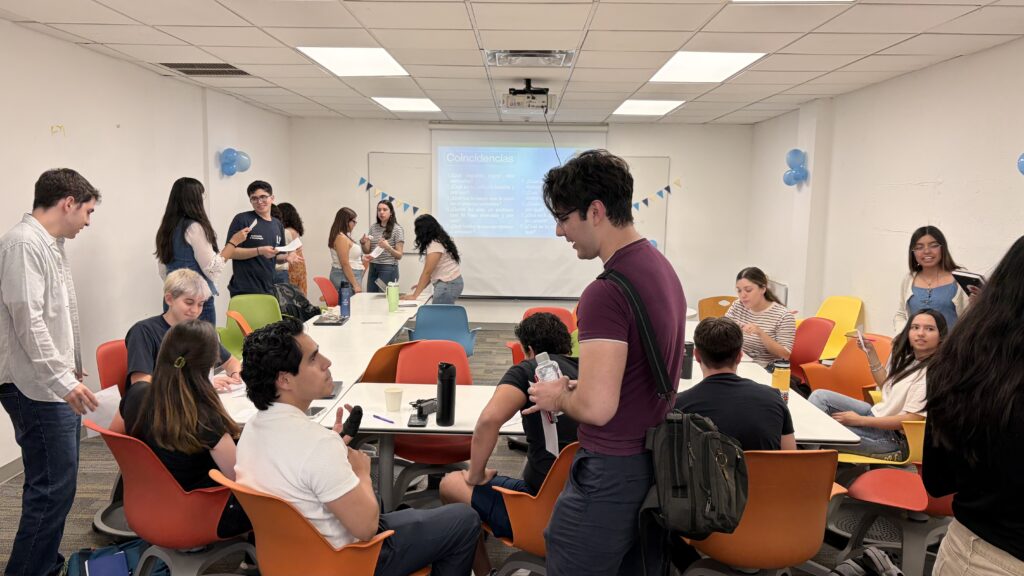
This logic informs the nature of the Bachelor’s Degree in Innovation and Educational Transformation, which he directs. It is not a degree program that trains teachers in the traditional sense, but rather forms professionals capable of intervening in the educational system from multiple fronts: designing learning experiences with educational technologies, teacher and organizational training, developing inclusion projects, conducting educational research, and coordinating social innovation initiatives. “We are looking for professionals who can navigate a more complex world,” he says. This complexity requires understanding both the technological dimension and the cognitive and socio-emotional dimension of learners.
In today’s debates, artificial intelligence is often a focus of conversation. When asked whether Dr. Villalba considers AI overrepresented, he responds with nuance. He has mixed feelings. On the one hand, he recognizes an overrepresentation: the public discussion seems to revolve almost obsessively around technology. But at the same time, he warns that technology has become a structural part of the contemporary human experience. “What does it reveal to us? What does it represent? What does it mean?” he asks.
AI is not just a tool; it stands as a mirror of fears, professional identity crises, and ethical debates. For many young people, technology is no longer an add-on; it is a permanent background in their daily lives. The question, then, is not whether AI should be present, but how and with what intention.
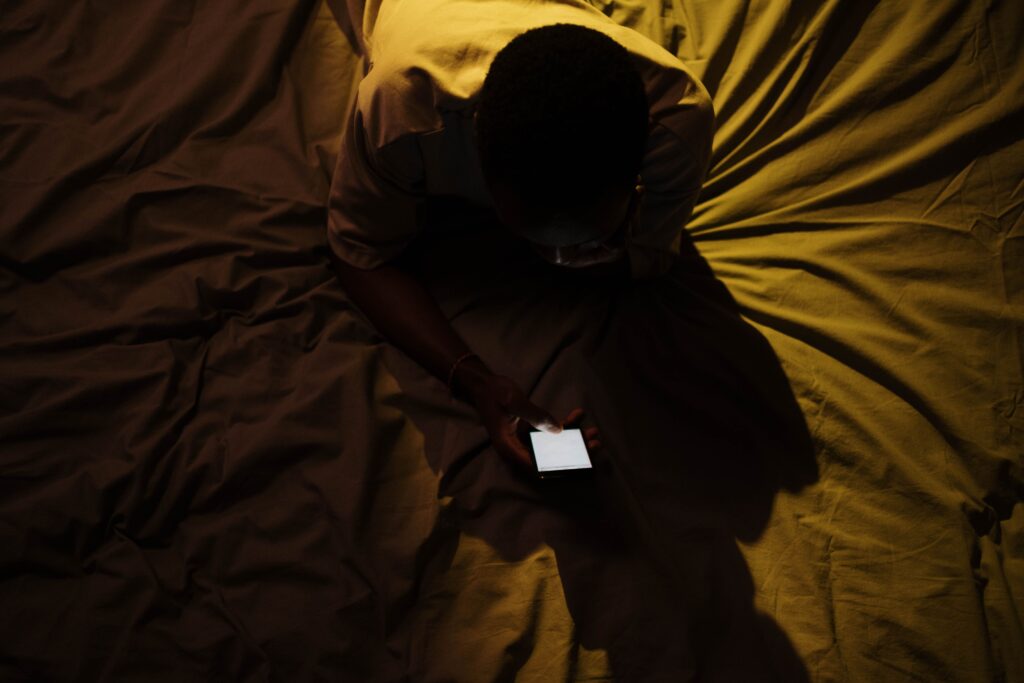
At this point, one of the central tensions emerges: the possible gap between the school structure, which continues to depend on sustained attention, deep reading, and prolonged sequencing, and the cognitive and emotional patterns of students trained in digital culture. Éder Villalba recognizes the distinction.
“It has to do with plasticity,” he explains, alluding to the brain’s ability to adapt to changing environments. Constant immediacy creates diverse dynamics, and some functions require deliberate strengthening. However, he avoids alarmist simplifications. “We label to understand,” he clarifies, but the goal must be to think beyond with flexibility.
Technology mediates the gap, which should not be analyzed in reductionist terms. Attention and memory are particularly stressed areas, but any diagnosis must also consider the socio-emotional context. In a hyper-consumerist culture, saturated with external stimuli, maintaining rigid educational structures without revision can generate frustration that overwhelms learning.
“Educational transformation requires rigorous research, not just technological enthusiasm.”
Hence his recurring metaphor: “We cannot design a glove without knowing the hand.” In the educational context, the metaphor alludes to designing educational solutions without understanding how students are cognitively configured, even from early childhood, which implies intervening blindly. Worse, this can lead to the design of educational programs that address only symptoms rather than root causes.
For Dr. Villalba, an educational innovator must be able to understand the state of the art of a situation before intervening, identify the “invisible skills” at play, and start from a solid diagnosis. Educational transformation requires rigorous research, not just technological enthusiasm.
He mentions that “we always have to be current on the state of things. Every time my students have to design something, I have them research the state of the art of the corresponding topic: what they are addressing, the level, the people, the context, and the situation. What is the last thing we know about the constructed knowledge, not collectively as humanity, nor from an academic or scientific perspective, regarding this situation, phenomenon, or problem? It begins from there.”
As for the specific integration of artificial intelligence, his position is pedagogical rather than instrumental. He proposes a model of progressive literacy, in which critical familiarization is first necessary: understanding how models work, how they are trained, what biases they can incorporate, and their ethical limits.
Finally, there is collaborative creation: integrating AI as an assistant or collaborator in academic and professional processes. “It can be an assistant, it can be a collaborator, while knowing its limits and the responsibility that I have,” he says. Later, AI management comes into play: integrating the technology into complex, real-world projects with a defined purpose. Finally, there is design: stop being just a user and become a developer or a customizer of AI-based solutions.
In practice, this translates into solid transparency mechanisms. Allowing the use of AI demands accountability. Students must specify which tools they used, the prompts, the results obtained, and how they validated the information. This exercise distinguishes between delegable and essential training processes. “They must understand the key processes that you cannot delegate because we are looking for them to develop them,” explains Dr. Villalba. AI does not become an automatic shortcut, but an object of critical reflection.
When asked what worries him more, the speed of technological advancement or the lack of understanding its effects, his answer is clear. “Speed doesn’t worry me. That is going to be determined by the agenda and the investment we make as humanity.” What worries him is the lack of research.
“We do not have conclusive clarity about the effects of the internet. We don’t have strong clarity on the effects of smartphones on education.” The gap between exponential technological development and linear educational research is problematic: By the time we begin to understand one technology, another has replaced it. He warns, “By the time we have true knowledge about a current technology, it is no longer the technology in use. Another replaces it.”
Today’s challenges in training educators
On the human level, this degree program recognizes the importance of socio-emotional accompaniment, especially in education. The Director of the Bachelor’s Degree in Innovation and Educational Transformation notes that approximately 20% of the student body is international, which implies adaptation processes and possible feelings of isolation. The career program includes support such as Edu Makerspace and peer-support networks, as well as socio-educational accompaniment, to address these issues.
However, Villalba acknowledges that many students still face difficulties in self-management. Strengthening autonomy, purpose, and competence, understood as the real ability to do something, is a central part of training. Educational innovators cannot limit themselves to technical mastery; they need critical thinking, ethical sensitivity, and the capacity for self-government.
When asked if technology can strengthen capacities such as engaged attention or emotional regulation, he responds with conscious ambivalence: “Yes and no.” For him, “technology is no longer neutral; it is not a hammer that only works when someone uses it.” It can have a positive or negative impact, depending on how it is designed and integrated. Risk arises when it becomes an automatic solution to structural problems that require deeper transformations. Adopting technology without revising the underlying pedagogical model only intensifies existing tensions.
“The focus is not on technology. It is on the learner, the person who teaches, and the relationship formed between the two.”
When predicting the future of education, Dr. Villalba does not anticipate the educational system’s disappearance, but its reformulation. He talks about greater personalization, better inclusion, and new ways to validate competencies. He envisions a scenario in which micro-credentials and competency-based models transform traditional architecture. However, he insists that this transition must be guided by innovators who design with intention. “Innovators in education are needed to consider what the new world should be like,” he says.
Ultimately, the conversation returns to square one. Artificial intelligence will continue to advance. The tools will change. New problems will arise. But if the discussion is limited to platforms, algorithms, and efficiency, what is essential will be lost. The focus is not on technology. It is on the learner, the person who teaches, and the relationship formed between the two. Before celebrating automation or fearing its advance, perhaps the most urgent question remains profoundly human: what kinds of skills do we want to cultivate and what society are we educating? Because, as Dr. Villalba repeats, “We cannot design a glove without knowing the hand.”
Translation by Daniel Wetta