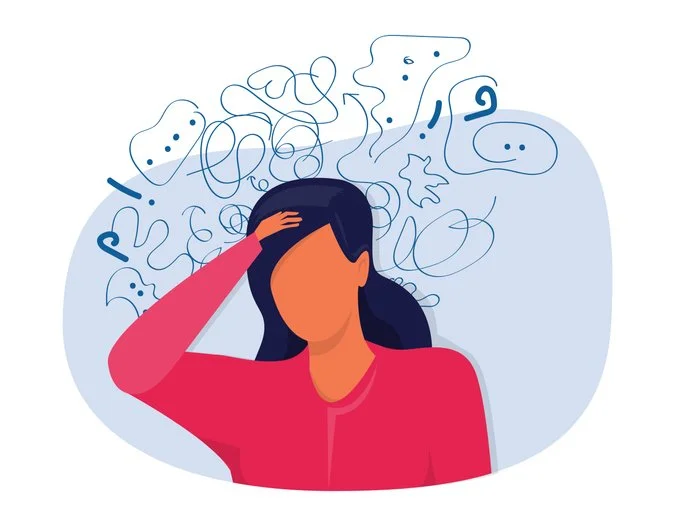



Let’s pay attention to the discourses and ideas we express. Often, women themselves perpetuate verbal practices that violate, invalidate, or minimize others.
The depiction of women in film, literature, and in their role as a reader is a matter that directly concerns the lives of every one of us as women. Depending on the stories we tell ourselves, how we tell them, and to whom we direct them, is how we create, reaffirm, and reinvent our identities.
At university, I have noticed sometimes that female students find it challenging to speak in the female first-person when they refer to the activity “of the architect,” “of the engineer,” “of the marketer,” (using the male form of the noun) when in reality, they should present themselves to the world with confidence and without hesitation speaking from the “I” and from what they study in a female meaning. Language configures reality, shapes it, and makes us participants in it.
To the extent that we appropriate the spoken, written, and narrated word in different media, we also make ourselves and our problems visible with everything, how we confront day-to-day life and the internal and external challenges that we impose on us in a real, imagined, and projected way by ourselves as women and by the sociocultural collective.
“The empowerment of women and our role in the written, spoken, and visual narrative are intimately related.”
One seemingly impactful but straightforward activity is the self-directed personal narrative. Keeping a log that records what I feel, what I think, and narrating it from the first-person female, makes me see my life and my situation in perspective. For example: “I am a storyteller,” “I am a creator,” “I am a protagonist,” “I am a producer,” “I am a reader,” etc., all expressed in the first person in the feminine. All these possibilities incentivize me to feel more comfortable in my skin, in my reality. They help me reconcile with myself and the struggles that other women have waged so that my voice is heard; they echo and find shelter in the reconciliation and coherence that I give to my personal narrative.
In the academic environment, as well as in the literary, film, and advertising industries, women and men have raised our voices to generate a change. We have proposed campaigns, slogans, stories, and the use of inclusive language to minimize the negative impact of the stereotypes created and perpetuated in the creative industries. Both the use of inclusive language and what I would call the “grammar of empowerment” are tools that, together, refer to a personal narrative that restores power and self-confidence, while opening the door to new possibilities for rethinking one’s identity.
As success stories in the field of narrative, I would like to mention the contributions of David Epston and Michael White (1992), who relied on constructivist theory, adapting it to the use of narrative means to employ the spoken and written word therapeutically. These authors have been critical of how some women feel a particular disadvantage concerning others in our environment. For example, parents, professors, directors, and people who seem to be over us, and we attach a lot of weight to their words about our person. What makes these stories dominant – which does not make them true – is that we take them for granted when we do not take into account alternative stories, including those of our own voice, our feeling, memory, and narration, during and afterward seen in retrospect.
Epston’s and White’s work has focused on delivering a new model of thought and verbality to counteract what they call the “problem-label.” It consists of distancing us from what we think about ourselves as women or from our life as a problem or stereotype. In other words, when family members, friends, neighbors, co-workers, or professionals think a person ‘has’ a specific characteristic or a particular problem, they are wielding power over them by “representing” this knowledge about the person (Castle, Ledo & Pino, 2012). The use of metaphor and other literary figures in how we speak and describe ourselves and our existential situation also helps to empower us and rethink ourselves from broader identity spectra. How we communicate this to others can reinforce this stance or make it wobble.
One thing that I adapted from the contributions of the authors mentioned above to the specific case of female empowerment was to translate the theoretical resource of the “problem-label” that they propose to a stereotype or “toxic narrative,” as I call it. What these authors saw in the therapy, I have taken it to the classroom with the use of personal journals, where I indicate that it is important to write our own story and put the versions of “how would my parents or tutors would say it,” “how would a close male friend or female friend narrate it,” and “how would I narrate it.” After this, I do an analysis work, just like the therapists, and whose work inspires me, to adapt them to the educational field. One of the things I’ve noticed is that my students —both men and women— tend to feel more relieved upon rereading what they wrote two days later, which is when we have the next session.
From this exercise in narratives, I incentivize my students –male and female– to tell how they have been participants in gender inequality, describing what they have done or said that could have delegated them (women, in their case) to a secondary role in their own history; In the case of men, which parts of their narratives have omitted, minimized, or violated the position of some woman in their life, and how could they relate it differently?
Another aspect that I think is important to improve is inclusive language. Both experts and my own students in class believe that it is not enough to say “they.” We should work on the basis, that is, what underlies our way of talking about things. This base has to do with both cultural and sociohistorical issues. Based on this observation, my proposal is geared towards digging into the discursive level. This means that I think it is more important to pay attention to the content of what is said than how it is said. While it is true that the use of “they” as a third-person singular pronoun instead of “he” or “she”, intends to give inclusiveness to our language, even if is not achieved, at least it highlights that something that is written with a certain emphasis could be the signaling the feeling of social injustice because historically, everything has been spoken in the masculine singular and plural. I do not mean that we should stop doing these practices in our language, but I propose that we go further and start observing, reflecting, and being careful about what we say. What’s behind our words? Do the ideas we express have a certain weight of exclusion, sexism, or machismo? If so, part of our personal narrative would also have the important task of taking responsibility for how we express.
To delve deeper into this subject, I suggest the revision of the theoretical elements proposed by the philosopher Julia Kristeva. In Strangers to Ourselves (1991), Kristeva takes to the realm of the symbolic that identifies us from some heterogeneous elements t
hat can break into that identity or, on the contrary, complement it. As an example, some issues that we can consider as a part or contribution to identity would be the language expressed from the “I,” the acceptance of one’s own body, and the importance and respect for it in our openness both to the world and others, self-love and empathy conceived from a comprehensive understanding of myself and, from there, to respectful approach to the other. Some examples of heterogeneous elements would be self-rejection, self-criticism, the feeling that our body is alien or has less value than the “I” as a whole; practices of discrimination that start from seeing in other things what displeases us about ourselves as women, giving more power to what others think or say about us rather than our own opinion.
I invite you to share your thoughts and experiences on this topic to learn together how to empower ourselves and our students. We should all pay more attention to the beliefs, discourses, and ideas that we express, share or think so that we become increasingly aware of how we as women often perpetuate verbal practices that violate, invalidate, humiliate, or minimize the other. Let’s be meticulous observers and encourage students to be so as well.
About the author
Lorena García Caballero (lorena.caballero@tec.mx) holds a Ph.D. in philosophy and is a U.N.A.M. graduate. She specializes in the area of ethics and neuroethics. She currently teaches courses in Philosophy and Ethics at the Tecnológico de Monterrey campus in Guadalajara, Mexico.
References
Castillo I & Ledo H & Pino Y. (2012). Técnicas narrativas: un enfoque psicoterapéutico. Norte de salud mental. (10) 59- 66.
Epston, D. & White, M. (1992). Experience, Contradiction, Narrative, and Imagination: Selected papers by David Epston & Michael White, 1989-1991. Adelaide: Dulwich Centre Publications.
Kristeva, J. (1991). Extranjeros para nosotros mismos. Barcelona: Plaza & Janés editores.
Disclaimer: The viewpoints expressed in this article are the author’s own and do not necessarily reflect the opinions, viewpoints and official policies of Instituto Tecnológico y de Estudios Superiores de Monterrey.