
The underrepresentation of women in Science, Technology, Engineering, and Mathematics (STEM) in Latin America and the Caribbean (LAC) remains a persistent problem. Rovani Sigamoney, a UNESCO specialist in engineering and chemistry programs, warns that closing the gender gap globally will take more than 123 years, while in LAC it is projected to take 52 years.
However, women hold only 12% of STEM management positions internationally. Although 41% of graduates in this field are women, a World Bank survey found that only a third of employees with degrees in these areas are women. In the region, women comprise less than 30% of science researchers. Meanwhile, in STEM higher education enrollment, women represent 38% in Mexico, 34% in Argentina, 30% in Brazil, and 25% in Chile.
In response, the international MakerWomenSTEM initiative has emerged to strengthen Latin American women’s participation in STEM through training, mentoring, and collaboration ecosystems that offer greater educational and leadership opportunities. Developed in Ecuador, Colombia, and Mexico as part of the ERASMUS-EDU-2024-CBHE project, it is funded by the European Union program, Erasmus+.
Its active education model builds digital, creative, and entrepreneurial skills in local environments through practical, interdisciplinary learning that promotes professional growth, whether participants are students, teachers, practicing engineers, coordinators, institution directors, or professionals interested in STEM. This makes it a significant educational innovation, with a training program and a learning platform.
In addition, they have mentor training in the three countries, use digital badges based on the Maker pedagogical framework, connect researchers, teachers, and leaders in a collaborative international network, and have implemented their pilot training experiences in the three countries, specifically in La Guajira (Colombia), Hidalgo (Mexico), and Durán (Ecuador), with the ability to replicate the model contextually in various communities.
So far, there are 328 Maker mentors; the goal for 2026 is to reach 500.
The human experience behind the initiative
María Eugenia Gil Rendón, a research professor at the School of Humanities and Education at Tecnológico de Monterrey, participated in the pilot project; she shares that she began at the activity-design stage, collaborating with various people. The process was built gradually and refined through pilot tests. For her, piloting the proposal was essential to demonstrate how it works, identify areas for improvement, and make necessary adjustments.
This design and piloting process allowed the initiative to adapt to different contexts and pave the way for implementation in other institutions. So far, the research professor has conducted the MakerWomenSTEM workshop at CEIPA and Universidad de la Guajira in Colombia, Universidad Bolivariana del Ecuador (UBE), Distrito de Educación, Salud, Ciencia, Tecnología e Innovación (DESCTI), and Corporación Universitaria para el Desarrollo de Internet (CUDI) in Mexico.
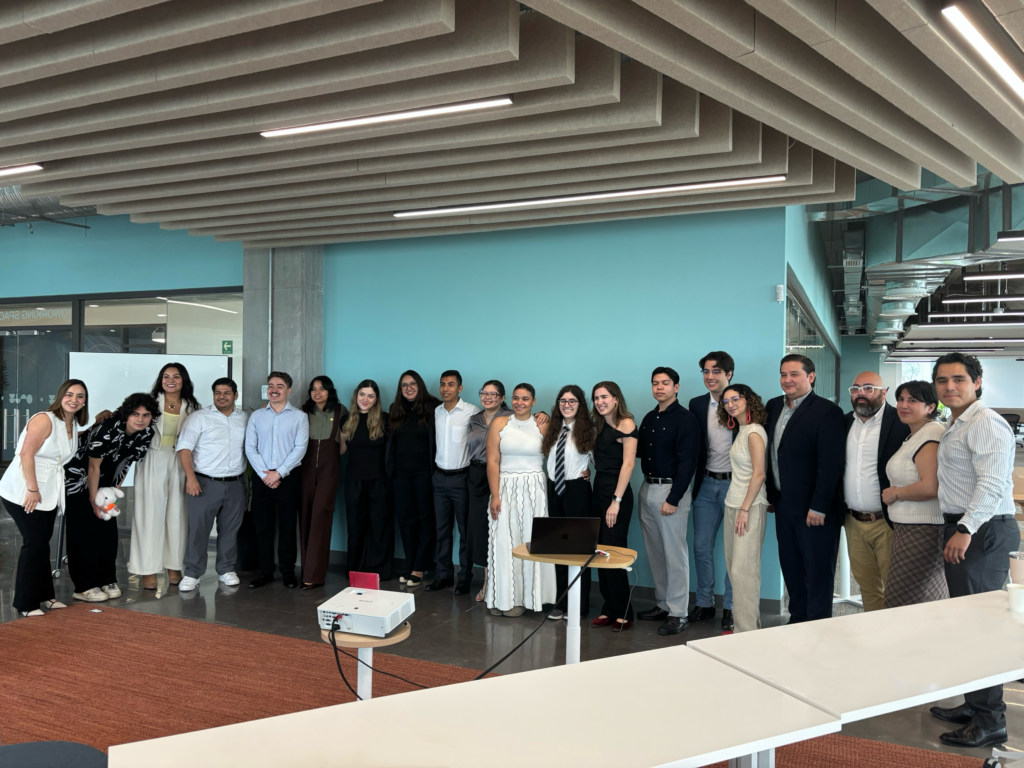
The first pilot took place at the Tecnológico de Monterrey campus and included participants from different areas. Subsequently, the team conducted a second pilot at DESCTI, in collaboration with one of the participating institutions. Both experiences made it possible to review and strengthen the model and lay the foundation for the training of mentors. As a result, a group of collaborators prepared to replicate the methodology at other Maker-affiliated universities.
During this second experience, participants learned about the Maker approach and became acquainted with technological tools such as laser cutters, 3D printers, Arduino and Micro:bit kits, and the Tinkercad and MakeCode platforms for Micro:bit. The goal was to build skills to use these resources to create projects that address environmental needs and support local and regional development.
The project then expanded to other Latin American contexts, particularly Ecuador, Colombia, and Mexico. In these countries, the initiative emphasized strengthening women’s presence in STEM fields, focusing not only on access but also on retention. The goal was to build leadership skills while creating opportunities for more women to innovate and lead in their own environments.
“It was important for them to feel very sure of what they were doing and let go of the belief that they could not do it, and to learn that they can. So, it was like unlearning in order to learn. To realize that they could achieve it. Thus, this project takes on significant challenges, such as the sometimes-low representation of women in STEM disciplines, the limited availability of support networks, the lack of mentoring, and the need to strengthen capacities in educational institutions at an international level,” explains Gil Rendón.
Creating these ecosystems helps women function in academic environments while strengthening their professional development and community participation.
Gil Rendón states that the mission was to consolidate a group of seed mentors who could replicate the model in cascade training. This is happening in all countries where the program is implemented. However, she emphasizes that the model’s impact depends largely on the attitude and support provided during interactions with participants.
Therefore, one objective was to let them know they were part of the team. Although each instructor had a specific function within the workshops, Gil Rendón sought to maintain close contact with the participants, especially at the beginning and end of each session. Beyond transmitting technical knowledge, these moments reinforced a message of confidence: they could do it, they belonged in these spaces, and they could carry out their own projects.
“It’s about giving them, first and foremost, confidence and hope that they’re going to succeed, and to realize that the workshops and mentoring sessions we conducted as certified mentors empower them to keep moving forward. That was the intention,” she states.
The universities advertised the calls for attendance, and the workshops were developed under different conditions in each one. Available resources varied, as did the number of participants: some groups had 35 people, while others had around 15. The women who responded had various levels of experience and previous knowledge. Given this diversity, one of the main challenges was ensuring that all participants reached a common level of knowledge and skills.
Gil Rendón notes that workshop environments also varied by location: some classrooms were larger and had more resources, while others had fewer materials. For example, some groups had up to 16 poster boards for the activities, while others had only four. Given these differences, one challenge as an instructor was adapting activities to the available resources without losing sight of the objective of achieving the same learning outcomes. At the same time, it was essential to recognize each woman’s abilities, knowledge, and talents and use this diversity as part of the learning process.
For Gil Rendón, her experience in education and in forming and collaborating with teams was key to managing these differences effectively. She explains that providing a safe space requires building, from the beginning, an environment of trust that lets participants share their experiences and, at the same time, put their knowledge and talents in service of others. From her perspective, this means staying open and willing to analyze each situation and adapt how participants are supported depending on the needs and characteristics of each context.
For this reason, the research professor stresses that the first step is to understand the context in which the teaching will take place. Before each experience, she tried to learn about the university, review the participants’ profiles, and familiarize herself with the locality. This allowed her to prepare better and maintain a work structure that, while having a defined base, could be adjusted to each group’s needs.
This flexibility was especially important in an initiative like MakerWomenSTEM, as a module could require more time in one institution than in another; in some cases, it was possible to optimize activities to ensure all participants had the opportunity to learn and become familiar with the course tools.
Additionally, in each country, a diagnosis and selection process was carried out to identify the people in charge of conducting the workshops. However, the profiles and contexts varied considerably. For example, in Ecuador, most participants were adults, while in Colombia, younger profiles predominated.
Given these differences, the teaching tools became especially relevant. For Gil Rendón, listening to others helps overcome the limitations of applying the model rigidly without considering each group’s particularities. Paying attention to people helps identify their needs and find the best way to address each situation. She explains that it is not only about listening to what participants say, but also about listening carefully to understand their needs and respond accordingly.
Through patience, smiles, and continuous learning, Gil Rendón sought to empower participants, fostering a sense of belonging and self-confidence so they would recognize their abilities and develop their full potential. Her approach and connection with them allowed her to build bonds that, over time, made her a reference and a figure they could identify with.
She notes that other mentors can adapt the model for implementation in different contexts. Workshop times can be more flexible, strategies can change, and adjustments can respond to each group’s particular needs; all of this adds to the richness of its implementation. However, she believes these adaptations capture the essence of the validated model: a structure built and tested to be flexible and applicable across contexts.
The competencies to be strengthened are both technical and socio-emotional skills. The former involved using tools such as 3D printers and laser cutters, while the latter focused on emotional regulation as a resource for navigating learning processes and managing frustration when something did not work out the first time.
Throughout the five modules and their different activities, critical and creative thinking, problem solving, innovation, effective communication, and collaborative work received focused attention. Developing these skills not only supports individual learning but also helps participants build support networks.
The modules were supported by a platform where participants completed activities, received assessments, and documented their progress. At the end of each module, they received a badge from Tecnológico de Monterrey that indicated their progress and recognized the learning they had acquired.
During these stages, mentors played an important role in supporting and guiding them so they could complete the activities and advance in each one. But as with any tool in the testing and improvement process, the platform could also present difficulties. Therefore, close monitoring was essential to identify these aspects and address them promptly. In the end, Gil Rendón notes, this was all part of the experience.
In addition to pilot testing, she participated directly in the activities and completed the process as if she were just another participant before assuming the instructor role. This first-hand experience helped her understand the journey, identify potential difficulties, and grasp what it meant to carry out each activity so that, later, she could teach it and support other women through the process.
Some training modules also incorporated a virtual approach. For example, module zero, an introductory module, was delivered virtually, and participants later attended practical sessions to apply what they learned. In this way, the training took on a hybrid character by combining online instruction and preparation with practical, face-to-face experience.
For this reason, several challenges arose related to connectivity and the use of the mobile application. The instructors had to find timely solutions to address these situations and prevent them from becoming an obstacle to learning. At the same time, these experiences helped them recognize that not everyone has the same level of familiarity or experience with technology. For some, it wasn’t part of their daily activities or immediate need.
This reality made clear the importance of respecting each person’s rhythms and learning processes, as well as maintaining an open attitude toward collaborative learning. Rather than assuming everyone had to adapt to the same pace, instructors and participants had to find ways to overcome difficulties and move forward together.
Tecnológico de Monterrey took the initiative to create this model, thereby assuming an important responsibility and commitment. Gil Rendón highlights that, behind its development and implementation, the conviction is that each process must be carried out with human, professional, and academic quality. “This means that people are going to observe us more and that we are showing precisely the mission and vision of our institution: Opening doors, giving hope in learning, in education, and transforming lives,” she says.
MakerWomenSTEM gave the opportunity to actively contribute to building a more inclusive, innovative education with strong social impact. At the same time, the initiative facilitated international collaborations and learning with other institutions, as well as from the different contexts in which the model was implemented. In this way, the exchange was not limited to sharing the good practices developed by Tecnológico de Monterrey staff. It also offered an opportunity to enrich one’s educational strategies based on the experiences, perspectives, and learning gained in each context.
Gil Rendón argues that this experience reinforced a fundamental idea: one also learns from mistakes. The process helped break the myth that everything must go perfectly the first time and created space to experiment, make mistakes, and try again without harsh judgment or transferring that demand to others.
In this respect, the Maker approach favors dynamic learning through experimentation and practice. Participants can apply knowledge in practice, identify what isn’t working, and improve by overcoming stumbling blocks.
The project involved people with different profiles and experiences, including some with doctoral training. As a team, one lesson learned was to recognize each member’s strengths while also identifying areas where they could learn from others. This diversity allowed them to complement one another’s knowledge, support each other, and understand that leading also means having the confidence to recognize one’s own areas for growth and learn from others.
Throughout the process, it was important to highlight good practices and show how the learning acquired could open new opportunities for women, including in the workplace and entrepreneurial ventures. Gil Rendón explained that each tool and piece of knowledge could become an opportunity to develop their own project. For example, participants could view technology as a resource for entrepreneurship, from making keychains with a laser cutter to designing logos and generating new product ideas.
Another stage she considers fundamental is documenting the experiences. Recording what happened in each implementation made it possible to present the results, identify lessons learned, and create a reference to facilitate replicating the project in other contexts. From this perspective, she recognizes Erasmus+’s support, whose trust and funding made it possible to expand the initiative’s scope and strategically leverage available resources.
This comprehensive perspective sought to help women not only develop new skills but also recognize themselves as leaders capable of sharing their knowledge with other women and becoming agents of change within their communities and institutions. The intention was for them to see themselves as protagonists of innovation processes, capable of driving transformation in their environment and inspiring others to do the same. Thus, they could become part of the model, not just learn a methodology, and promote a new way of relating to technology, innovation, and their own capabilities.
“I believe that one of the next steps is to make sustainable collaborative ecosystems and not be isolated. Sometimes we believe that working independently can yield better results, but not necessarily. If we really want our countries and this area so important in education having to do with STEM to create networks of support for opportunities, we must provide the new generations with other great opportunities and inspire a different vision,” she notes.
Currently, the program has been shortlisted for the Access, Diversity & Inclusion Award at the 2026 QS Reimagine Education Awards.
The MakerWomenSTEM experience shows that transforming an educational model involves more than transmitting technical knowledge; it involves listening and adapting, learning from failures, and building confidence to encourage other people. Through collaboration among institutions, mentors, and participants, the methodology builds spaces that recognize creators, leaders, and agents of change who bring this learning into their daily lives and environments and multiply opportunities for other women.
Learn more about MakerWomenSTEM and join as they continue to build new avenues for learning, innovation, and leadership.
Translation by Daniel Wetta