)
)
)
)
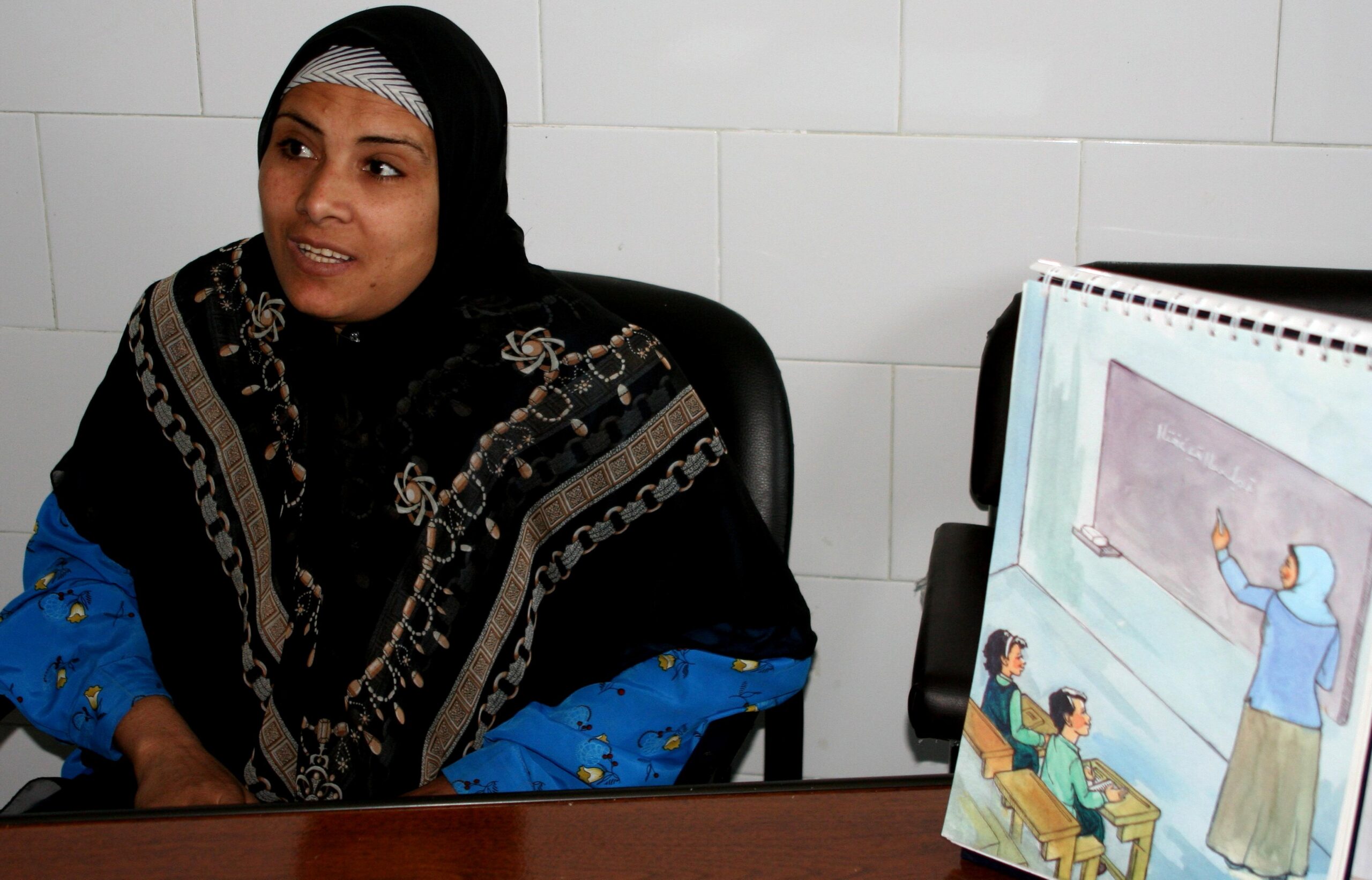
Not all teachers are the same.
This lucid assertion, worthy of the most clever Perogrullo (referring to an obvious statement), can, with all its obviousness, introduce us to one of the most complex problems of pedagogy, one that keeps theorists and practitioners awake at night the most. To pose the problem, we can start from the generalized idea of what a teacher is, namely, someone capable of translating knowledge into a language familiar to their students, that is, into a clear message to them.
If it is a question of finding a common language, we will agree that the best thing is rational language, the only one we identify as common to all humans (“People understand each other by talking,” the saying goes). It should be clarified that the teacher’s message includes not only the class topics (Mathematics, Psychology, History, Human Rights…) but also the pedagogical and ethical values that are expected to govern the encounter: discipline, honesty, generosity, inclusion, etc. These values can be rationally inferred from their behavior even when the teacher does not make them explicit.
According to the above description (the most common, as I have said), the best teacher is the one who comes closest, in every way, to the ideal upheld by rationality. And so I come to the conclusion I wanted to reach: the best teachers will tend to resemble each other, at least in the essential traits that lead to that ideal. Seen in this way, the fact that not all teachers are the same ceases to be an obvious premise and makes us wonder if the difference we take for granted is an inevitable fact or if, as a society (and for the sake of greater rationality) we must strive for teachers to become homologous in their skills and values.
To some people, this question will seem entirely out of place in a world where diversity is increasingly defended and valued. However, if you think about it, you must admit that it is difficult to dismiss it because, in that same world, the specter of homologation thrives by leaps and bounds (through the media, social networks, and new digital programs) to the extent that no one would be surprised if all teaching were suddenly in the hands of artificial intelligence devices running on standard programs. (By the way, is the word “robot” no longer used?)
Now, suppose technology were to triumph: That would not mean that the controversy would end; in this case, the talk would revolve around who should program the new devices, whether scientists and technologists or philosophers and pedagogues. Some of the latter would be inclined to prioritize science, while others would leave the door open to languages of patent subjectivity, such as art. However, even if they were to reach an agreement on this point, a new question would emerge: should those robotic teachers have a device to emulate emotional subjectivity and use tones of voice that are kind, hesitant, angry, etc., or should they maintain a tone of affective neutrality and not try to simulate human emotional exchange? Undoubtedly, the discussion would break down into whether this subjective exchange, with all its subtleties, could be described in rational terms and translated into a programmable language or if, in reality, human emotionality flows to unknowable depths, utterly alien to robots, so it would be better for them to maintain a neutral tone of voice and not risk trying something unattainable.
We are almost fully engaged in the philosophical problem to which I referred at the beginning and which, by the way, I have not yet mentioned by name: it is the problem of the role played by objectivity and subjectivity in the field of education and teaching.
Let’s keep going. Contrary to the generalized image of the good teacher who always teaches objectively, some thinkers maintain that all teaching carries a personal, subjective message, which sometimes cannot be expressed in words and inevitably intervenes in the transmission of knowledge. Among those who think this way, some go so far as to say that the important thing about pedagogy is not what is taught but how it is taught. This strand of thought does not excuse its skeptical side: some see in the subjective an interference so radical that they deny any kind of objective teaching possible (so thought the Greek sophist Gorgias, who tried to demonstrate that human communication is impossible).
As a result of all of the above, pedagogues continue to wonder if it is possible to include “the knowledge that cannot be said” in the lecture. The struggle between yes and no is such that we could play at classifying the pedagogical currents according to how much rationality they are willing to leave out of education, that is, how much of the “objective” they are willing to renounce for the sake of subjectivity. And vice versa.
A positivist scientific pedagogy, for example, would like to eliminate the problem by reducing the language of teaching to mathematics and logic, disciplines that promise perfect understanding. The problem with science is that this promise is projected onto an ideal future, which can be postponed indefinitely. This gives it an advantage in terms of knowledge. Truthfully, when the end is delayed again and again, it is easier to establish a truth in the present moment. It happens in those works of fiction (films, series, novels) that fill chapters and chapters with plausible adventures without worrying about what is going to happen to them in the end (whether they will be coherent or not) simply because the screenwriters are willing to conclude them with both genius and nonsense. In matters of science and rationality, the end can reveal the weaknesses of the process.
Thinking of putting an end to the path of science, some have thought of inserting a practical objective into it. For these people, education, communication, and learning consist of acquiring all the skills necessary to serve something. Educating is still a rational act, but now it is also practical. Caricaturizing this idea, the teacher in this concept works like a hammer and the student like a nail; the end comes when the teacher hits the nail on the head and forces the student to be inserted into the prepared place.
Contrary to the hammer/nail pedagogy, there is another for which teaching implies not intentionally intervening in students’ lives. Apparently, Maria Montessori thought more or less this way when she stated that nothing can be imposed on children. In this pedagogy, a part of the teacher’s subjectivity must disappear: that of intention. The sages who bequeathed to us the Chinese oracle I Ching speak of not doing not in the sense of not acting but of not trying to influence reality with a will that contravenes the natural order of things. If the teacher has an intention – an attempt, an effort – it should not be to achieve a predetermined objective but to respond to the nature of the moment. Thus, to educate is to be there with what one is and what one is not, with its riches and shortcomings, learning in the very act of teaching.
Not much different from the previous pedagogy is another for which the function of educators is reduced to “bearing witness.” Here, it is not a question of giving hammer blows but exposing how we learned something to the students. This exposition, which is more like a narrative, can be as detailed, eloquent, silent, rational, subjective, technical, or poetic as we want, but the approach does not aspire to insert the learner into an objective or to induce him to behave in a certain way; it will not even allow us to project our aspirations onto him.
A cruel joke will allow me to explain what this thing about not wanting to lead the other means to me. It has to do with traffic signs. As we all know, good road signage is intended to guide a motorist from one place to another, from start to finish. That purpose is fulfilled, for example, by the informative signs in the United States, as those who have traveled by car in that country proclaim. Obviously, the signs are made not to educate but to guide. On the other hand, in our country, the signs seem to have been made with educational intention. Specifically, I mention the ones where we motorists have to decipher what the signs are saying (their content): (“Morelia is over there.” “No, it’s over there.” “No, no, it was back there”). It becomes clear to us that they do not intend to tell us where to go but only to narrate to us (half objectively, half subjectively, with a certain fluidity or stuttering) how their author remembers having arrived at a particular place. The signs do not intend to impose a route on us but to offer us some traces. If they were didactic pieces, the signs in Mexico would be educational monuments that give us their support and allow us to learn by ourselves.
Explaining it with a joke does not help me now that I have to get serious. I am convinced that the teacher’s life testimony is indeed authentic teaching: it contains all our objectivity, subjectivity, and practice, and it can mobilize others, although not in a pre-established direction. Teachers’ testimonies are the most honest way to declare what we know and don’t know and the very personal path that led us to this moment when we give our testimony.
The etymological root of the word educate means “to guide” or “to lead.” It arose in a world without as many traced paths as the present one. Back then, guiding someone still had a lot of improvisation and risk. I think we can still attend to that tradition and at least accept the risk it entails, as teachers, to propose taking our students somewhere. I think it is better to show them (as in my joke about the signs) how we have taken the tour ourselves. Acting in this way implies exposing our whole being, the one that we know rationally and the one that is too subjective and deep to symbolize in words. In short, it requires courage: it means admitting to young people, who sometimes expect definitive answers from us, that the paths of life are not like one thinks.
Life and knowledge are inseparable. That, to me, is the conclusion of all this.
Translated by Daniel Wetta

)
)
This article from Observatory of the Institute for the Future of Education may be shared under the terms of the license CC BY-NC-SA 4.0