
Sign language is the pillar of communication, identity, and inclusion for deaf people within society; more than a simple means of expression, it is a tool that enables access to education, culture, and human rights. This is how Dilo en Señas came about: a civil association that promotes its visibility and dissemination, playing a key role in advancing equal opportunities and breaking down the barriers that still persist in society.
What is Say It in Signs?
Dilo en Señas is a civil organization that works towards the inclusion of people with hearing disabilities, focusing on promoting and teaching Mexican Sign Language (MSL). Founded to facilitate comprehensive family, educational, work, and social inclusion for deaf people in Mexico, it has been a springboard for creating accessible communication spaces and environments for those in this community. The partnership employs a 4i Model: Living in Inclusion, based on Investigation (research), creating Innovation, to achieve Impact.
The work of associations like this is significant in building a more inclusive society. Their existence is necessary to ensure that people with hearing impairment have the same rights and opportunities as the rest of the population. Deaf people, historically marginalized and uninformed, face various barriers that can affect their access to education, work, health, and social participation. Three types of these barriers are: a) communicative, which everyone can observe; b) the language barrier, since being unable to develop language in a natural environment during early childhood can entail serious setbacks; and c) the barrier to access to information, primarily throughout the different educational levels, producing a cumulative learning lag.
In addition to providing solutions and educational experiences for MSL, initiatives such as these raise awareness of diversity and the importance of inclusion across all areas. Let’s remember that teaching sign language not only benefits deaf people but also helps society become more empathetic, respectful, and understanding of differences.
Agents of change
Dilo en Señas was consolidated as a civil association in 2017, explains Rocío Garza Gutiérrez, a hearing person, co-founder and general director; however, its origin dates back to 2015, when, together with her partner and co-founder, José Gerardo Monsivais González, a deaf person, the project saw the light of day. The road to the association’s creation and subsequent success was not easy; in fact, the problems stemmed from the inclusion problems Gerardo faced when trying to integrate into the workforce.
With the help of an MSL interpreter, Gerardo shared with us some of the difficulties he faced growing up as a deaf child in a hearing family.
“I was born as a deaf person; I am a deaf person from birth. I was born into a family where everyone could hear, that is, they could listen. So, during that time, it was very complicated for me because I was a deaf child. In my family, everyone was a listener; everyone communicated without problem through speaking, and I always felt excluded. I always missed information.” José Gerardo Monsivais González
Although Gerardo had the opportunity to attend a Multiple Attention Center (MAC), his first formal exposure to Mexican Sign Language came at university, where he encountered an inclusive model for the first time. The classes had interpreters who supported his education, and he was not the only deaf person in his classroom. “It was an awakening in the blink of an eye because sign language helped me improve my life in many ways. I was able to understand more meaning; I could improve my writing and my reading because I learned more vocabulary.”
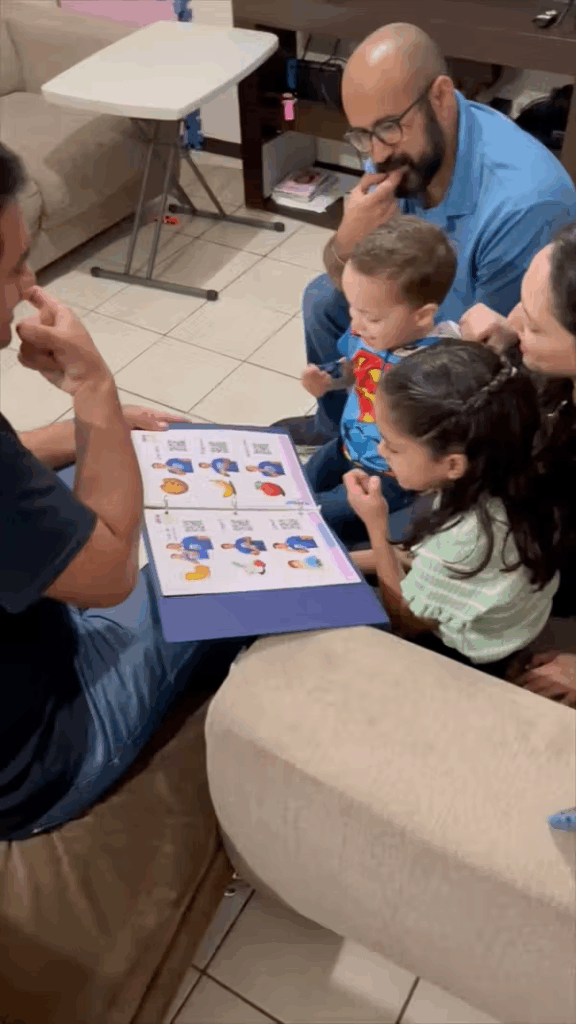
However, Gerardo faced another reality check when he needed to complete his professional internship. He began as an intern working in Rocío Garza’s team. She remembers him as a brilliant, capable person, but the organization lacked the knowledge to successfully include a deaf person on the team. This situation presented several problems that delayed Gerardo’s training, a common experience faced by people with hearing impairments when entering the workforce. In Mexico, it is estimated that approximately 2.3 million people have hearing disabilities, of which only 29.9% are economically active, as they face barriers to obtaining employment due to a lack of accessibility in language and access to information, prejudices, or a lack of knowledge about sign language by employers and colleagues.
Fortunately, Rocío did not give up. By reading, studying, and researching, she acquired various materials and methodologies to help Gerardo learn, who, simultaneously, introduced her to deaf culture, a world that she did not know and wanted to know more about. Her interest led her to obtain a Doctorate in Inclusive Education from the University of Baja California (UBC) in 2015.
Their shared experience inspired them to join forces and create Dilo en Señas, thus converting the challenges they experienced into an opportunity to transform the reality of many others, promoting a more empathetic, equitable society that is aware of the importance of accessible communication and integral inclusion in the family, educational, work, and social spheres.
Continuous work
As he has expressed on several occasions, Gerardo’s motivation was deeply personal and genuine. Both agreed that they did not want other deaf children to go through the same difficulties that he faced. His life experiences, educational lag, the lack of opportunities for knowledge and understanding of deafness within his family, and the need for more support were the factors that encouraged Rocío and Gerardo to form the association, offering the new generations of deaf people the opportunities and accompaniment he did not have.
Initially, before being established as a civil association, Dilo en Señas’ primary objective was to facilitate the teaching of sign language through play using a mobile phone application. Later, in 2016, the organization had the opportunity to participate in the renowned Shark Tank Mexico program, where it received support and congratulations from investors. The visibility and guidance obtained through the program were determining factors in formalizing it as a civil association and in its decision to expand its work beyond the development of the application.
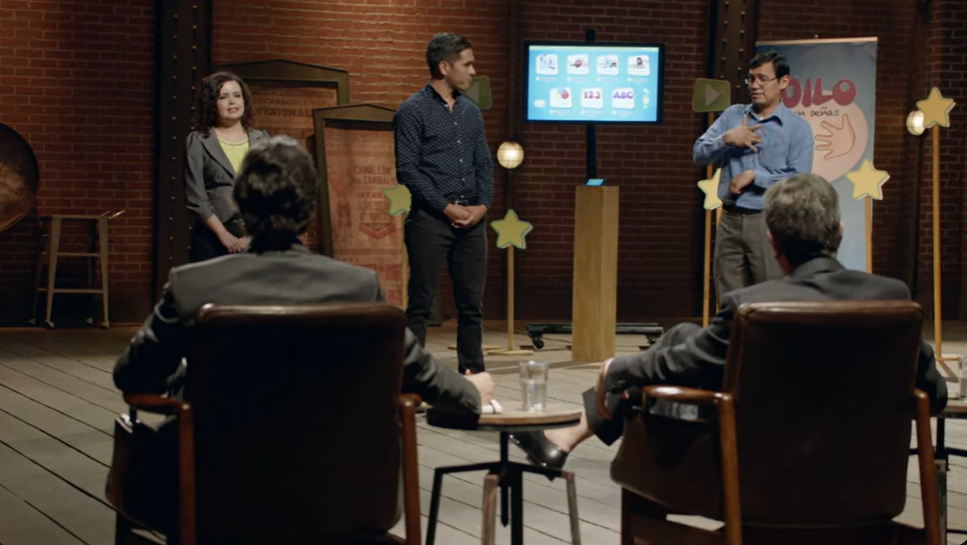
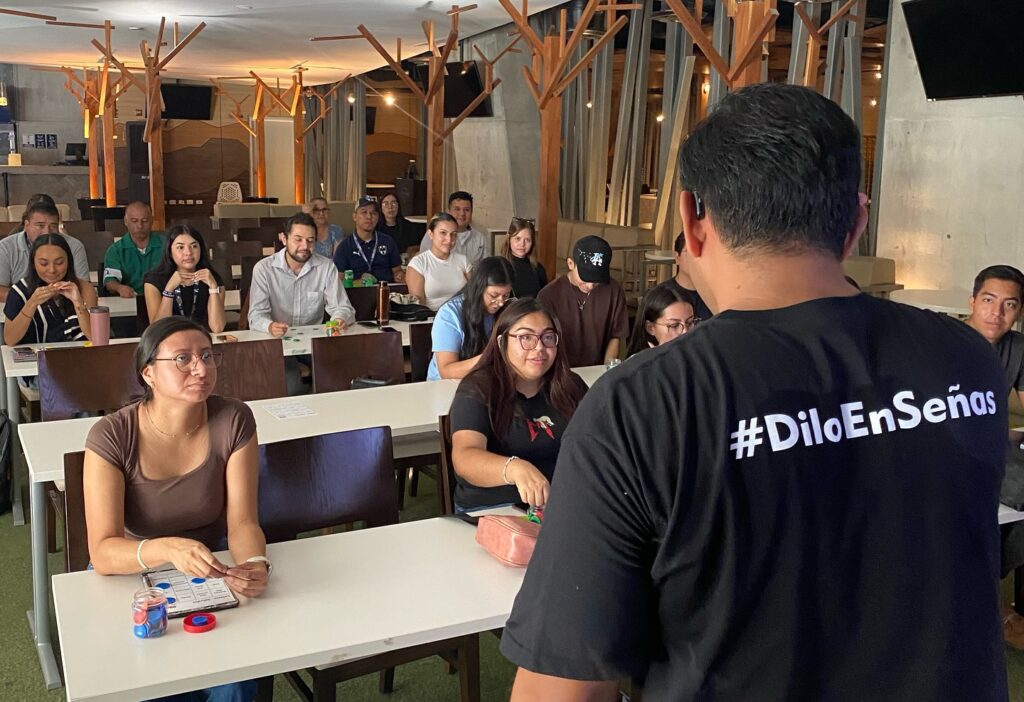
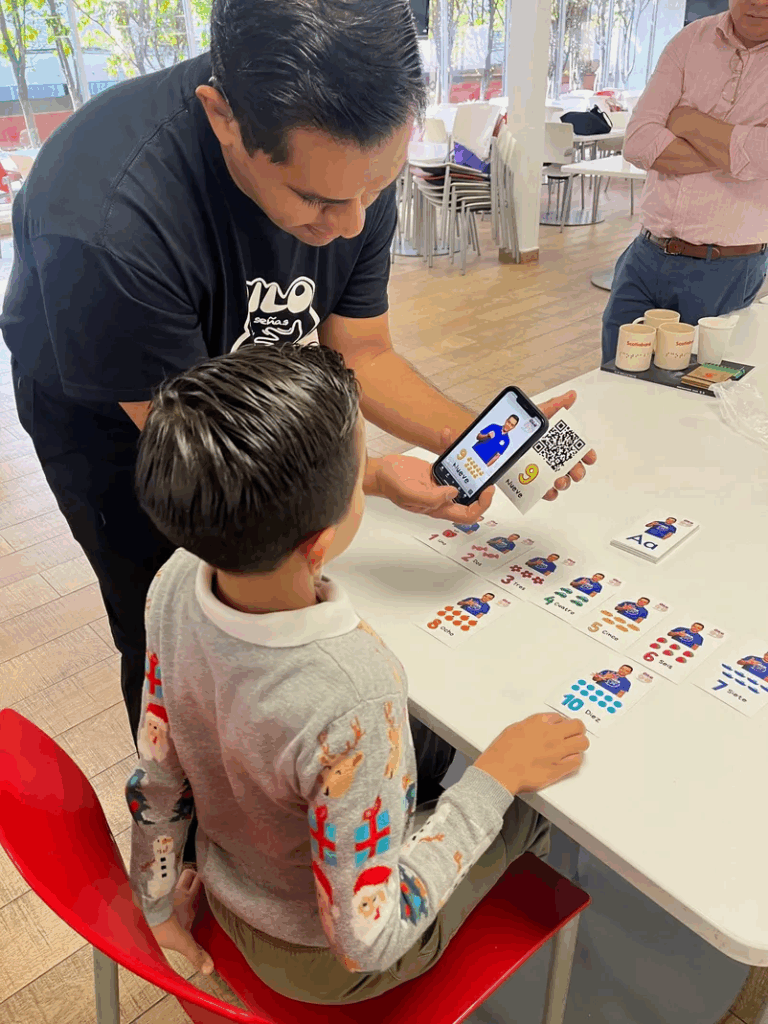
Currently, the association is working hard to develop strategies that motivate people to learn Mexican Sign Language (MSL). Its main focus is to generate events of value that present innovative ways to facilitate learning, one of which is the lottery ‘Say it in Signs, in Silence, in Signs,’ a dynamic in which people can learn MSL through play. This event has had a significant impact, as participants usually enjoy the experience and subsequently invite others, thereby increasing interest in sign language.
In addition, the association has taken these activities to various institutions and companies, which have received them very positively. Its activities are not limited to games but also include awareness courses and sign language workshops, leveraging every opportunity to connect and drive fundamental societal transformation.
The association works to debunk myths and prejudices, such as the idea that communicating with deaf people is impossible without being an expert in sign language or the belief that all deaf people have the same degree of disability. They demonstrate that each deaf person is different: their hearing level, command of written Spanish, and knowledge of sign language, among other things, may vary. Therefore, they consider it essential first to promote awareness and understanding of diversity within the deaf community, so that people can communicate, interact, and include others more effectively and empathetically.
Rocío also reports that they are looking to approach families of children with hearing disabilities, either to teach them MSL or to find community in a situation that is usually out of the ordinary, but that, in the long run, will prevent deaf children from growing up in a world that they cannot understand. As Gerardo relates, he grew up without healthy language development because he lacked access to information and education, and thus was unable to interact or communicate effectively.
“What we seek to do is precisely to facilitate the inclusion of deaf people in Mexico – comprehensive inclusion, that is, inclusion in the family, educational, work, and social areas. So, we want to help; we devise solutions and educational experiences of different types that we disseminate so that they reach other people.” Rocío Garza Gutiérrez
In 2018, Gerardo was invited by the Foundation ONCE to present the project at the IV International University Congress on Disability in Spain. In 2020, he participated in a TEDx conference, where he shared his experiences with Dilo en Señas. Additionally, in 2024, Rocío Garza Gutiérrez was awarded the TEC Woman Award.
The organization has expanded beyond Gerardo and Rocío due to its significant growth. It currently has a team of more than 20 deaf people around the country, whom they employ on a project basis. One of its new members is Paulo Manzano, a psychologist and interpreter of Mexican Sign Language (LSM), whose collaboration was fundamental for the preparation of this article. In an interview, Manzano highlighted various problems faced by the deaf community that hearing people often fail to fully comprehend. Everyday situations, such as going to a medical appointment or accessing psychological therapy, demonstrate the absence of MSL in daily life.
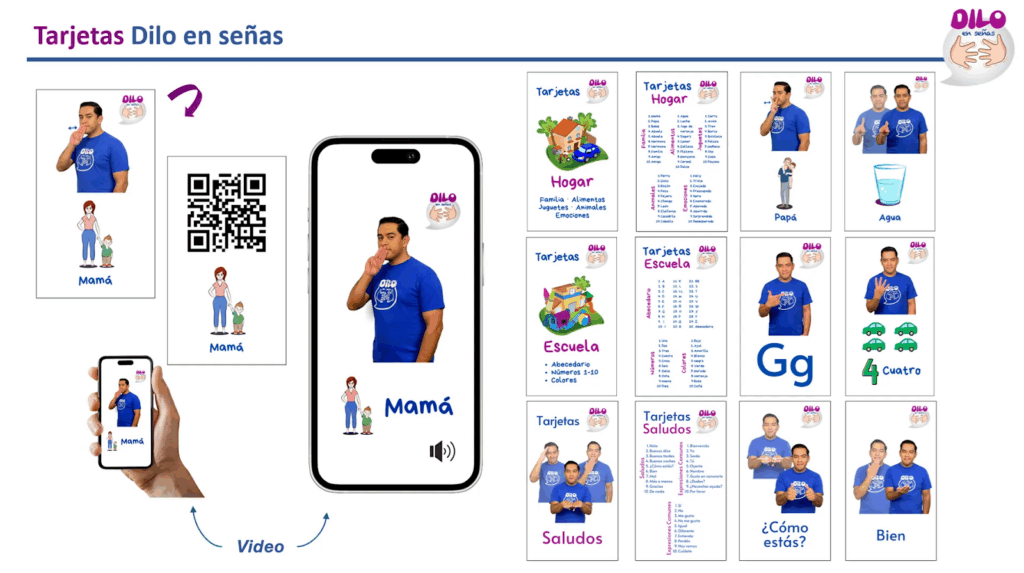
The association, in addition to what has already been mentioned, also provides educational solutions and accompaniment, as well as creating free, accessible content for all audiences through its various social media platforms. Additionally, it develops pedagogical materials available for purchase on its website at an affordable price. To learn more about the association, visit their social media networks, where you can also find a detailed catalog of their services.
The work of associations such as Dilo en Señas helps us continue building an inclusive society, where diversity is seen as a strength rather than a barrier. Rocío mentions, with admiration, their transition from an imposed relationship, in which she was a leader and Gerardo a practitioner, to a voluntary collaboration as partners. She expresses her gratitude for having met Gerardo and her conviction that, without him, Dilo en Señas would not have lasted a day. Due to their contributions and collaboration, the organization continues to grow and evolve.
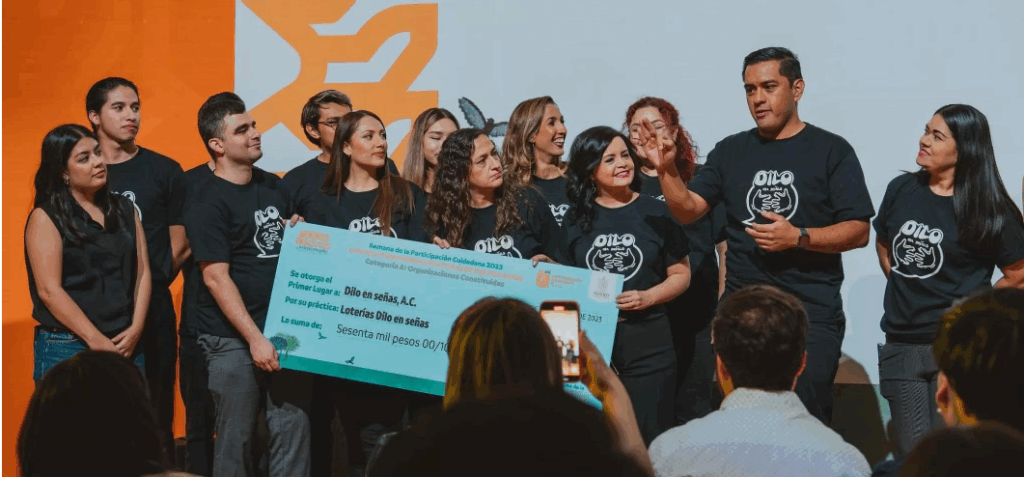
Thanks to their work, more people can learn about Mexican Sign Language and comprehend the importance of inclusion. Dilo en Señas, with its committed team and educational approach, continues to promote the inclusion of the deaf community in the social fabric, opening doors so that everyone can develop, understand one another, and live on equal terms.
Translation by Daniel Wetta