
Byung-Chul Han, the philosopher we should all read, says that the best form of political resistance in today’s world is to stay at home. He means staying away, as much as possible, from current forms of work, consumption, and communication, which only force us to a life of self-exploitation for the sake of performance.
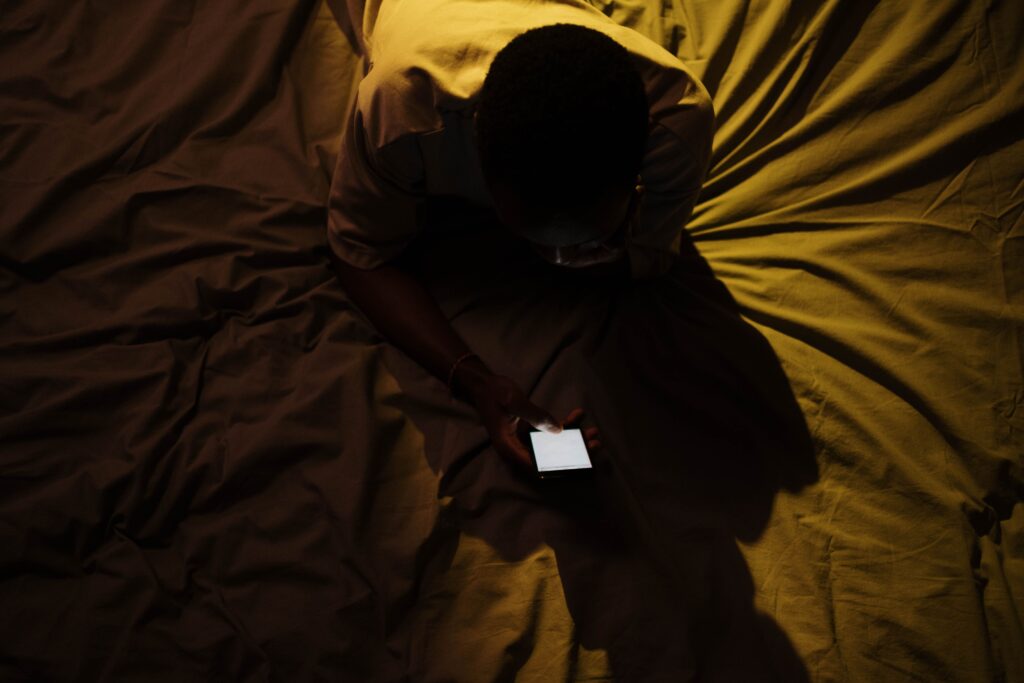
Well, I want to declare, now, that I am going further than Han: I am staying in my bed. I don’t even tend my home garden, as he does, but lie down most of the day, and here (in my bed, where I now write), I spend hours thinking, reading, meditating, working, and—I can’t deny it—taking a nap from time to time.
Yes, I’m living in my bed. However, comparing me to Han is just a joke: I’m not a follower of his resistance. It’s true that, like him, I want to change the world, but I don’t stay in bed because of that; I simply have little need to go out.
I ask my readers not to think of me as a hermit and, even less, a misanthrope. I have a family whom I love, and day by day I fulfill my responsibilities as a father and husband, including sharing meals with everyone (at the table, not in my bed) and contributing to the housework. We also go out together, from time to time, to restaurants and the supermarket, for example, and visit family and friends, whom I also love. And if we don’t do much tourism, it’s not because we follow the South Korean philosopher, who opposes the fashion of “experiencing life,” but because we don’t have the money to travel as often as we would like.
In my bed, to be a little more specific and get to the point, I watch movies, series, short videos, chat with friends, take an online course very occasionally, do banking, chat at length (ha ha, at length, literally) with my son and my wife, and talk on the phone with my siblings and closest friends, all that from my cell phone, which is also where I write. (By the way, I beg the reading public not to worry about my health. For the moment, despite my extremely sedentary lifestyle, I have found a way to stay fit through continuous stretching, relaxation practices, and a notable body awareness that I cultivated in my time as an actor and theater teacher: we will see how real this turns out to be for me).
Thus, as some of my readers know from my previous essays, not only do I enjoy all the resources of virtual life, but I also defend their use, including by young people, who seem to use them excessively. I think and write a lot about the subject and about the real possibilities of enjoying a life of fullness in an increasingly electronic community.
The present article explores, in a bit more depth, the questions that have occurred to me about whether it is possible not only to endure a virtual life but also to flourish humanly within it. In the following paragraphs, I will therefore try to inquire briefly about the scope of our non-face-to-face exchanges. In fact, it is a kind of game, one more of my philosophical fantasies, which, I hope, will also entertain the reader.
To begin with, what is the virtual life I imagine like? At one extreme (that of total digitalization), it would be a life with zero face-to-face communication and a completely robotized production of goods and services (even the reproduction of the species would be carried out at a distance). However, given that I cannot conceive of a lack of face-to-face meetings with my wife, children, siblings, and friends, I think my model should preserve those “living experiences” at least in those cases. In fact, I would have to include personal meetings with people from all over the world, which implies I would travel from time to time; not from the need to know other places and commune with people, but also because of the need to verify that reported news is true. Moreover, this, of course, involves contact with nature and animal life, as well as the treatment afforded to both. (Clearly, if our life is reduced to digital, we can be completely deceived and live in denial of many terrible abuses).
Thus, my fantasy of a virtual life has clear limitations: it would entail partial physical isolation and immersion in the digital world, which would not prevent us from staying vigilant and serving as eyewitnesses to events.
As for the production of goods and services, given that its robotization would eliminate approximately ninety percent of the world’s population, it must be time-limited, that is, to ensure that this occurs gradually and without injustice.
Thus, the virtual life that I fantasize would be more or less limited to encounters at a distance of communication, coexistence, artistic enjoyment, entertainment, academic training, planning and decision-making, bureaucratic procedures, etc. (precisely the things I carry out from my bed). The “virtual,” therefore, would be an e-book, a message, a photo, a video, a film, audio, a phone call, an online chat, the sending of documents, and all kinds of meetings by digital means, such as a course, a conference, professional advice, or a medical consultation.
Once the virtual has been thus delimited, we can begin to ask ourselves how much it really offers us and what we lose in all this. What, exactly, do we give up by reducing our face-to-face meetings with people?
The other day I went to Mexico City and traveled on the subway. I already had this question in my head, so I was especially sensitive to the subject. I remembered the great Dr. Bolavski, who in his Neocursi Manifesto affirms, both humorously and truthfully, “If we come to meet one another in the big cities, on public transport, it is to be together, to touch each other, to smell each other, to feel each other, to die within ourselves: to die of an excess of love.”
In fact, presence, in addition to offering smell and touch and the enjoyment of a shared space, is something more mysterious that “circulates,” putting it very loosely, from one body to another, from one being to another, and we are especially conscious of its absence during a virtual encounter.
To explain myself well, I must take a little detour. You see, in an area of knowledge that is between psychology and philosophy, there is a concept that I want to use to describe all of this. It is “cenesthesia.” The older 1984 edition of the Spanish-language dictionary defines it dazzlingly: cenesthesia is a general sense of the existence and state of one’s own body. “Sense of existence,” wow! Recent versions, trying to remove ambiguity, have stripped it of this poetic precision, reducing it to “a general sense of the state of one’s own body,” eliminating the sensation of existing, which is the most important meaning. Cenesthesia is what we momentarily lose in serious moments of anguish, when we feel that our body ceases to exist. What I want to get to here is that the presence of others, in our environment, produces in us a kind of cenesthesia, in this case not self-perception but another, which tells us that the others do exist; they are here (an alteresthesia, if you will allow me this nice neologism). Such a sensation allows us to perceive them as real and take them into account. Without alteresthesia we would be unable to recognize them within a common circumstance, and, therefore, they– and we with them – would lose all meaning: I always remember my Swedish friend, blonde and about five feet nine inches tall, who, in a town in Mexico, despite speaking perfect Spanish, almost without an accent, could not make herself understood, always receiving the same answer from my countrymen, who stared at her in astonishment, as if she were a ghost, saying, “No inglich,” “I don’t speak English.” Like cenesthesia, alteresthesia gets lost in moments of distress.
Thus, I dare say it is the feeling we need most in virtual meetings. Of course, one gets used to it, just as people in the first half of the twentieth century got used to the very real existence of people on the other end of the phone. Perhaps it happens that, in the face of electronic media, alteresthesia ceases to be a sensation and becomes an intellection; that is, one resigns himself to dispensing with his senses and becomes content to accept intellectually that others are really there. In this case, the neologism would be something like alternoesia, from the Greek nosis, meaning “consciousness” or “understanding.”(By the way, the alternoesia would also be lost in moments of anguish: I will always remember the day when, while talking on the phone, my mind played tricks on me by telling me that there was no way to verify that my speaker, on the other end of the line, really existed: I felt that I was turning into air).
Often, a face-to-face encounter is, contrarily, a neutralizer, a barrier that makes it difficult to be close, while, paradoxically, the virtual is more intimate and deeper. We can be sure that more than one relationship has been saved thanks to the use of WhatsApp, which allows us to space our face-to-face meetings, demonstrating that it is possible to communicate virtually, at least on a verbal level, and achieve a true emotional, intellectual, and even physical and spiritual exchange, the latter, if we take into account literary styles.
We thus arrive at the question of how many things we can share with others through writing. The answer, of course, is a lot! The soul is translatable into words, at least to a very high degree. The most eloquent proof of this is poetry, although María Zambrano considers that the supreme literary genre is confession, like the famous Confessions of St. Augustine and Rousseau. St. Paul says: “The letter kills, but the spirit gives life,” referring to writing, which can be cold or emotionally ambiguous, but which, inspired by the right spirit, is capable of conveying its own presence to the reader.
Thus, from all that has been said, we can conclude that there is a bodily dimension that is irreplaceable within virtual life, and another that benefits from it, and that both must be taken into account when reviewing the type of balance between them that would be conducive to our flourishing.
As you can see, we have already come a long way in this analysis, and we have only addressed a small part of its multiple angles. For example, we have not even mentioned what is today the most widespread and widely discussed tool in virtual life: artificial intelligence, and the complexity it adds to all this. Just think that some of its attributes leave far behind the question we have been asking ourselves, about the possibility of achieving deep virtual encounters, and plunge us into a new crisis, this time about the effects that emulating the personal and feigning true communication between human beings and machines can have (in short, technology is not morally neutral, as Pope Leo XIV recently courageously reminded us).
The subject, then, is immense and so important that it has made me fantasize about continuing to write about it in subsequent articles.
We will see if it is possible. For now, I will end with a blunt clarification. I do not believe that the difficulties that face-to-face learning has always endured should be considered eternally insurmountable, nor, moreover, that virtual means of communication deserve more attention than live meetings. There will never be a more valuable experience than the one we can have with someone in front of us. But I also accept that, as humanity, we are still very far from achieving the ideal of a relationship between equals, to which we aspire, and that the path of virtuality can be the way in which, over the centuries, we approach it. For now, it is a fact that virtual life brings us closer to people we would otherwise never have met and frequented again, allowing us unprecedented community fantasies. We can question the real value of the latter, but we cannot deny the vital opportunity it represents.
With this, I end, dear readers, inviting you, always from my bed, to continue meeting through this medium.
Translation by Daniel Wetta